
When to Worry About a Fever in Babies and Children
Not sure when to worry? Learn how to check your child’s temperature, what symptoms matter, and when to seek care.
Most fevers in children are mild and a normal sign that the immune system is doing its job. But when your child has a fever, it can be hard to know what is typical and when it may signal something more serious. Understanding how fevers work, what to watch for, and when to seek medical care can help you feel more confident in those moments.
At KidsStreet Urgent Care, we help families understand fever in kids and provide guidance on when to monitor at home and when to bring your child in for evaluation.
What Is Considered a Fever in Children
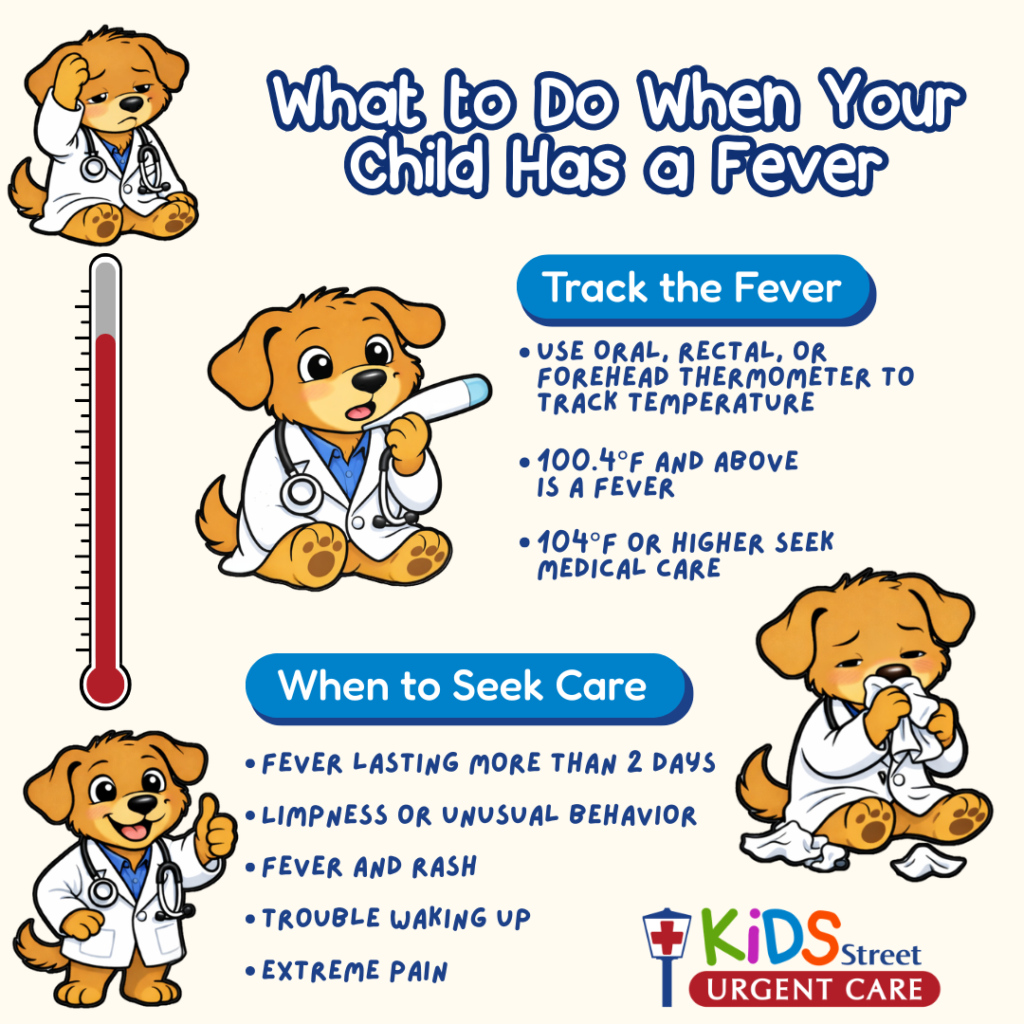
A fever in children generally means a body temperature of 100.4 degrees Fahrenheit or higher.
Using a digital thermometer is the most reliable way to measure your child’s temperature. For babies, a rectal temperature provides the most accurate reading. For older children, oral or underarm readings may be appropriate depending on age and cooperation.
Keep in mind that your child’s temperature can change throughout the day. Activity level, clothing, and even being wrapped in a blanket can affect the reading slightly. What matters most is how your child feels and behaves overall.
How to Take Your Child’s Temperature
If you suspect your child has a fever, use a digital thermometer for the most accurate reading.
For babies and young infants, a rectal temperature provides the most reliable measurement. For older children, oral, ear, or forehead thermometers may be appropriate depending on age and cooperation.
Avoid relying on touch alone. If your child feels warm, check with a thermometer to confirm.
Why Do Kids Get Fevers
A fever in kids is not an illness itself. It is a symptom.
Common causes of fever in children include:
- Viral infections such as colds or the flu
- Ear infections
- Strep throat
- Certain vaccinations
- Other common childhood illnesses
When your child has a fever, it usually means their immune system is responding appropriately to a virus or bacteria.
Most fevers are short lived and improve within a few days.
What to Do If Your Child Has a Fever
If your child has a fever and is still drinking fluids, interacting normally, and fairly comfortable, you can often monitor them at home.
Here are a few helpful steps:
- Use a digital thermometer to check your child’s temperature accurately
- Offer plenty of fluids to prevent dehydration
- Dress your child in lightweight clothing
- Avoid bundling them tightly or keeping them wrapped in a blanket
- Allow them to rest
If your child feels uncomfortable due to the fever, you may consider giving acetaminophen or ibuprofen based on their age and weight. Always follow dosing instructions carefully. For babies younger than 3 months, speak with a provider before giving medication.
Sometimes how your child feels is more important than the exact number on the thermometer. A playful toddler with a mild fever may need less intervention than a child who seems unusually sleepy or irritable.
Fever by Age: When to Pay Closer Attention
Age matters when evaluating a fever in children. Younger infants have developing immune systems and are more vulnerable to certain infections. Because of this, the same temperature can carry different levels of concern depending on your child’s age.
Babies Under 3 Months
If a baby younger than 3 months has a rectal temperature of 100.4 degrees or higher, they should be evaluated promptly. Young infants are more vulnerable to serious health problems, and even a low-grade fever can require medical attention.
Infants and Toddlers
For children 3 months and older, a fever alone is not always an emergency. However, you should seek care if:
- The fever lasts more than a few days
- Your child is not drinking fluids
- Your child feels unusually lethargic or difficult to wake
- The fever keeps returning
- There are other concerning symptoms such as rash, stiff neck, or persistent vomiting
Older Children
In older kids, focus on how your child feels overall. If they are alert, drinking fluids, and improving between doses of acetaminophen or ibuprofen, home care may be appropriate.
If they seem significantly uncomfortable, confused, or have trouble breathing, seek care right away.
When to Worry About a Fever
Most fevers in children improve within a few days and are part of the body’s natural immune response. However, certain symptoms may signal that closer monitoring or medical evaluation is needed.
Pay closer attention if:
- A baby under 3 months has a rectal temperature of 100.4 degrees or higher
- The fever lasts more than three days
- Your child is unusually irritable, inconsolable, or very uncomfortable
- Your child is not drinking fluids normally
- The fever improves but then returns
- You notice a new rash, persistent vomiting, or signs of pain
Trust your instincts. If your child feels significantly different than usual or something does not seem right, it is reasonable to have them evaluated.
When to Visit Urgent Care for Kids
Sometimes a fever is not an emergency, but it still needs medical attention. Urgent care for kids is appropriate when your child needs evaluation the same day but is not in immediate danger.
Consider visiting KidsStreet Urgent Care if:
- Your child’s temperature remains high despite acetaminophen or ibuprofen
- The fever is accompanied by ear pain, sore throat, cough, or congestion
- Your child refuses fluids or is urinating less than usual
- The fever is interfering with sleep or daily activity
- You are unsure what is causing the fever
- Your child has underlying health problems that make a fever more concerning
Our providers can evaluate fever in kids, identify the underlying cause, and recommend appropriate treatment so your child can begin feeling better.
Learn more about our evaluation and treatment for fevers in kids and how our pediatric providers can help.
How KidsStreet Evaluates and Treats Fever in Children
When you visit KidsStreet for a fever, our pediatric providers begin with a thorough review of your child’s symptoms and medical history. We assess your child’s temperature, examine for signs of infection, and determine whether the cause is likely viral, bacterial, or related to another condition.
In some cases, testing such as strep or flu screening may be recommended to identify the source of the fever. Treatment depends on the underlying cause. Many fevers require supportive care and monitoring, while others may require prescription medication.
Our goal is to identify the cause quickly, provide clear guidance, and help your child feel better as soon as possible.
When to Seek Emergency Care
While most fevers are not dangerous, certain symptoms require immediate medical attention.
Call 911 or go to the nearest emergency room if your child:
- Has trouble breathing or is struggling to breathe
- Experiences a seizure
- Cannot be awakened or is unresponsive
- Has a stiff neck with severe headache
- Shows signs of severe dehydration such as no tears when crying or very little urination
- Develops bluish lips, face, or skin
If you believe your child is experiencing a life-threatening medical emergency, seek emergency care right away.
Supporting Your Child Through a Fever
Caring for a sick child can feel overwhelming. Remember that a fever in children is often a normal part of fighting infection.
Focus on comfort, hydration, and rest. Offer reassurance that they are going to be okay. Keep monitoring your child’s temperature and overall behavior.
Most importantly, know that you are not alone.
We Are Here for You
At KidsStreet Urgent Care, we provide specialized urgent care for kids in a setting designed just for children. Whether your child has a fever, cough, ear infection, or other illness, our pediatric providers are here to help.
We are open late 7 days a week to make care convenient for families.
You can walk in anytime or register online to save your spot in line. Online registration adds you to the queue and provides an estimated arrival time. It is not an appointment, but it can help reduce your in-clinic wait time.
Find a KidsStreet location near you and learn more about our pediatric urgent care services.
Other Fever in Kids Blogs

Fever In Kids With No Other Symptoms
At 3 months old, your baby is becoming more alert, expressive, and interactive. This stage often feels exciting because you are starting to see more smiles, more personality, and longer stretches of awake time.
Why Fevers in Kids Spike at Night
Fevers often seem worse after the sun goes down, leaving parents worried in the middle of the night. Learn why body temperature rises in the evening and when nighttime fever needs medical attention.
How Long Should a Fever in Children Last?
Watching the thermometer for days can make any parent anxious. Learn what is considered a normal fever duration, when three days is still typical, and when a longer fever may need medical evaluation.

Fever After Vaccines in Children: What’s Normal?
It can be unsettling when your child develops a fever after shots. This post explains why post vaccine fever happens, how long it typically lasts, and when it may be time to check in with a provider.
Alternating Acetaminophen and Ibuprofen for Fever
If your child’s fever will not budge, you may wonder whether alternating medications is safe. This guide covers when fever medicine is appropriate, safe dosing principles, and when medication alone is not enough.
Turn to KidsStreet Urgent Care for Your Urgent Care Needs
Is your child suffering from a fever? KidsStreet Urgent Care is here to help them heal and feel better, FAST! To visit one of our clinics, register online. You’ll be able to wait from your vehicle or at home until we’re ready to see you.
You can register online to secure a spot in line while waiting from your car or your home, and we will alert you via text message when we are ready for you. You will have 30 minutes from when we text you to make it into our office and check in with the front desk.
Walk-ins are welcome, but we highly recommend registering online. This will reduce in-clinic wait times.