
Not sure when to worry? Learn what different types of coughs mean, which symptoms matter, and when to seek care for your child.
Most coughs in children are caused by common viral illnesses and improve on their own. However, some coughs can signal breathing concerns, infection, or airway inflammation that require medical attention.
Because coughs can sound alarming, it is important to focus on how your child is breathing, acting, and drinking fluids rather than the sound alone. While most coughs are not dangerous, certain symptoms deserve closer attention.
At KidsStreet Urgent Care, we help families understand coughs in children and provide guidance on when urgent care for kids is appropriate.
What Causes a Cough in Children?
A cough is not an illness by itself. It is a protective reflex that helps clear mucus, germs, or irritants from the airway.
Common causes of cough in children include:
- Viral infections such as colds or the flu
- Croup
- Bronchitis
- Asthma
- Allergies
- Post nasal drip
- Environmental irritants such as smoke
In many cases, a cough is part of the body’s natural healing process and improves within one to two weeks.
You may also notice your child coughing without a fever, which can happen with allergies, asthma, or lingering airway irritation. Learn more about cough with no fever in kids and what it may mean.
Types of Coughs in Kids
The sound and pattern of your child’s cough can provide helpful clues.
Dry Cough
Often caused by viral infections or irritation. It may linger after a cold.
Wet or Productive Cough
Usually associated with mucus. Common with colds, sinus infections, or bronchitis.
Understanding the difference between wet and dry cough can help you recognize what may be causing your child’s symptoms. Learn more about wet vs dry cough in children.
Barking Cough
A harsh, seal-like cough often linked to croup. It may worsen at night.
A barking cough in children is often linked to croup, a viral illness that causes swelling in the upper airway. Learn more about barking cough in kids and signs of croup.
Cough with Wheezing
May suggest asthma or lower airway inflammation.
Nighttime Cough
Coughs often worsen at night due to post nasal drainage or airway sensitivity.
Many parents notice their child’s cough worsening after bedtime due to post nasal drip or airway sensitivity. Learn more about why cough gets worse at night in kids.
Even though different coughs sound different, what matters most is how your child feels overall. Pay attention to changes in breathing, energy level, and hydration rather than focusing only on the sound of the cough.
What to Do If Your Child Has a Cough
If your child has a cough but is breathing comfortably, drinking fluids, and acting normally, you can often monitor them at home.
Helpful steps include:
- Encourage plenty of fluids
- Use a cool mist humidifier
- Allow your child to rest
- Use saline nasal drops for congestion
- Keep your home smoke free
For children older than one year, a small amount of honey may help soothe a cough. Avoid honey in children under one year.
Cough and cold medications are generally not recommended for young children unless directed by a provider.
Cough by Age: When to Pay Closer Attention
Age plays an important role in evaluating a cough. Younger infants are more vulnerable to breathing difficulties and infections.
Babies Under 3 Months
Any persistent cough in a baby younger than 3 months should be evaluated promptly. Infants have smaller airways and can become sick more quickly.
Infants and Toddlers
Seek care if:
- Your child is breathing faster than normal
- You notice retractions, meaning the skin pulls in between the ribs
- There is persistent wheezing
- Your child refuses fluids
- The cough is accompanied by a high fever
Older Children
In older kids, monitor how your child feels overall. If they are playful, hydrated, and breathing comfortably, home care may be appropriate.
If symptoms worsen, linger beyond two weeks, or interfere with sleep and activity, medical evaluation is recommended.
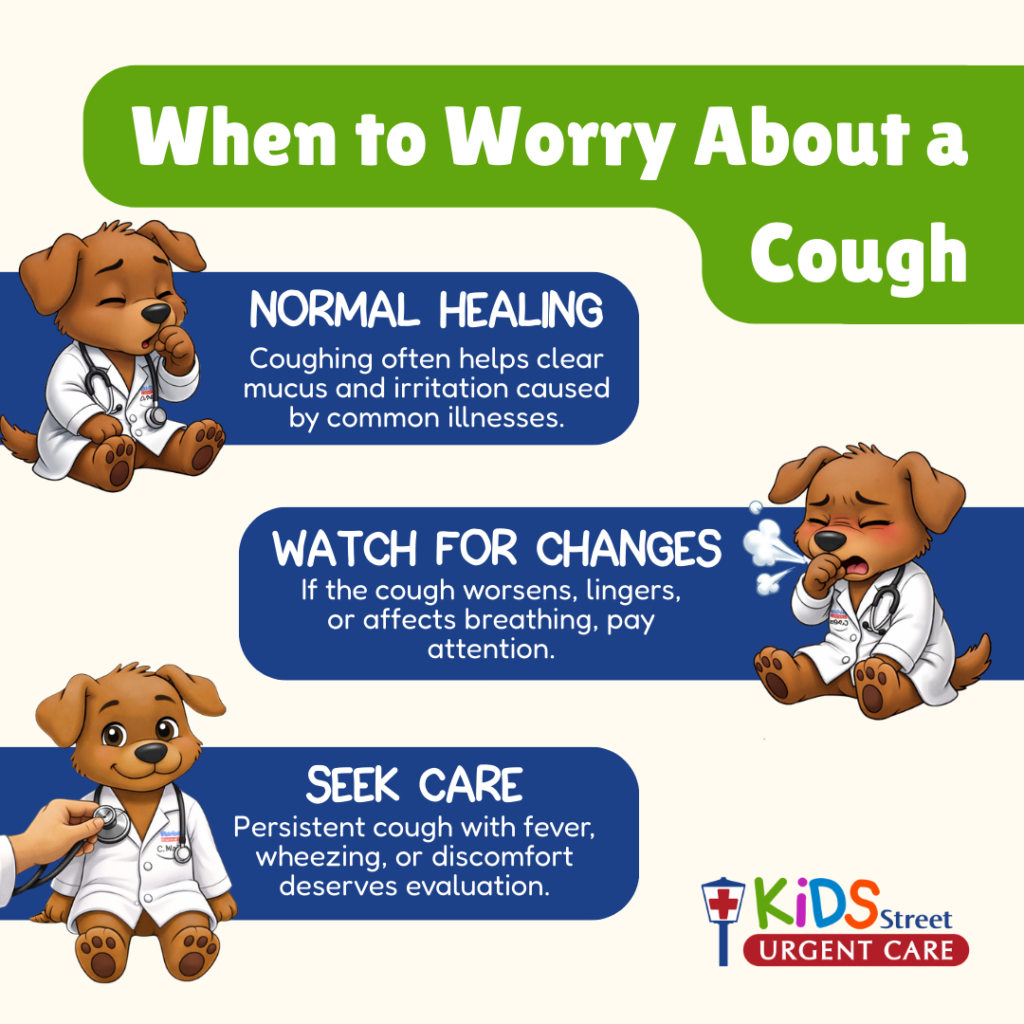
When to Worry About a Cough
Most coughs improve gradually. However, certain symptoms require closer attention.
Pay closer attention if:
- The cough lasts longer than two weeks
If your child’s cough continues beyond two weeks, it may be time for evaluation. Learn more about cough lasting more than two weeks in kids.
- Your child has difficulty breathing
- The cough causes vomiting repeatedly
Some children cough so forcefully that it triggers vomiting. Learn more about cough and vomiting in kids and when to seek care.
- There is chest pain
- Your child seems unusually tired or lethargic
- The cough is getting worse instead of better
Trust your instincts. If something feels different about your child’s breathing or behavior, it is reasonable to seek evaluation.
When to Visit Urgent Care for Kids
A cough is not always an emergency, but it may still require medical attention.
Consider visiting KidsStreet Urgent Care if:
- Your child has a persistent cough with fever
- The cough is accompanied by ear pain or sore throat
- There is wheezing or mild breathing difficulty
- Your child has asthma and symptoms are worsening
- You are unsure what is causing the cough
Our providers can evaluate coughs in children, listen to your child’s lungs, and determine whether the cause is viral, bacterial, allergic, or asthma related. We can also provide breathing treatments when appropriate.
How KidsStreet Evaluates and Treats Cough in Children
When you visit KidsStreet for a cough, our pediatric providers begin with a thorough review of your child’s symptoms and medical history. We listen carefully to breathing sounds and evaluate for signs of infection or airway inflammation.
In many cases, testing such as flu, RSV, or strep throat screening may be recommended. Treatment depends on the underlying cause. Many coughs require supportive care only, while others may require prescription medication or breathing treatments.
Our goal is to identify the cause quickly and help your child breathe easier and feel better as soon as possible.
When to Seek Emergency Care
While most coughs are mild, certain symptoms require immediate medical attention.
Call 911 or go to the nearest emergency room if your child:
- Is struggling to breathe
- Has lips or face that appear bluish
- Cannot speak or cry due to breathing difficulty
- Has severe chest retractions
- Becomes unresponsive
If you believe your child is experiencing a life-threatening medical emergency, seek emergency care right away.
Supporting Your Child Through a Cough
Coughing can be exhausting for both children and parents. Remember that most coughs improve with time and supportive care.
Focus on hydration, rest, and comfort. Offer reassurance. Keep monitoring breathing and overall behavior.
Most importantly, know that you are not alone.
KidsStreet Urgent Care Is Here for You
At KidsStreet Urgent Care, we provide specialized urgent care for kids in a setting designed just for children. Whether your child has a cough, fever, ear infection, or other illness, our pediatric providers are here to help.
We are open late 7 days a week to make care convenient for families.
You can walk in anytime or register online to save your spot in line. Online registration adds you to the queue and provides an estimated arrival time. It is not an appointment, but it can help reduce your in-clinic wait time.
Find a KidsStreet location near you and learn more about our urgent care services for children.
More Resources for Parents About Cough in Kids
Cough With No Fever in Kids: What Does It Mean?
Sometimes children develop a cough even when they don’t have a fever or other obvious symptoms. Understanding the common causes of cough without fever can help parents decide when to monitor at home and when to seek care.
Barking Cough in Kids (Croup)
A barking cough can sound alarming, especially when it starts suddenly at night. This distinctive cough is often caused by croup, a common childhood illness that affects the upper airway.
Wet vs Dry Cough in Children
The sound of a cough can offer helpful clues about what may be causing your child’s symptoms. Learning the difference between wet and dry cough in children can help parents better understand what their child may be experiencing.
Why Your Child’s Cough Gets Worse at Night
Many parents notice that their child’s cough becomes worse once bedtime arrives. Nighttime coughing is common in children and is often linked to post nasal drip, airway sensitivity, or asthma.
When a Child’s Cough Lasts More Than 2 Weeks
Most childhood coughs improve within a week or two, but sometimes symptoms linger longer than expected. A cough that lasts several weeks may have different causes that require medical evaluation.
Cough and Vomiting in Kids
Some children cough so forcefully that it triggers vomiting, which can be frightening for parents to witness. Understanding why coughing can cause vomiting can help parents know when symptoms are normal and when they may need medical attention.


