
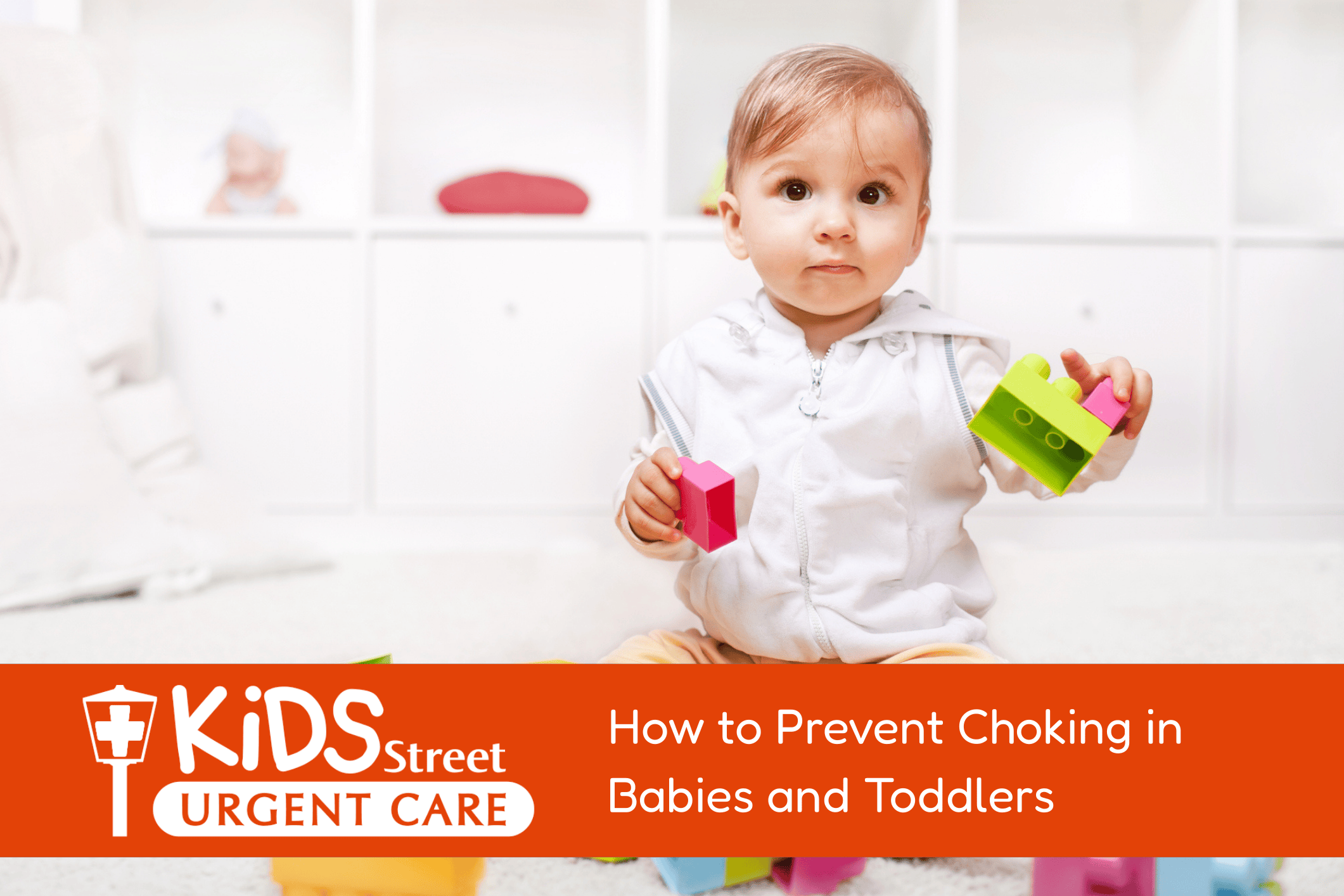
Babies and toddlers explore the world with their hands and mouths, which is why choking is a common concern for parents. At KidsStreet Urgent Care, we’re here to help you feel more confident in keeping your little one safe as they grow and explore.
Choking can happen quickly, but the good news is there are many steps you can take to lower your child’s risk. Here’s what every parent should know.
Why Babies and Toddlers Are at Risk
Young children are still learning how to chew and swallow. Their small airways can easily become blocked if something goes down the wrong way or gets stuck.
Children under age 4 are most at risk because:
- Their chewing skills are not fully developed
- They often try to eat quickly or while distracted
- They may put small items in their mouths while playing
That’s why it’s important to stay close during meals and playtime and be aware of what’s within reach.
Foods That Are Most Likely to Cause Choking
Some foods are harder for children to chew, or are shaped in a way that makes them more dangerous. The most common choking hazards for young children include:
- Grapes and cherry tomatoes (always slice these into quarters)
- Hot dogs (cut into thin strips instead of circles)
- Whole nuts or spoonfuls of peanut butter
- Chunks of meat or cheese
- Raw carrots or apples (try shredded or thin slices)
- Hard candies, gum, or popcorn
Introduce new foods slowly and always watch closely while your child eats. Sitting upright and eating at a table is also safer than walking or lying down with food.
Toys and Household Items That Pose a Choking Hazard
Choking does not just happen during meals. Many toys, craft supplies, and household items can be dangerous if they are small enough to fit into a child’s mouth.
Some common choking hazards include:
- Small toy parts or pieces that detach
- Button batteries or magnets
- Coins, beads, and marbles
- Balloons and plastic wrappers
- Hair ties, paperclips, or tiny accessories
Use the toilet paper tube test. If the item fits inside a cardboard toilet paper roll, it is too small for a child under 3 to play with unsupervised.
Safe Habits for Parents and Caregivers
Here are a few simple things you can do every day to protect your little one from choking hazards:
- Watch your child during meals and snacks and never leave them alone with food
- Serve age-appropriate foods in small, manageable pieces
- Encourage children to eat slowly and chew well
- Store small objects and toys out of reach
- Follow age recommendations on toy packaging
- Learn basic first aid and choking rescue steps for infants and children
If your child has a history of feeding difficulties, talk with their provider to make sure their development is on track.
We’re Here When You Need Peace of Mind
At KidsStreet Urgent Care, we are here to help with concerns about choking, swallowing, or other pediatric issues. Whether it is a minor scare or ongoing symptoms like coughing or gagging, our providers can evaluate your child and guide next steps.
We are open late 7 days a week and provide care moms can trust.
Register online to save your spot or find a KidsStreet location near you. Walk-ins are welcome, too.