

All babies cry. It’s one of the only ways they can communicate their needs. But if your baby cries frequently for long periods and doesn’t respond to feeding, changing, or comforting, it may be something more than typical fussiness.
This kind of excessive crying may be a sign of colic, a common but often misunderstood condition in infants. While colic doesn’t mean anything is medically wrong, it can be incredibly stressful for both babies and parents.
At KidsStreet Urgent Care, our providers are here to help parents understand what’s going on, how to manage it, and when to seek support. We offer pediatric urgent care services in a setting that’s built around families just like yours.
What Is Colic?
Colic is defined as frequent, intense crying in an otherwise healthy baby. It usually begins around 2 to 4 weeks of age and tends to improve by 3 to 4 months. Some babies continue to experience symptoms a little longer, but colic is temporary and not dangerous.
Your baby may have colic if they:
-
Cry for three or more hours a day, especially in the late afternoon or evening
-
Seem difficult or impossible to comfort
-
Pull their legs toward their tummy or arch their back while crying
-
Pass gas or appear uncomfortable
-
Calm down for a while, then begin crying again
Colic can affect any baby, even if all their needs are met. While the exact cause is unknown, possible triggers include developing digestive systems, gas, overstimulation, or sensitivity to food or formula.
Ways to Soothe a Colicky or Fussy Baby
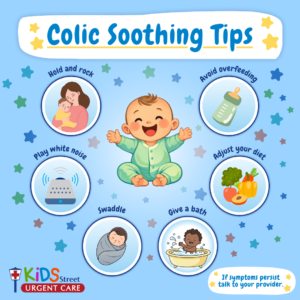
Every baby is different, and what works for one might not work for another. That said, here are several techniques that can help soothe a crying or colicky baby:
-
Hold your baby close with skin-to-skin contact or carry them in a sling
-
Rock gently or walk around with your baby in your arms
-
Play white noise or calming sounds to mimic the womb environment
-
Swaddle in a lightweight blanket to create a secure, comforting feeling
-
Offer a pacifier or help them suck their fingers for self-soothing
-
Avoid overfeeding, and try spacing feedings at least two to three hours apart
-
Try a warm bath or tummy massage to relieve gas and tension
-
Adjust your diet if breastfeeding, or talk to your provider about formula options
If nothing seems to help, it’s okay to place your baby safely in their crib and step away for a few minutes to regroup. Taking care of yourself helps you care better for your baby.
When to Reach Out for Help
If your baby is crying excessively and you’re worried something might be wrong, trust your instincts. While colic itself is not harmful, crying can sometimes be a sign of another issue, such as reflux, infection, or an allergy.
You should seek care from a provider if your baby has:
-
A fever
-
Vomiting or diarrhea
-
Difficulty feeding or signs of dehydration
-
Trouble gaining weight
-
A sudden change in their usual behavior or cry
At KidsStreet, we’re here for the unexpected moments that come with parenting. Our pediatric urgent care clinics are open late 7 days a week, so you can get answers and peace of mind when you need them.
We’re Here for Your Whole Family
Being a parent to a newborn comes with a lot of questions and emotions. Whether you’re looking for guidance about colic or need quick care for a sick child, KidsStreet providers are ready to help.
Register online to save your spot or walk into your nearest clinic. Online registration helps reduce your wait time by adding you to the queue and giving an estimated arrival time. It is not an appointment, and during busy seasons, there may still be a short wait.