
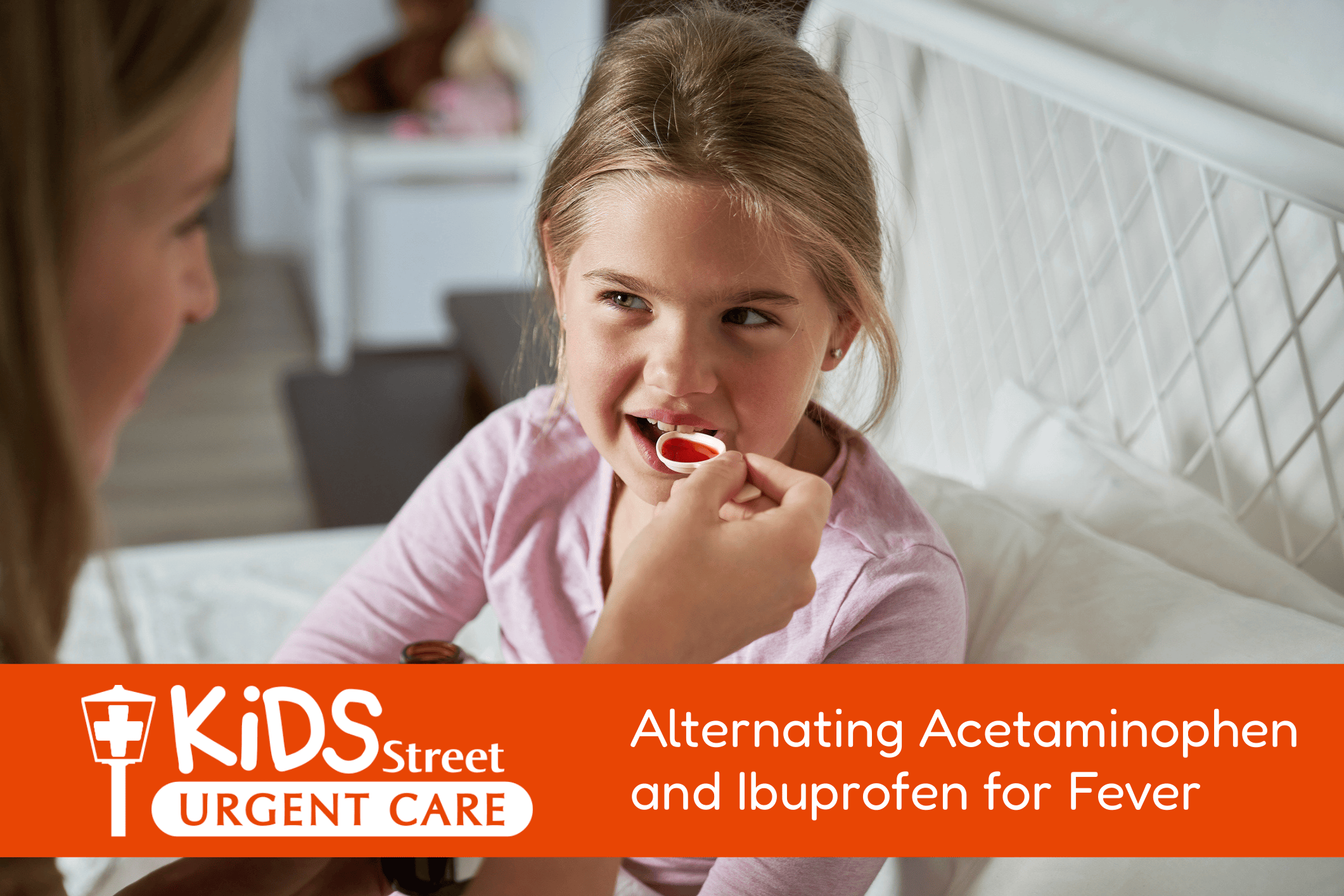
Your child’s fever won’t budge, and you’re wondering if it’s okay to give them a different med than you did a few hours ago. Maybe a friend recommended alternating medications, or you vaguely remember a provider suggesting it once. You’re not sure what to do, and you just want to make the fever go down safely.
Is alternating children’s acetaminophen and ibuprofen safe? In many cases, yes, when done correctly and with proper dosing.
Read our full guide to learn more about when to worry about a fever in babies and children.
What Fever Medication for Kids Actually Does and When You Should Use It
When your child is sick, the fever isn’t the enemy. A fever, after all, is just a way our immune systems defend ourselves from bacteria and viruses. A higher body temperature makes it harder for these invaders to survive. So, a kid’s fever is a sign that their immune system is operating as it is supposed to.
To that end, a mild fever doesn’t always need to be treated. We turn to fever medication when our child is genuinely miserable: too hot and uncomfortable to eat, sleep, or drink fluids. We just don’t want to run the risk of overmedication that can cause serious damage to our child’s kidneys, liver, and stomach lining.
In some cases, providers may recommend alternating medications to provide consistent relief while minimizing the risk of overmedication.
The two most common types of fever medication for kids that are used as a pair are acetaminophen (Tylenol) and ibuprofen (Motrin, Advil). These two work differently in the body, which is why they can be safely used together in rotation.
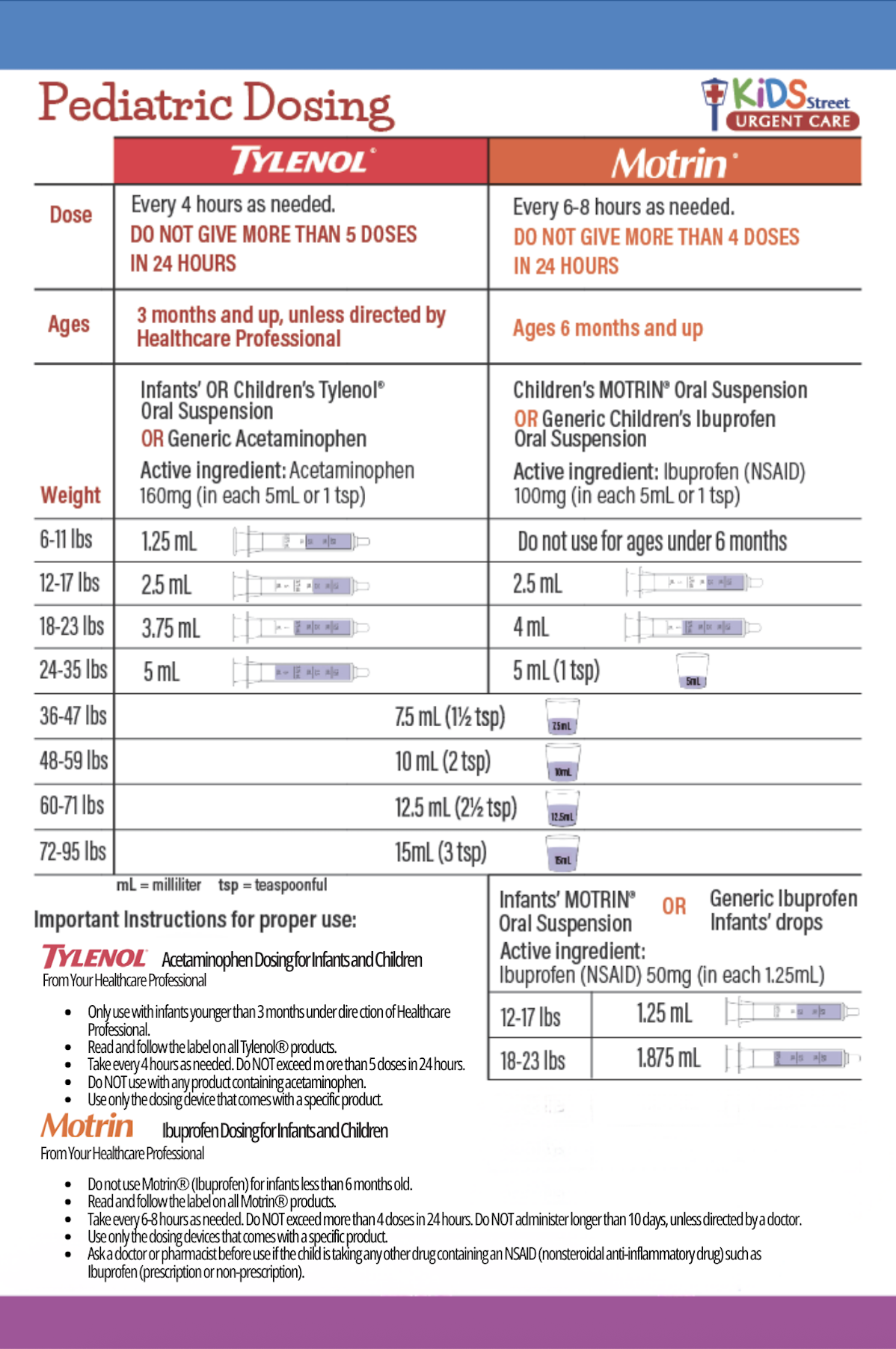
Acetaminophen can be given every 4-6 hours, and ibuprofen can be given every 6-8 hours. So, if you give your child Tylenol at noon, you could give them Motrin at 4pm, and Tylenol again at 8pm.
Disclaimer: Always follow the specific dosing instructions provided on the medication label or by your provider.
Here are a few pointers:
- Never exceed the max dosage per 24 hours for each type of medicine. Consult the dosage instructions on the package.
- Dose by weight, not age, because your child can be lighter than average for their age.
- Never give ibuprofen to babies under 6 months
- Use just the lowest effective dose
- Keep track of what you give your child, how much, and when
Finally, always carefully read labels.
When Medication Isn’t Enough for Your Child’s Fever
While fever medication can help with comfort, it does not treat the underlying cause of infection.
If your kiddo’s fever doesn’t go away after three days, rises to 104 degrees F or higher, or comes with any symptoms like difficulty breathing, a stiff neck, unusual lethargy, or a severe headache, visiting an urgent care for children is recommended.
KidsStreet is open late 7 days a week and provides urgent care for children when you need it most. Walk-ins are always welcome, and you can register online to save your spot in line and reduce your in-clinic wait time.
Our friendly providers will be more than happy to consult with you on your child’s condition and develop a utreatment plan that will get your little one back on the happy road of health.
You don’t have to stress about overdoing it when trying to treat your child’s fever with medication. With this info (and your local KidsStreet staff at the ready) you’ll be able to provide care with confidence.
Other Fever in Kids Blogs

Fever In Kids With No Other Symptoms
At 3 months old, your baby is becoming more alert, expressive, and interactive. This stage often feels exciting because you are starting to see more smiles, more personality, and longer stretches of awake time.
Why Fevers in Kids Spike at Night
Fevers often seem worse after the sun goes down, leaving parents worried in the middle of the night. Learn why body temperature rises in the evening and when nighttime fever needs medical attention.

Fever After Vaccines in Children: What’s Normal?
It can be unsettling when your child develops a fever after shots. This post explains why post vaccine fever happens, how long it typically lasts, and when it may be time to check in with a provider.
How Long Should a Fever in Children Last?
Watching the thermometer for days can make any parent anxious. Learn what is considered a normal fever duration, when three days is still typical, and when a longer fever may need medical evaluation.