
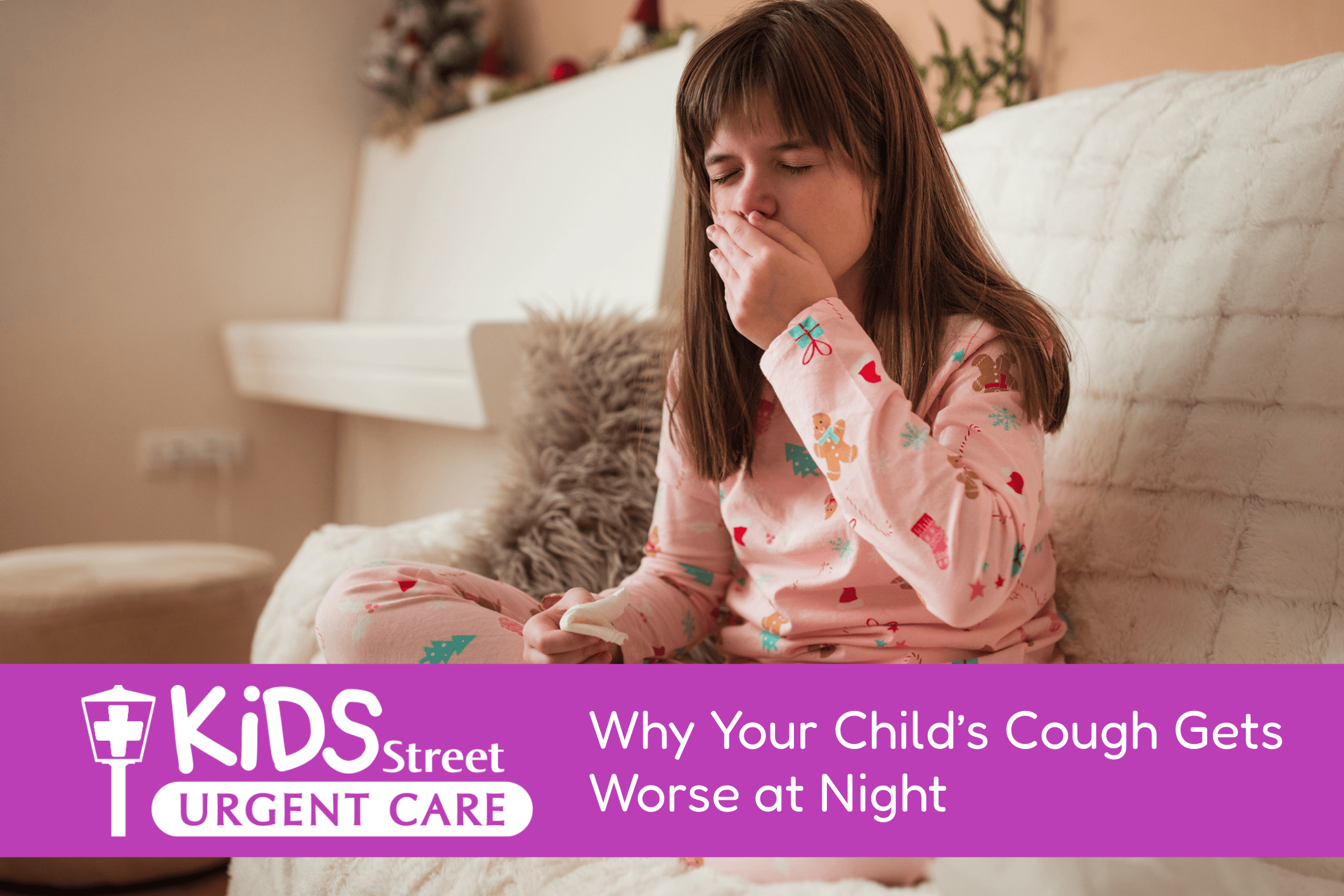
Your child seemed fine all day. Maybe a little sniffly, maybe a bit tired, but nothing alarming. Then bedtime rolls around and suddenly the coughing starts, and it just will not quit!
If this sounds familiar, you’re not imagining things (this pattern is very common in children). A cough that worsens at night is incredibly common in children, and there are real, explainable reasons why it happens. Understanding the reasons a cough can worsen at night in children can help you feel less helpless at 2 a.m. and more confident about what to do next.
Why Nighttime Makes Coughing Worse
Several things change when your child lies down, and most of them work against a calm, quiet night.
The biggest culprit is post-nasal drip. During the day, mucus from the nasal passages drains naturally down the throat and gets routinely swallowed. When your child is horizontal in bed, that mucus has nowhere to go except to pool at the back of the throat, which triggers coughing. This is why so many children with allergies or a simple cold cough far more at night than during the day.
Asthma is another major factor behind nighttime cough in children. The airways naturally narrow slightly in the early morning hours due to the body’s internal clock and hormone shifts overnight. For children with asthma or heightened airway sensitivity, this makes nighttime and early morning the prime time for coughing, wheezing, and chest tightness.
Cooler bedroom air and exposure to dust mites in bedding can also act as triggers. If your child’s nighttime cough seems to follow a pattern, happening most nights rather than just during an illness, asthma cough is worth discussing with a provider.
Dry indoor air is one more piece of the puzzle, particularly in winter months when heating systems pull moisture out of the air. Dry air irritates already sensitive airways and can turn a mild cough into a persistent one the moment your kiddo settles in for the night.
When to Monitor and When to Seek Care
Most nighttime coughs tied to a cold, allergies, or mild asthma are uncomfortable but not dangerous. Running a cool mist humidifier, keeping your child’s head slightly elevated, and making sure bedding is washed regularly to reduce dust mites can all make a meaningful difference. If allergies seem to be the trigger, talking to a provider about appropriate options for your child’s age is a good next step.
That said, some nighttime cough symptoms deserve more than a wait and see approach. Seek care promptly if your child has a high-pitched sound when breathing in, if their nostrils are flaring or their skin is pulling in around the neck or ribs with each breath, or if they seem anxious and cannot settle because breathing feels difficult. A cough that has gone on for more than two to three weeks without improvement also warrants an evaluation.
You can also read our full guide on when to worry about a cough in babies and children to better understand which cough symptoms may require medical care.
KidsStreet Urgent Care is Here for You
KidsStreet’s urgent care services for children are available when you need answers without waiting days for an appointment. Our providers can assess your child’s airway, identify what is driving the nighttime cough, and walk you through a plan that actually helps – without waiting days for an appointment.
KidsStreet is open late 7 days a week! Register online to save your spot in line and get your little one the care they need tonight.
More Resources for Parents About Cough in Kids
Cough With No Fever in Kids: What Does It Mean?
Sometimes children develop a cough even when they don’t have a fever or other obvious symptoms. Understanding the common causes of cough without fever can help parents decide when to monitor at home and when to seek care.
Barking Cough in Kids (Croup)
A barking cough can sound alarming, especially when it starts suddenly at night. This distinctive cough is often caused by croup, a common childhood illness that affects the upper airway.
Wet vs Dry Cough in Children
The sound of a cough can offer helpful clues about what may be causing your child’s symptoms. Learning the difference between wet and dry cough in children can help parents better understand what their child may be experiencing.
When a Child’s Cough Lasts More Than 2 Weeks
Most childhood coughs improve within a week or two, but sometimes symptoms linger longer than expected. A cough that lasts several weeks may have different causes that require medical evaluation.
Cough and Vomiting in Kids
Some children cough so forcefully that it triggers vomiting, which can be frightening for parents to witness. Understanding why coughing can cause vomiting can help parents know when symptoms are normal and when they may need medical attention.