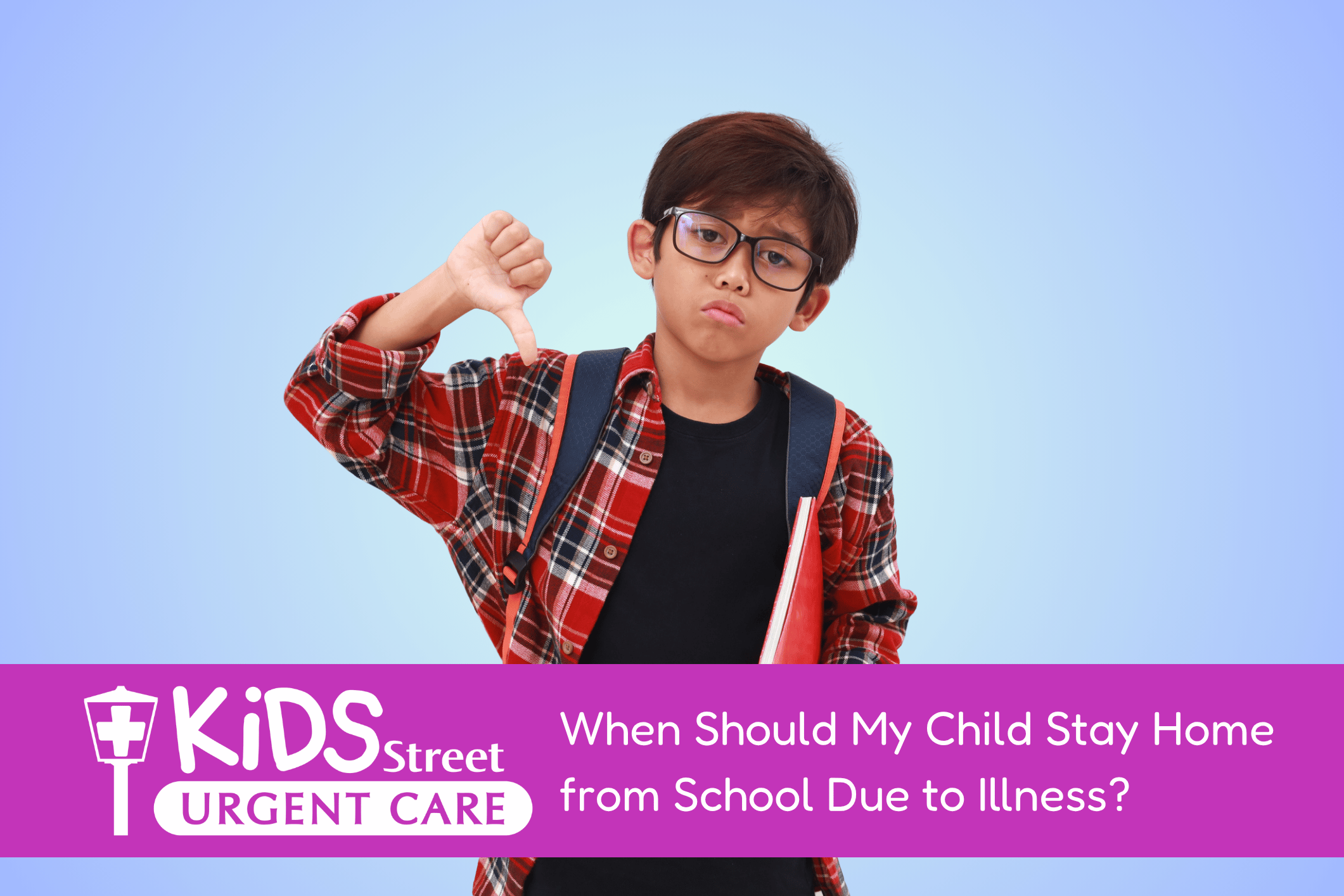
One school morning, your child looks a little off. You ask how they’re feeling, and they say something like, “I feel okayish,” but you have your doubts.
Now you have a decision all parents face: whether or not to send your child to school. It’s one of the trickiest calls parents make, especially when symptoms are mild or hard to read. Here’s a simple guide to help you decide.
Symptoms That Often Mean Staying Home
In general, it’s best to keep your child home if they have:
- A fever
- Vomiting
- Diarrhea
- A severe cough
- Trouble breathing
- Pink eye symptoms
- A severe sore throat
- Symptoms that make it hard to focus or participate
- Symptoms that seem to be getting worse
If you’re not sure, it’s okay to keep your child home and have them checked out if needed.
Fever and School
A fever is often a sign that your child’s body is working to fight off an illness. Most schools require kids to be fever-free without medication for a set period before returning, so it’s worth checking your school’s specific policy.
If a fever is high, isn’t improving, or comes with other concerning symptoms, it’s a good idea to have your child evaluated rather than just waiting it out.
Vomiting, Diarrhea, and Stomach Bugs
Stomach bugs move fast through classrooms, so staying home helps protect other kids too and gives your child’s body a chance to rest.
Keep your child home if they can’t keep fluids down, are having frequent diarrhea, or show signs of dehydration, like a dry mouth or noticeably less urination than usual.
Cough, Congestion, and Sore Throat
Mild congestion or an occasional cough is often manageable at school. But a worsening cough, breathing concerns, fever, or a sudden sore throat that could point to strep are all good reasons to keep your child home and have them checked out.
Pink Eye and School
Red, itchy, watery, or draining eyes can be a sign of pink eye, which spreads easily among kids. Many schools require documentation before a child can return, which means it’s important to have it evaluated by a provider, especially if symptoms are getting worse.
When to Visit KidsStreet
It’s a good idea to bring your child in if you notice:
- A fever that isn’t improving
- A sore throat with fever or swollen glands
- A cough that’s getting worse
- Vomiting or diarrhea with signs of dehydration
- Pink eye symptoms
- Ear pain
- Symptoms that might need testing
- Any general concern, even if you’re not sure it needs a visit
Our team offers friendly and dependable pediatric urgent care for kids, so you always have somewhere to turn for a clear answer.
When to Go to the ER
Some symptoms need emergency care instead of urgent care. Go to the nearest emergency room or call 9-1-1 if your child has:
- Trouble breathing
- Blue lips or face
- Severe dehydration
- Confusion or extreme sleepiness
- A seizure
- Chest pain
- Any symptoms that feel life-threatening
Follow Your School’s Return-to-School Policy
Once your child is feeling better, be sure to follow your school’s specific return policies. If you need a note or letter for your child’s return to school, just let our team know during the visit, and we’ll be happy to provide one.
Visit KidsStreet for School Illness Concerns
Deciding whether to send your child to school doesn’t have to feel so uncertain. Our team is here to help you make that call with confidence.
KidsStreet is open late 7 days a week.
Register online to save your spot in line! Online registration is not an appointment, but it can help reduce in-clinic wait times by adding you to the queue before you arrive.
For more tips on navigating illness this school year, be sure to check out our resource: Back-to-School Illnesses: A Parent’s Guide.