
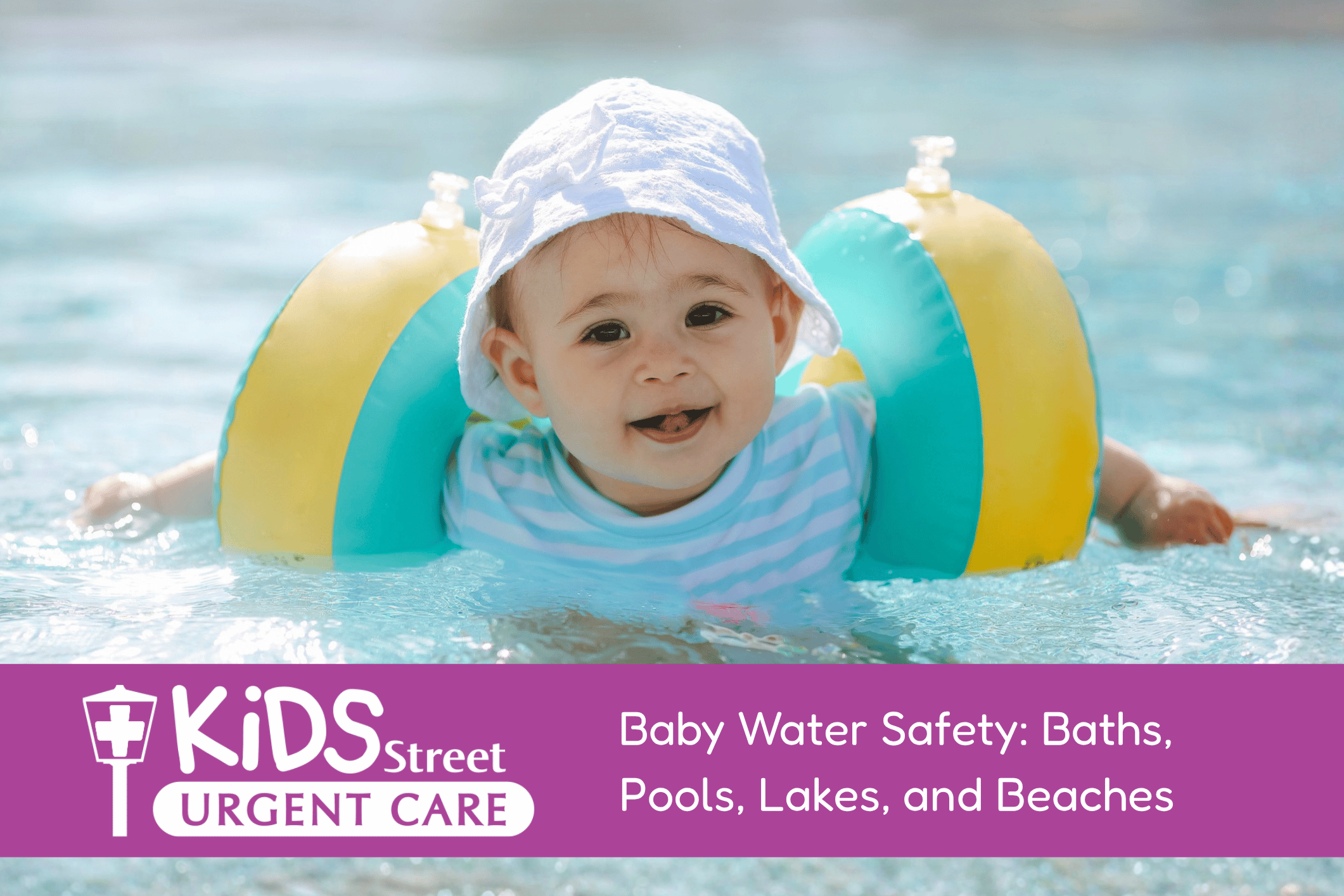
When you think about water safety, you may picture pool days, beach trips, swim lessons, and life jackets.
But for babies, water safety starts much earlier than that.
It starts at bath time. It starts with a bucket on the floor, a toilet lid left open, a kiddie pool in the yard, or a few inches of water where a curious baby can reach.
Babies are fast learners, and once they start rolling, crawling, pulling up, or walking, they can get to places you may not expect. That is why water safety for babies is less about one big rule and more about building simple habits every day.
Here is what parents and caregivers should know about keeping babies safer around water at home, by the pool, and during family trips.
Why Water Safety Matters for Babies
Babies and toddlers can get into danger around water quickly. They are still learning balance, body control, and how to respond when something feels scary or unfamiliar.
They also cannot reliably call for help.
That means close supervision matters every time your baby is near water, even if the water looks shallow or harmless.
Water risks can show up in places like:
- Bathtubs
- Buckets
- Toilets
- Kiddie pools
- Pools
- Hot tubs
- Lakes
- Rivers
- Beaches
- Coolers, containers, or outdoor items that collect water
A few inches of water can still be dangerous for a baby. The safest habit is to treat every water source like it needs your full attention.
Bath Time Water Safety
Bath time can be sweet, funny, and sometimes very splashy. It is also one of the most important times to stay focused.
Before you start the bath, gather everything you need so you do not have to step away. That includes towels, soap, shampoo, clean clothes, diapers, and anything else you use during your baby’s routine.
During bath time:
- Stay within arm’s reach
- Keep your eyes on your baby
- Avoid leaving the bathroom, even for a moment
- Ignore phone calls, texts, and distractions until bath time is over
- Empty the tub right after the bath
- Keep bathroom doors closed when not in use
- Keep toilet lids closed and consider toilet locks when needed
If you forget something, take your baby with you. Even a quick step away can be too long when water is involved.
Buckets, Toilets, and Everyday Water Risks
Not every water danger looks like a pool.
Babies are curious, and everyday household items can become risky when they hold water. A mop bucket, cooler, storage bin, pet water bowl, or toilet may not seem like a big deal, but babies can tip, reach, climb, or lose balance quickly.
To lower risk around the house:
- Empty buckets and containers right after use
- Store buckets upside down
- Keep bathroom and laundry room doors closed
- Close toilet lids
- Use child safety locks when needed
- Check outdoor toys or containers after rain
- Empty kiddie pools immediately after use
These small habits can make a big difference, especially once your baby becomes mobile.
Pool Safety for Babies
Pool days can be fun for the whole family, but babies need constant, close supervision around pools.
If your baby is near a pool, an adult should be focused on watching them. Not half-watching while scrolling, talking, cooking, or helping another child. Watching the baby should be the job.
Pool safety tips for babies include:
- Stay within arm’s reach around pools
- Use barriers like pool fencing and self-latching gates
- Keep pool gates closed
- Remove toys from the pool area when swim time is over
- Do not rely on floaties or inflatable toys as safety devices
- Use a properly fitted life jacket when appropriate
- Keep babies away from pool drains and suction areas
- Empty small inflatable pools after each use
If multiple adults are around, choose one person to be the active watcher. Switch off when needed so the person watching stays focused.
Lake and Beach Safety for Babies
Lakes and beaches can be beautiful, but they come with extra risks. Uneven ground, waves, currents, boats, slippery surfaces, and low visibility can make water harder to judge.
For babies, the safest choice is usually to keep water time short, supervised, and close.
When visiting lakes or beaches:
- Stay within arm’s reach
- Watch for waves and changing water conditions
- Keep your baby away from drop-offs or moving water
- Use a properly fitted life jacket when appropriate
- Avoid letting babies play near water without an adult beside them
- Watch for slippery rocks, shells, or sharp objects
- Keep babies shaded and hydrated during warm weather
- Follow posted warnings and local safety rules
Even if your baby is not swimming, water can still be a risk. Sitting near the edge of the water, crawling near a bucket, or playing close to a shoreline still needs close supervision.
What About Baby Swim Lessons?
Swim lessons can be helpful as children grow, but babies still need constant supervision around water. No class, floatation device, or safety product replaces an adult watching closely.
If you are considering swim lessons, talk with your child’s provider about what may be appropriate based on your baby’s age, development, comfort around water, and how often your family is near water.
The biggest rule stays the same: babies should always be watched closely around water.
Signs After Water Exposure That May Need Care
Sometimes parents notice symptoms after a baby has been in or near water. A little coughing after a splash may happen, but symptoms that continue or seem unusual should be taken seriously.
Consider having your baby evaluated if you notice:
- Coughing that does not settle
- Breathing that seems different than normal
- Wheezing
- Unusual tiredness
- Vomiting after a water incident
- Fever after swimming or water exposure
- Ear pain or tugging at the ear
- Cuts, scrapes, or wounds from pool edges, rocks, shells, or outdoor surfaces
- Any symptom that makes you feel uneasy
A medical provider can evaluate your baby and help you understand what to do next.
When to Seek Emergency Care
Some water-related situations need emergency care right away.
Call 9-1-1 or go to the nearest emergency room if your baby has:
- Trouble breathing
- Blue lips or face
- Loss of consciousness
- Extreme sleepiness or difficulty waking
- A serious fall or injury near water
- Symptoms after a near-drowning or water rescue
- Signs of severe dehydration
- Symptoms that feel life-threatening
If something feels seriously wrong, do not wait. Emergency care is the safest choice.
Visit KidsStreet for Pediatric Urgent Care
Water safety can feel overwhelming, especially when your baby is curious, mobile, and learning something new every day. The goal is not to be perfect. The goal is to build simple safety habits that help lower risk.
For non-emergency concerns after water exposure, such as coughing that lingers, ear pain, minor cuts, rashes, or symptoms that need a closer look, KidsStreet is here to help.
KidsStreet offers pediatric urgent care and is open late 7 days a week.
Register online to save your spot in line! Online registration is not an appointment, but it can help reduce in-clinic wait times by adding you to the queue before you arrive.