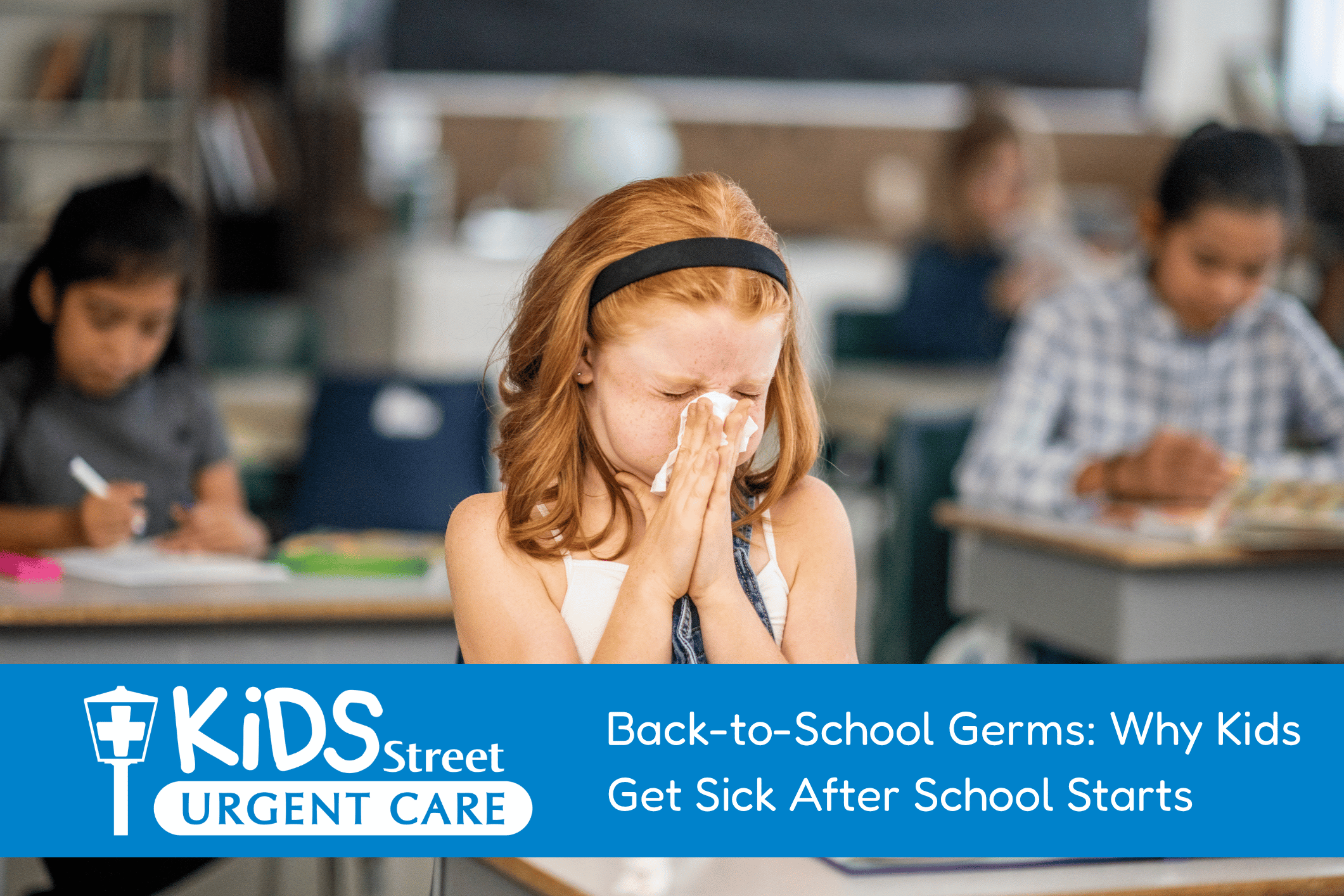
School is back in session, and you know what that means: germs.
Right now, many parents are noticing that their child who was healthy all summer long is suddenly battling the sniffles. The first few weeks of school can be rough, but this is common and has a simple explanation.
Here’s more on why back-to-school germs pop up and what you can do about it.
Why Germs Spread More Easily at School
School environments naturally bring a lot of germs together in one place. A few reasons illness tends to pick up once the school year begins include:
- Kids are seated close together in classrooms for hours each day.
- Germs spread easily through coughs, sneezes, and shared surfaces like desks and doorknobs.
- Younger children often touch their faces without realizing it.
- Buses, sports practices, and after-school programs add even more opportunities for exposure.
- Changes in sleep schedules and daily routines can also affect how a child’s body handles new germs.
None of this means you are doing anything wrong as a parent. It’s simply part of returning to a more social, shared environment after a summer spent around fewer kids.
Common Illnesses Kids Bring Home
Several illnesses tend to circulate heavily once school starts, including:
- Colds
- Flu
- COVID
- Strep throat
- RSV
- Stomach bugs
- Pink eye
- Ear infections
Many of these share overlapping symptoms, which is why it can be hard to tell exactly what’s going on without a checkup.
Symptoms That May Need a Closer Look
While mild symptoms aren’t usually a big deal and typically improve with rest at home, it’s worth paying closer attention if your child has:
- Fever
- Sore throat
- Cough that is getting worse
- Trouble breathing
- Ear pain
- Vomiting or diarrhea
- Redness or drainage from the eyes
- Symptoms that aren’t improving after a few days
- Symptoms that are affecting sleep, eating, drinking, or normal activity
Trust your instincts. You know your child best, and a change in their usual energy or behavior is worth taking seriously.
When Pediatric Urgent Care May Help
For non-emergency illnesses, KidsStreet can be a helpful and reassuring resource.
Our providers can perform testing when appropriate, including for flu, COVID, strep, and RSV, and can evaluate symptoms like sore throat, cough, fever, ear pain, or upset stomach.
If you’re unsure whether your child’s symptoms need to be checked, that’s reason enough to come in.
We are proud to offer dependable urgent care services for kids, so families always have somewhere reliable to turn during busy back-to-school weeks.
When to Go to the ER
Some symptoms need emergency evaluation rather than urgent care. Go to the nearest emergency room or call 9-1-1 if your child has:
- Trouble breathing
- Blue lips or face
- Signs of severe dehydration
- Chest pain
- Confusion or extreme sleepiness
- A seizure
- Any symptoms that feel life-threatening
How Parents Can Help Reduce Germ Spread
It’s impossible to avoid every germ, but a few simple habits can help reduce how often illness spreads through your home and classroom:
- Encourage frequent handwashing.
- Teach kids to cover coughs and sneezes with their elbow.
- Keep kids home when they’re too sick to go to school.
- Encourage plenty of rest and fluids when your child isn’t feeling well.
- Follow your school’s illness policies for returning after sickness.
These habits won’t prevent every illness, but they can go a long way in supporting your child’s overall health throughout the school year.
Visit KidsStreet for Back-to-School Illness Concerns
You don’t have to face this season alone. Our team is here to help evaluate your child’s symptoms and let you know what to do next.
KidsStreet is open late 7 days a week.
Register online to save your spot in line! Online registration is not an appointment, but it can help reduce in-clinic wait times by adding you to the queue before you arrive.
For more help with tackling illness during the school year, take a look at Back-to-School Illnesses: A Parent’s Guide.