
What to Expect at 12 Months
Your baby is officially one year old. This milestone brings exciting changes in movement, communication, and independence. At 12 months, many children are exploring more confidently and beginning to show strong preferences and personality.
At KidsStreet Urgent Care, we love helping moms feel confident about what is normal at each stage of your baby’s development. Here is what you can expect around your child’s first birthday and how to support healthy development.
Growth and Development at 12 Months
By one year, many babies are:
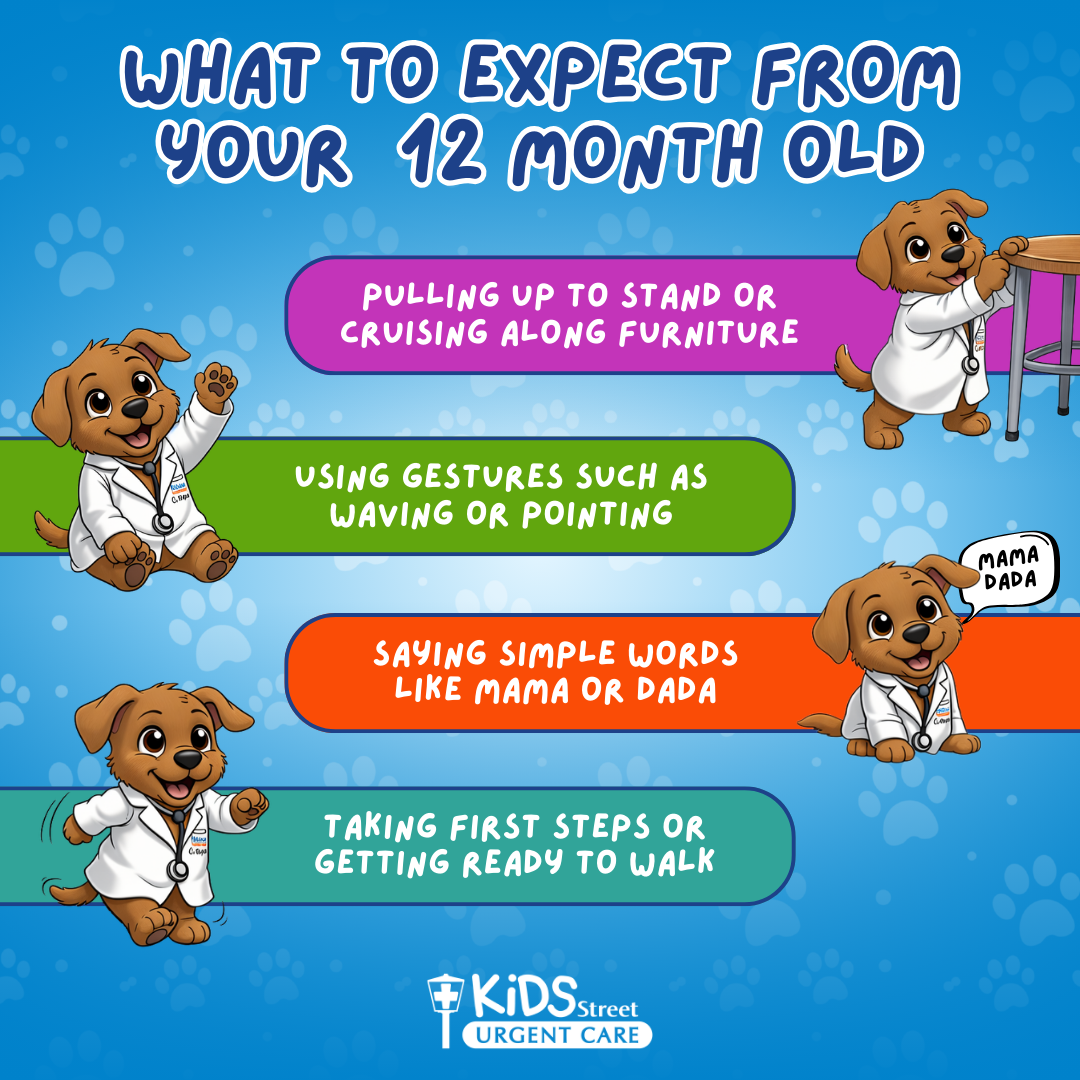
- Pulling up to stand or cruising along furniture
- Taking first steps or getting ready to walk
- Saying simple words like mama or dada
- Using gestures such as waving or pointing
- Showing excitement around familiar people
- Displaying strong reactions when separated from parents
You may also notice your toddler testing limits. This is a normal part of learning about independence.
Keep talking, reading, and singing to your child every day. Simple repetition builds language skills. Face to face interaction is still far more beneficial than screen time at this age.
Feeding Your 12-Month-Old
At 12 months, your child is transitioning into more table foods and eating meals with the family. Most toddlers do well with three meals and two to three snacks spaced throughout the day.
Helpful feeding tips include:
- Offer a variety of healthy foods
- Encourage self-feeding with fingers or a spoon
- Use a small cup for water or milk
- Let your child decide how much to eat
- End the meal when they lose interest
Avoid foods that can cause choking such as whole grapes, hot dogs cut into rounds, nuts, popcorn, and hard raw vegetables.
If your child is still using a bottle, begin transitioning to a cup. Try offering water in a cup instead of milk in a bottle at bedtime.
Establishing Routines and Discipline
At this age, routines help toddlers feel secure. Simple and consistent rules work best.
You can:
- Praise positive behaviors
- Use short and clear instructions
- Redirect instead of scolding
- Keep bedtime calm and predictable
- Follow a consistent nap and sleep schedule
Most one-year-olds still need at least one nap per day. A steady routine can help prevent overtiredness and tantrums.
Dental Care at One Year
If your child has teeth, brush them twice daily with a soft toothbrush and a tiny smear of fluoride toothpaste about the size of a grain of rice.
This is also a good time to schedule your child’s first dental visit if you have not already done so.
Avoid putting your toddler to bed with a bottle. Healthy habits now support strong teeth in the future.
Safety at 12 Months
As mobility increases, so does curiosity. Safety is becoming even more important.
Make sure to:
- Keep your child rear facing in a car seat according to manufacturer guidelines
- Install gates at the top and bottom of stairs
- Secure heavy furniture and televisions to the wall
- Lock away medicines and cleaning products
- Cover electrical outlets
- Supervise closely around water
Never leave your child unattended in the bathtub, near a pool, or in a vehicle.
At this age, toddlers move quickly and unpredictably. Close supervision is essential.
Supporting Yourself as a Parent
The first year is full of change, growth, and emotion. It is normal to feel proud, tired, and overwhelmed all at once.
Take time to:
- Rest when possible
- Stay connected with supportive friends or family
- Reach out if you feel persistently anxious or sad
Taking care of yourself helps you care for your child.
We Are Here for You
At KidsStreet Urgent Care, we specialize in pediatric urgent care services designed specifically for kids. Whether your toddler has a sudden fever, a fall, or you simply need reassurance, our providers are here to help.
We are open late 7 days a week to support busy families.
You can register online to save your spot in line or walk in at any time. Online registration adds you to the queue and provides an estimated arrival time. It is not an appointment, but it can help reduce your in-clinic wait time.
Find a KidsStreet location near you and learn more about our urgent care services for children.
See Other, Related Developmental Blogs:
What to Expect When Your Baby Is 3 Months Old
At 3 months old, your baby is becoming more alert, expressive, and interactive. This stage often feels exciting because you are starting to see more smiles, more personality, and longer stretches of awake time.
Child Development: What to Expect at 6 Months Old
Your baby is growing quickly, and hitting the 6-month milestone is a big deal. At KidsStreet Urgent Care, we’re here to support families through every stage of development. If your little one is around six months old, here’s what you can expect and how to support healthy habits at home.
What to Expect When Your Baby Is 9 Months Old
At 9 months old, babies are more curious, mobile, and social. They are also starting to show strong preferences, personalities, and new skills. As your baby continues to grow, you may have questions about feeding, development, and safety.