
What to Expect at 6 Months:
Your baby is growing quickly, and hitting the 6-month milestone is a big deal. At KidsStreet Urgent Care, we’re here to support families through every stage of baby development. If your little one is around six months old, here’s what you can expect and how to support healthy habits at home.
Growth and Development Milestones
At six months, many babies begin sitting with support, holding toys, and showing interest in their surroundings. You may notice your baby becoming more vocal and expressive, copying sounds, smiling at familiar faces, and enjoying interactive games like peekaboo and patty-cake.
Reading together and talking to your baby often is a great way to support brain development. While screens may seem like a helpful distraction, it is best to avoid TV or digital media during this stage. Focus instead on personal connection and playtime.
Feeding Tips for 6-Month-Olds
Your baby’s growth is slowing down slightly, and that is normal. If you are breastfeeding, keep it up for as long as you and your baby want. If you are using formula, make sure it is iron-fortified.
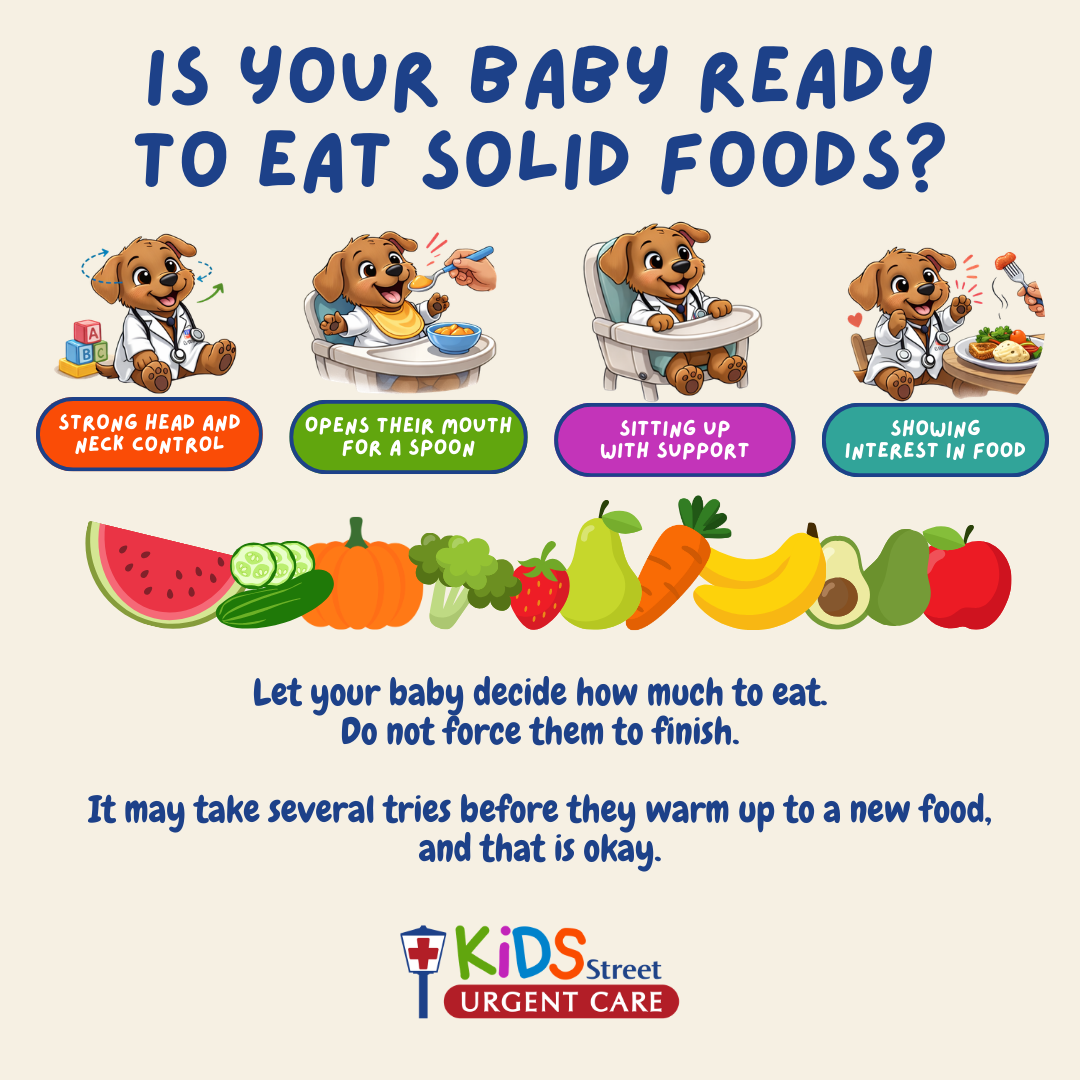
Around this time, your baby may be ready to start solids. Look for signs of readiness like:
-
Sitting up with support
-
Opening their mouth when a spoon comes near
-
Having strong head and neck control
-
Showing interest in what you are eating
Start with iron-rich foods such as infant cereals or pureed meats like beef or lamb. Introduce fruits and vegetables one at a time, and avoid raw honey or large chunks that could cause choking.
Let your baby decide how much to eat. Do not force them to finish. It may take several tries before they warm up to a new food, and that is okay.
Healthy Habits at Home
Your baby’s well-being goes beyond feeding and playtime. At this age, it is important to:
-
Choose a safe, qualified babysitter or caregiver
-
Avoid smoking or using e-cigarettes near your baby
-
Keep up with regular naps and routines
-
Reach out for support if you are feeling overly tired or sad
Keeping your baby safe and happy helps your whole household stay healthy and supported.
Safety at 6 Months
Safety becomes even more important as your baby starts to move and explore. Here are a few key reminders:
-
Use a rear-facing car seat in the back seat
-
Keep all medications, cleaning products, and small items locked away
-
Never leave your baby unattended on high surfaces or near water
-
Keep your home smoke-free
-
Use stair gates and cover electrical outlets
-
Lower the crib mattress and keep soft items out of the crib
-
Avoid using baby walkers
When you go outside, keep your baby out of direct sunlight. A hat and baby-safe sunscreen with SPF 15 or higher can help protect their skin.
Caring for Tiny Teeth
Even if your baby only has a tooth or two, now is a great time to start brushing. Clean their gums and teeth twice a day with a soft toothbrush and a tiny amount of fluoride toothpaste about the size of a grain of rice. Avoid letting your baby go to sleep with a bottle, and do not prop bottles up during feedings.
Care Moms Can Trust
At KidsStreet Urgent Care, we are proud to support families through each stage of childhood. We are open late 7 days a week to make care as convenient as possible. Whether your child has a sudden illness, needs pediatric urgent care services, or you have questions about development, we are here to help.
Register online to save your spot in line or find a KidsStreet location near you. Walk-ins are always welcome.
Learn more about our pediatric urgent care services.
See Other, Related Developmental Blogs:
What to Expect When Your Baby Is 3 Months Old
At 3 months old, your baby is becoming more alert, expressive, and interactive. This stage often feels exciting because you are starting to see more smiles, more personality, and longer stretches of awake time.
What to Expect When Your Baby Is 9 Months Old
At 9 months old, babies are more curious, mobile, and social. They are also starting to show strong preferences, personalities, and new skills. As your baby continues to grow, you may have questions about feeding, development, and safety.
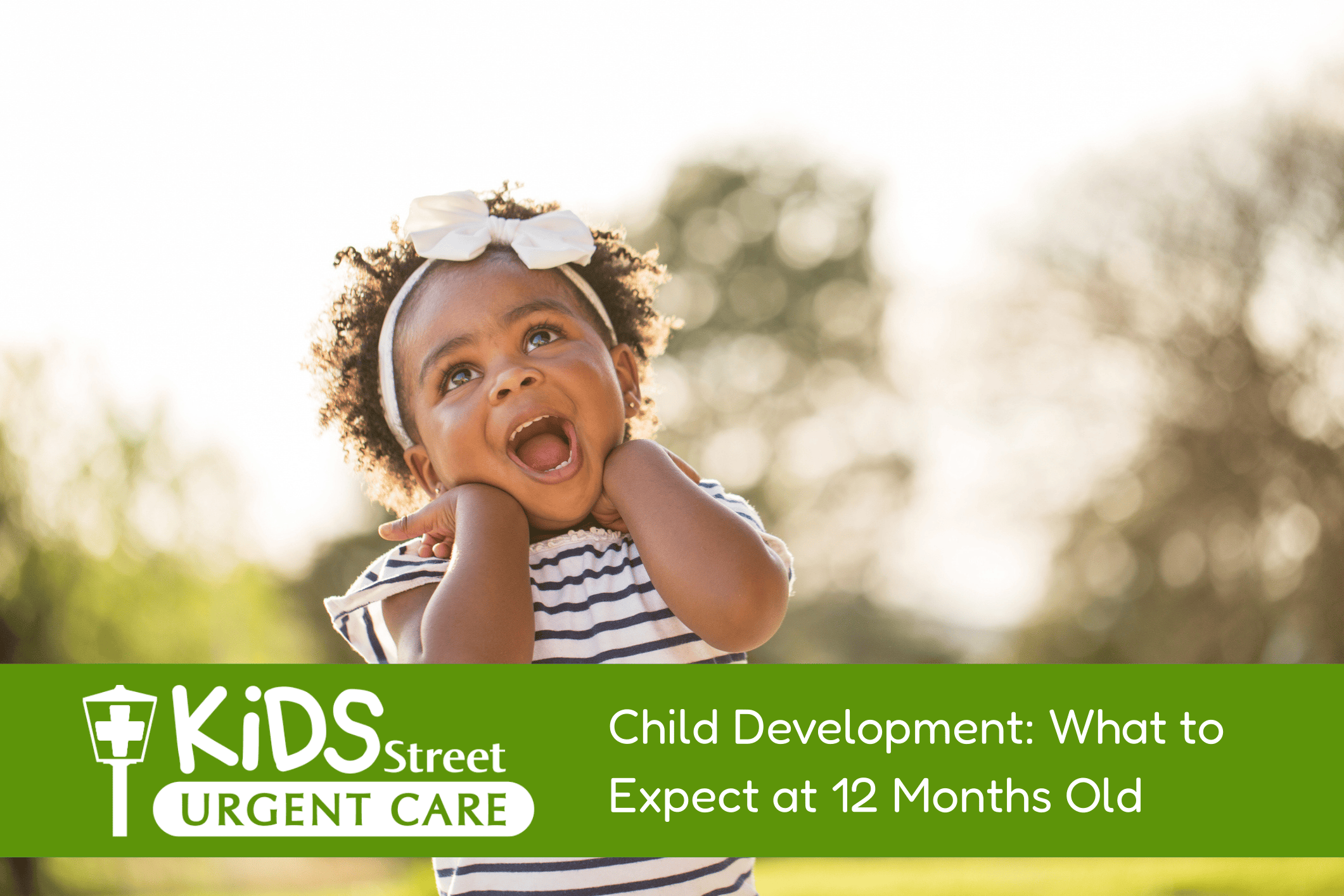
Child Development: What to Expect at 12 Months Old
Your baby is officially one year old. This milestone brings exciting changes in movement, communication, and independence. At 12 months, many children are exploring more confidently and beginning to show strong preferences and personality.