
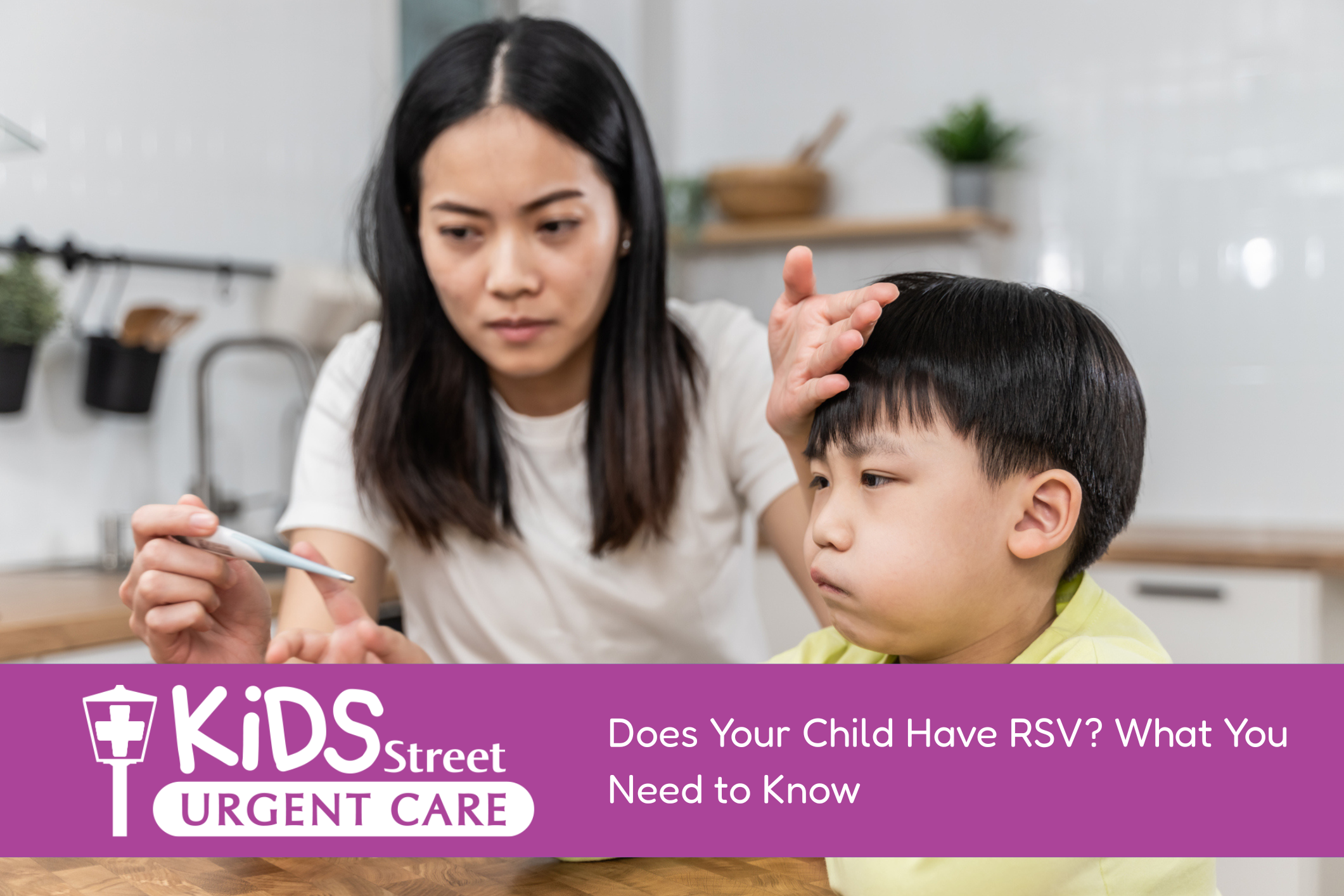
We all know our kids can and will come down with a wide (and frustrating) range of illnesses – so many, in fact, that they all seem to blur together. It can be difficult to figure out exactly what our children have – but we need to know so we can get them the right care ASAP.
One condition that’s more common than you think (and less understood by parents than a cold or strep throat) is respiratory syncytial virus (RSV): an infection that attacks how your children breathe.
RSV is mostly mild, but it can result in complications. And even in its mild forms, the infection can be a source of discomfort for your loved ones that no parent wants.
Good news: RSV can be treated – and it’s a lot closer than you think!
Here’s what you need to know about RSV, including when you should seek care and where.
Respiratory Syncytial Virus (RSV) Symptoms
RSV is an infection caused by a virus that is spread through close or direct physical contact. Specifically, it enters our bodies when we come in contact with bodily fluids that are infected, like when others sneeze or cough around us.
This condition mainly affects children. In fact, almost all children will come down with RSV at least once for the first two years of life! The Centers for Disease Control and Prevention (CDC) estimates that RSV is the number one driver of infant hospitalization in the U.S.
What can make RSV difficult to differentiate for parents is that the symptoms overlap with other frequently-seen conditions, like flu, or the common cold. These symptoms include:
- Coughing
- Sneezing
- Runny nose
- Chest and sinus congestion
- Fever
- Fussiness
Babies can also have difficulty feeding.
For most healthy children, the symptoms aren’t serious. But RSV can lead to bronchitis or pneumonia, which are more serious and include symptoms such as:
- Difficulty breathing
- Rapid breathing and shortness of breath
- Wheezing
- Rhythmic grunting while inhaling and exhaling
- Belly breathing
- Tugging between the ribs
If your child is experiencing any of these symptoms, seeking treatment is highly recommended.
When and Where to Find Pediatric Urgent Care Treatment for RSV
Fortunately, the pediatric urgent care services at KidStreet are just a short drive away.
We’ll diagnose your child’s condition and create a plan of treatment that will help alleviate discomfort and provide relief, including recommending over-the-counter medications like acetaminophen or ibuprofen.
We may also recommend things you can do at home to help your child breathe easier, such as running a cool-mist humidifier, or using nasal saline and suctioning. Also, we’ll talk about how you should make sure to use plenty of fluids to keep your child hydrated.
You should seek treatment as soon as symptoms emerge, especially if you notice any of the more severe symptoms that could indicate bronchitis or pneumonia. (Note that our urgent care clinic is for non-medical emergencies; in the event of an emergency, please call 9-1-1 or visit your closest hospital).
We’re open late, 7 days a week, with extended hours to help you find care for your little one when you need it. No appointments are necessary – you can walk in whenever you need. To shorten your wait time once you’re here, you can register online and be seen faster.
Respiratory syncytial virus is one of several routine conditions that your children will inevitably encounter – but when it rears its ugly head, you and your family won’t be alone.
Find a KidStreet location near you, and enjoy the personable, family-friendly care moms can trust!