

Your child wakes up and tells you they don’t feel well. You put your hand on their forehead and it feels warm.
One temperature check later and your kiddo officially has a fever. But, they don’t seem to have any other symptoms. No cough, no rash, no runny nose…just a fever. What gives?
Not having an obvious answer can feel unsettling. The good news is that a child having a fever but no other symptoms is pretty common, a sign that their immune system is working as it should be.
We’ll teach you what it means when you detect fever but no other symptoms in kids, and what action to take, including when you should visit urgent care for kids.
Just a Fever: What Does It Mean?
Fevers happen when the body’s immune system (our natural defense mechanism) leaps into action, usually in response to an infection. The goal is to raise our body’s temperature to a point where viruses and bacteria can’t thrive.
That means a fever can be a forerunner to other symptoms that will emerge later. It’s not uncommon to see a fever on day one, and the symptoms of a stomach bug or cold to come on day two or three.
There are a few culprits behind a solo fever in kids:
- Roseola (HHV-6): This is a common and contagious viral infection that typically affects kids from 6 months to 2 years. You’ll first notice a sudden fever for three to five days, followed by a spotted rash on the torso that typically goes away in 1 to 3 days.
- Common viral infections: These include things like influenza, enteroviruses, and adenoviruses. In many cases, the fever resolves as the immune system clears the infection, and additional symptoms may never develop.
- Urinary tract infections (UTIs): A UTI can cause a fever in kids without other obvious urinary symptoms. It never hurts to check with a provider to see if this may be the issue. If a UTI is present, your child could be prescribed a course of oral antibiotics.
If your child is an infant going through teething, you may have heard that teething can cause fever. In reality, if your baby has a true fever (temperature above 100 degrees F) it’s unlikely that teething is the cause. Something else is likely responsible.
How Long Should You Monitor a Fever With No Other Symptoms?
Most fevers caused by viral infection improve within three to five days. If the fever persists beyond that timeframe, evaluation is recommended.
When You Should Seek Urgent Care for Kids
Most of the time, you can manage your child’s fever at home if they otherwise seem healthy. The best course of treatment is to:
- Offer plenty of fluids
- Keep the room cool and comfortable
- Dress them lightly
- Give acetaminophen or ibuprofen (for children over 6 months old) per the dosing instructions on the package
- Keep track of fever duration. A fever should resolve itself within 3 to 5 days.
Ultimately, you know your kid better than anyone else, so trust your gut. If something seems “off” about your child, it may be time to seek care.
So, when should you take your child in for treatment? Some red flags include:
- Fever in a baby 3 months old or younger – seek emergency care immediately.
- Fever above 104 degrees F
- A fever that’s lasted longer than 5 days
- Wheezing, difficulty breathing, or rapid breath
- Severe headache
- Rash that doesn’t go away or fade when touched
- Dehydration (no wet diapers, no tears, dry mouth)
- Extreme lethargy
- Seizures
When in doubt, it’s always okay to call your child’s provider for guidance. You can also bring your child into KidsStreet Urgent Care and get direct care.
KidsStreet Urgent Care is Here for You
At KidsStreet Urgent Care, we provide specialized urgent care for kids in a setting designed just for children – open late, 7 days a week.
You can walk in any time, or register online to save your spot in line and reduce your in-clinic wait time.
Fever can be scary, especially when you can’t pinpoint a clear cause. But with the right information (and a friendly provider in your neighborhood!) you and your kid can get back to feeling better as soon as possible.
Other Fever in Kids Blogs
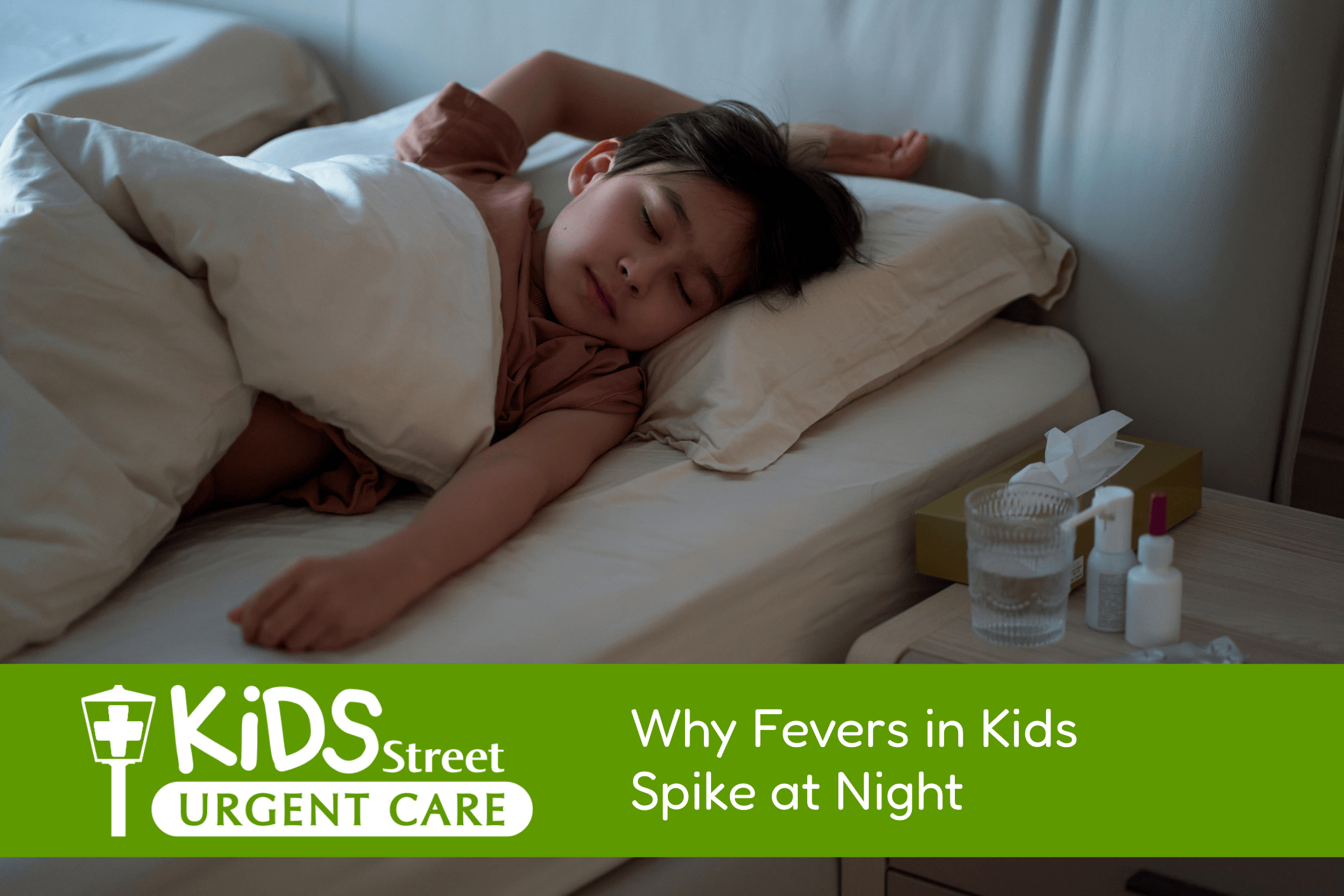
Why Fevers in Kids Spike at Night
Fevers often seem worse after the sun goes down, leaving parents worried in the middle of the night. Learn why body temperature rises in the evening and when nighttime fever needs medical attention.
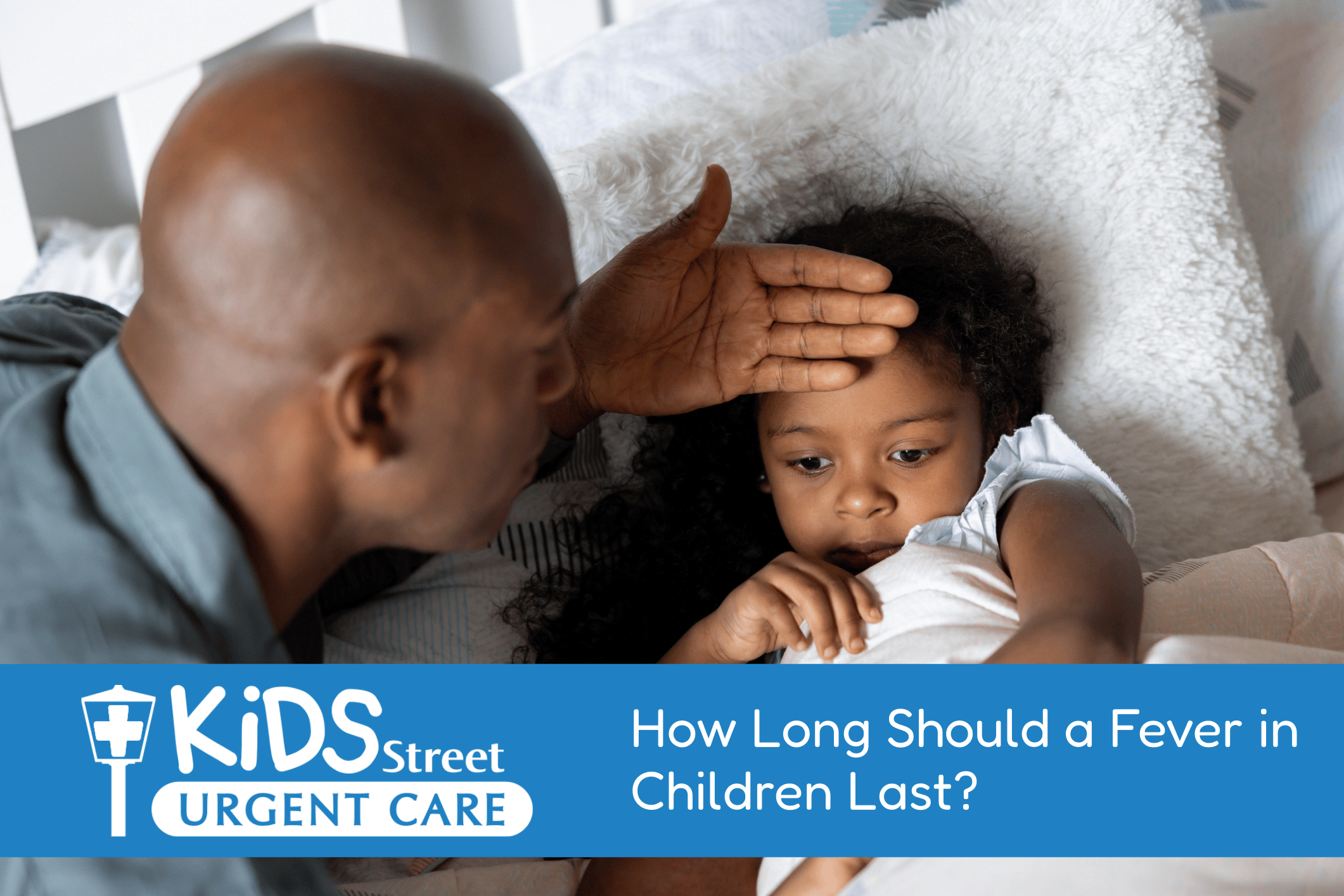
How Long Should a Fever in Children Last?
Watching the thermometer for days can make any parent anxious. Learn what is considered a normal fever duration, when three days is still typical, and when a longer fever may need medical evaluation.
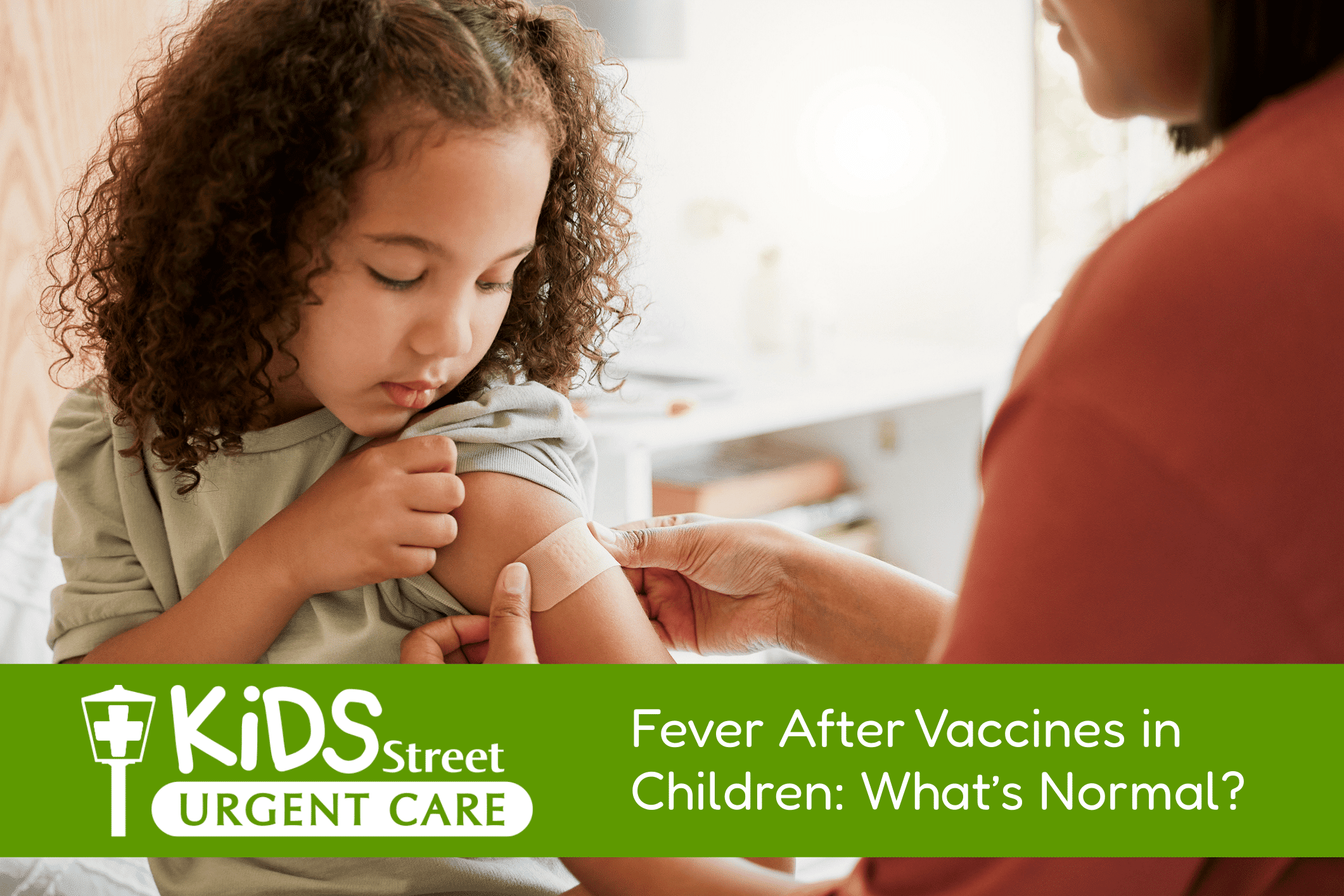
Fever After Vaccines in Children: What’s Normal?
It can be unsettling when your child develops a fever after shots. This post explains why post vaccine fever happens, how long it typically lasts, and when it may be time to check in with a provider.

Alternating Acetaminophen and Ibuprofen for Fever
If your child’s fever will not budge, you may wonder whether alternating medications is safe. This guide covers when fever medicine is appropriate, safe dosing principles, and when medication alone is not enough.