
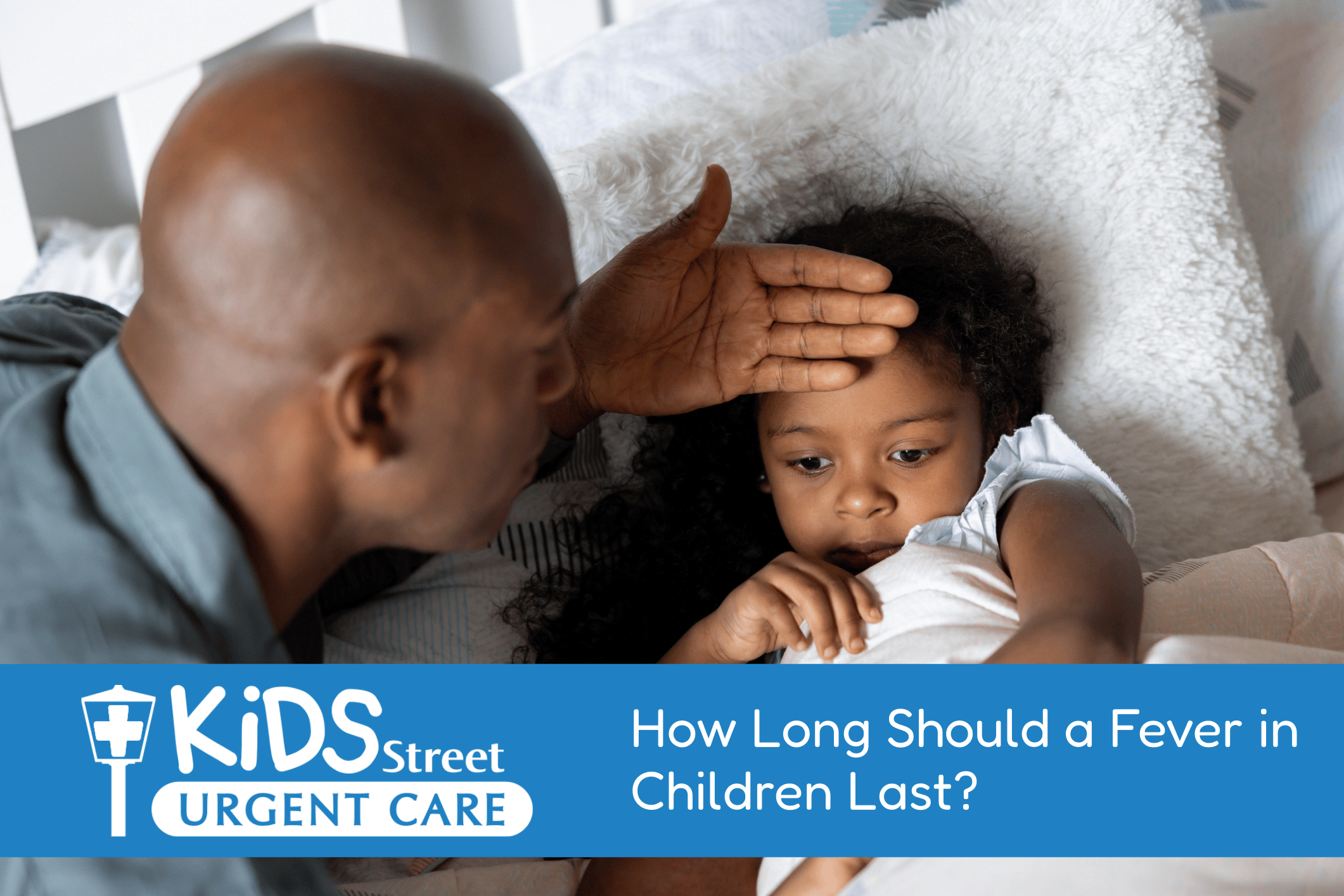
But as the days go by and the temperature doesn’t go down, you start to worry, staring at the thermometer and asking, “How much longer is this fever going to last?”
The simple answer is that it depends on your child’s age, the cause of the infection, and how their immune system responds.
If you’re unsure whether your child’s fever timeline is concerning, read our full guide on how long should a fever last in children.
What Is a Normal Fever Duration for Kids?
A fever is your body’s response to something causing trouble, usually an infection of some kind. Your immune system is attempting to create a pretty inhospitable environment for bacteria, viruses, and other pathogens that don’t do well with higher body temperatures.
As such, most fevers in children are caused by viral infections. These typically follow the same general arc: a fever that lasts from 2 to 5 days, peaking in the early part and tapering off as the immune system starts to turn the corner.
The three most common viral infections that can trigger a fever in your child include:
- The common cold and other upper respiratory viruses: The fever will last up to 3 days and will come with congestion, a sore throat, and a cough.
- Influenza (the flu): Your child will probably have a fever lasting 3 days or more, with body aches, fatigue, and chills.
- Roseola: This virus usually affects toddlers and can be scary at first, because it causes a higher fever of 103 degrees F or above that can persist up to 5 days. You’ll also notice a rash, but usually not any other symptoms, and it normally resolves itself on its own.
Your child can also have a fever caused by bacterial infections like strep throat and ear infections. These can worsen without treatment, and because they’re bacterial, they usually require a course of antibiotics prescribed by your provider.
In general, viral fevers can resolve on their own with supportive care. However, bacterial infections are less likely to resolve without treatment and often require antibiotics prescribed by a provider. Knowing which is which can be tough to tell on your own without the help of a medical provider.
Common Timelines and What to Watch For
A fever lasting 3 days is normal and not usually a cause for alarm in and of itself. But, this point is usually when moms and dads start to worry (which is understandable!).
Once the fever hits day three, make sure you’re monitoring and paying close attention. Is your child’s fever responding to medication? Is your child still taking in liquids? Do they seem like themselves? If the answers are “Yes”, then continued care at home is fine.
But if the answers are “No,” or if the fever persists beyond day three or your child’s symptoms worsen, then you should consider a trip to urgent care for kids, because the cause needs to be identified and treated if necessary.
What if the fever goes away, only to return later? A returning fever can mean the body is fighting off the next wave of the same infection, or is tackling a new or secondary infection. If a fever breaks, then comes back after 24 hours or more, it’s time to seek a provider.
Fever by Age: What’s Normal?
Age matters, too, when it comes to fevers.
- Any fever for children 3 months or younger is an emergency. Go to the ER immediately.
- For infants between 3 and 6 months, a fever of 100.4 degrees Fahrenheit or higher should prompt a call to your provider for guidance.
- For children 6 months to 2 years, home monitoring is fine for mild fevers. Just keep an eye out for any fever that goes over 102 degrees F or persists for more than 2 days.
- For children over 2 years, fevers aren’t as critical an issue because their immune systems are more developed and reliable. Follow the normal guidelines and trust your instincts.
If your child encounters any more serious symptoms, you should take your child into the clinic. These symptoms include:
- Fever above 104 degrees F
- Fever lasting longer than 5 days
- Dehydration (no wet diapers or tears, dry mouth)
- Difficulty with breathing and/or wheezing and rapid breathing
- Severe headaches and sensitivity to light
- Rashes that don’t fade when you press on them
- Significant lethargy and difficulty waking
Seeking Help from KidsStreet Urgent Care
Good news: you have a helping hand ready and waiting!
KidsStreet is an urgent care clinic for kids that’s open late 7 days a week for sick kiddos and their families.
Walk-ins are always welcome, and you can register online to save your spot in line and reduce your in-clinic wait time. You’ll be seen by friendly, caring providers and get the reassurance and clarity every worried parent needs.
Fever is normal and a sign of an immune system doing its job. But it can also be disconcerting. Knowing the timeline, understanding what’s normal for your child’s age, and recognizing red flags will help you take action if necessary and reassure yourself and your little one in the process.
Other Fever in Kids Blogs
Fever In Kids With No Other Symptoms
At 3 months old, your baby is becoming more alert, expressive, and interactive. This stage often feels exciting because you are starting to see more smiles, more personality, and longer stretches of awake time.
Why Fevers in Kids Spike at Night
Fevers often seem worse after the sun goes down, leaving parents worried in the middle of the night. Learn why body temperature rises in the evening and when nighttime fever needs medical attention.
Fever After Vaccines in Children: What’s Normal?
It can be unsettling when your child develops a fever after shots. This post explains why post vaccine fever happens, how long it typically lasts, and when it may be time to check in with a provider.

Alternating Acetaminophen and Ibuprofen for Fever
If your child’s fever will not budge, you may wonder whether alternating medications is safe. This guide covers when fever medicine is appropriate, safe dosing principles, and when medication alone is not enough.