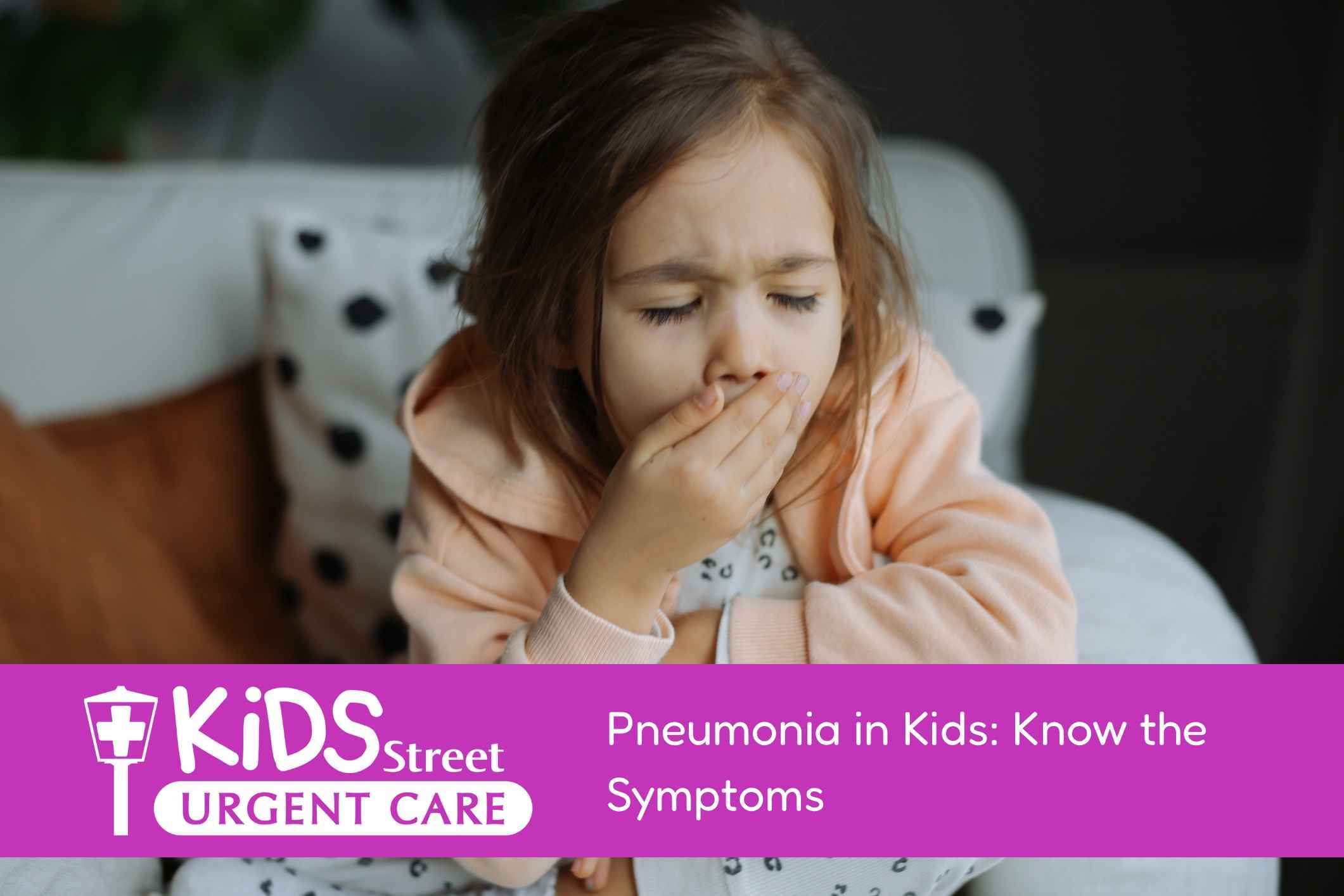
The culprit could be pneumonia, an infection in the lungs that can be serious.
Pneumonia can be caused by viruses, bacteria, or fungi, and it can’t reliably be diagnosed at home based on symptoms alone. A medical evaluation is needed. But don’t worry: you have help!
Here’s what you need to know about pneumonia in kids and what to do if you’re concerned.
Common Pneumonia Symptoms in Kids
Pneumonia presents with a set of possible symptoms, which include:
- Cough
- Fever
- Chills
- Fatigue
- Decreased appetite
- Chest discomfort
- Faster breathing than normal
- Difficulty breathing
- Wheezing in some cases
- Vomiting or stomach discomfort in some children
Note that these symptoms can vary based on your child’s age and the cause of the infection.
How Is Pneumonia Different From a Cold?
A lot of concerned parents confuse pneumonia with a cold, especially when there’s child cough and fever, but they’re different.
A cold usually affects the upper respiratory tract (the nose, sinuses, mouth, throat, and voice box). Pneumonia, by contrast, involves the lungs themselves.
Of course, some symptoms overlap. That’s what makes spotting pneumonia at home such a challenge.
Symptoms that get worse instead of better, a new fever after your child seemed to be improving, or changes in breathing (such as faster, more shallow, or more labored breathing) may call for medical evaluation.
Pneumonia Symptoms in Babies and Toddlers
In babies and toddlers, pneumonia may show up in other ways, such as:
- Feeding difficulties
- Unusual fussiness
- Rapid breathing
- Reduced activity
- Changes in alertness
- Breathing effort
- Fewer wet diapers
Pneumonia can be especially serious for infants. If your baby has any of these symptoms, have them checked by a medical provider promptly. If their breathing looks very fast or labored, go to the nearest emergency room or call 9-1-1.
When to Seek Medical Care
If you think your child may have pneumonia, have them evaluated by a medical provider promptly.
Symptoms that may need a closer look include:
- Persistent cough with fever
- Fever that returns after improving
- Symptoms that are worsening
- Chest discomfort with coughing
- Decreased appetite or fluid intake
- Unusual fatigue
If something feels off, that’s a good reason to have a provider take a look.
When to Go to the ER
Urgent care is for non-emergency conditions. Some symptoms call for emergency care. Go to the nearest emergency room or call 9-1-1 if your child has:
- Trouble breathing
- Very fast or labored breathing
- Skin pulling in around the ribs or neck
- Blue or gray lips or face
- Severe dehydration
- Confusion
- Extreme sleepiness or difficulty waking
- Symptoms that feel life-threatening
Significant breathing symptoms in particular shouldn’t wait for an urgent care visit. If you’re ever unsure whether something is an emergency, it’s always okay to choose the emergency room.
How Is Pneumonia Diagnosed?
Pneumonia can look like quite a few different illnesses, so it’s important to have your child evaluated.
Your medical provider will generally take a look at:
- Symptoms and medical history
- Breathing rate
- Lung sounds
- Oxygen levels
They’ll also determine whether additional testing or imaging is appropriate. In some cases, your child may need further evaluation at a higher level of care. Your provider will walk you through the process and give you guidance on what to do next.
Does Pneumonia Always Need Antibiotics?
Many parents think antibiotics are the go-to treatment for pneumonia, but antibiotics only work for pneumonia caused by bacteria. They don’t treat viral pneumonia or infections caused by fungi.
Your medical provider can explain treatment options and offer guidance for you and your family moving forward.
When KidsStreet May Help
The providers at our pediatric urgent care clinics can evaluate certain non-emergency respiratory symptoms and recommend next steps. In some cases, a provider may determine that additional testing, imaging, or hospital care is needed.
Visit KidsStreet for Non-Emergency Respiratory Symptoms
Pneumonia can be a challenging condition that rightfully concerns parents. That’s why getting help is important (and can be reassuring, too!). Just remember that for emergency symptoms like difficulty breathing, go to the nearest emergency room or call 9-1-1.
KidsStreet is open late 7 days a week!
Register online to save your spot in line! Online registration is not an appointment, but it can help reduce in-clinic wait times by adding you to the queue before you arrive.