
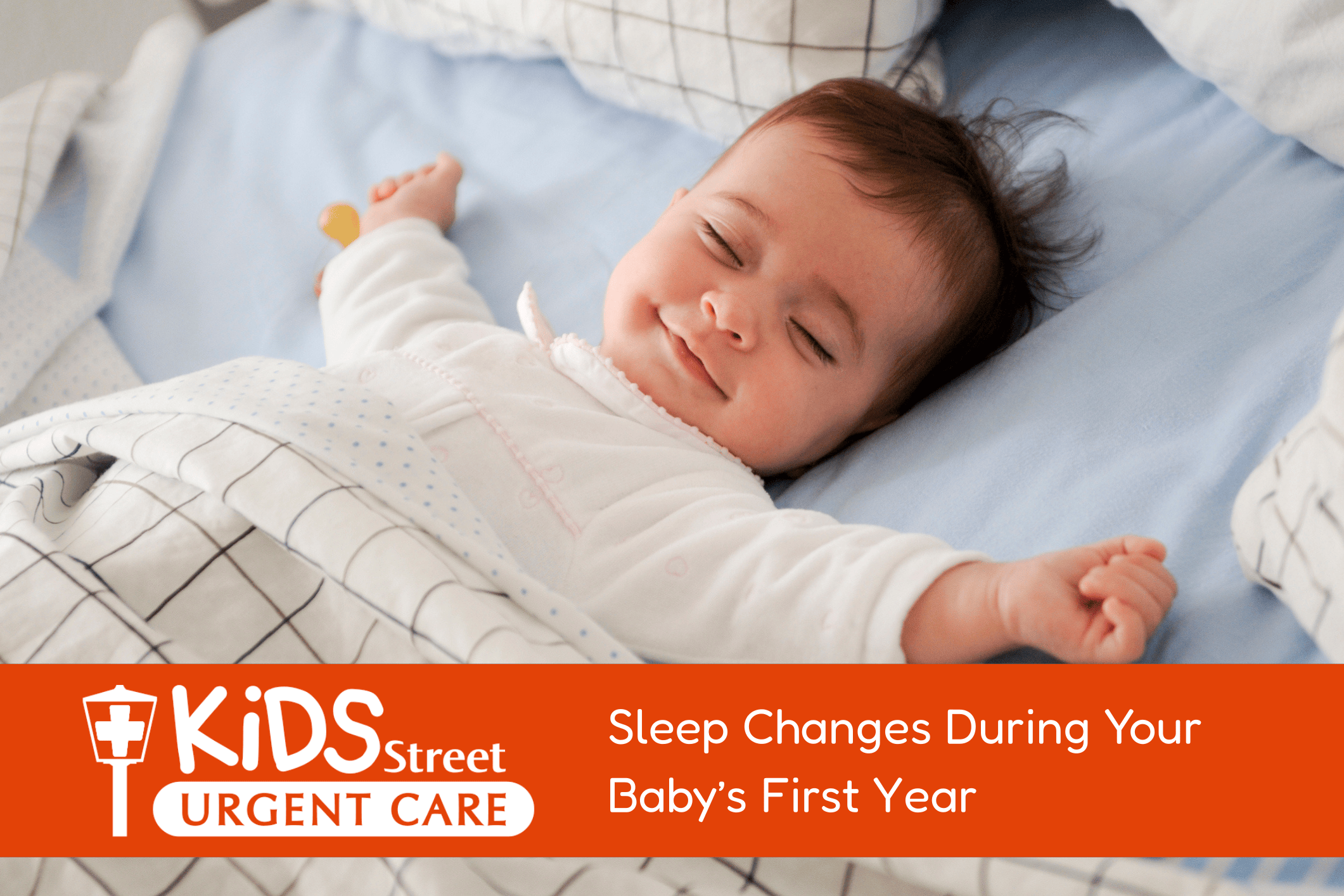
Sleep Changes During Your Baby’s First Year
Sleep can feel unpredictable during your baby’s first year. Just when you think you have a routine, everything changes. Growth, development, teething, and new milestones all affect sleep patterns.
At KidsStreet Urgent Care, we help parents understand what is normal and when a sleep change may signal something more.
Sleep at 3 Months
Around 3 months old, many babies begin sleeping slightly longer stretches at night. However, frequent waking is still normal.
Common sleep patterns at this stage include:
-
Short naps during the day
-
Waking every few hours to feed
-
Needing help falling asleep
Simple bedtime routines and placing your baby down drowsy but awake can support healthy sleep habits. Learn more about what to expect at 3 months old beyond sleep changes.
For more about development at this age, visit our guide on baby development by age during the first year.
Sleep at 6 Months
At 6 months, some babies sleep longer at night, but others may experience sleep disruptions as mobility increases.
Sleep may change due to:
-
Rolling over
-
Teething
-
Growth spurts
-
Beginning solid foods
This is also when many parents notice early sleep regression.
If your 6 month old suddenly wakes more often, it is often related to developmental changes. Learn more about what to expect at 6 months old and how development may impact sleep.
Sleep at 9 Months
Around 9 months, separation anxiety often affects sleep. Your baby may:
-
Cry when you leave the room
-
Wake more frequently
-
Resist naps
This stage is common and temporary. Consistent routines and calm reassurance help.
If your baby seems uncomfortable, pulling at ears, or running a fever, it may be helpful to have a provider evaluate them. Learn more about what to expect at 9 months old in addition to sleep changes.
Sleep at 12 Months
At 12 months, toddlers often transition to one nap per day. Increased independence and new mobility can also disrupt sleep.
You may notice:
-
Bedtime resistance
-
Early morning waking
-
Night waking during developmental leaps
Consistency remains key at this stage. Learn more about what to expect at 12 months old beyond sleep changes.
When Sleep Changes May Signal Illness
Most sleep disruptions are related to development. However, consider seeking care if your baby:
-
Has a fever
-
Is unusually fussy or inconsolable
-
Pulls at their ears
-
Has a cough or congestion
-
Shows signs of pain
Sleep changes combined with other symptoms may signal an ear infection or another illness.
Me: If you are unsure, it is always best to have your child evaluated.
We Are Here for You
At KidsStreet Urgent Care, we provide pediatric urgent care services designed specifically for kids. If your baby’s sleep changes seem connected to illness or discomfort, our providers are here to help.
We are open late 7 days a week to support busy families.
You can register online to save your spot in line or walk in anytime. Online registration adds you to the queue and provides an estimated arrival time. It is not an appointment, but it does reduce your in clinic wait time.
Find a KidsStreet location near you and learn more about our urgent care services for children.