
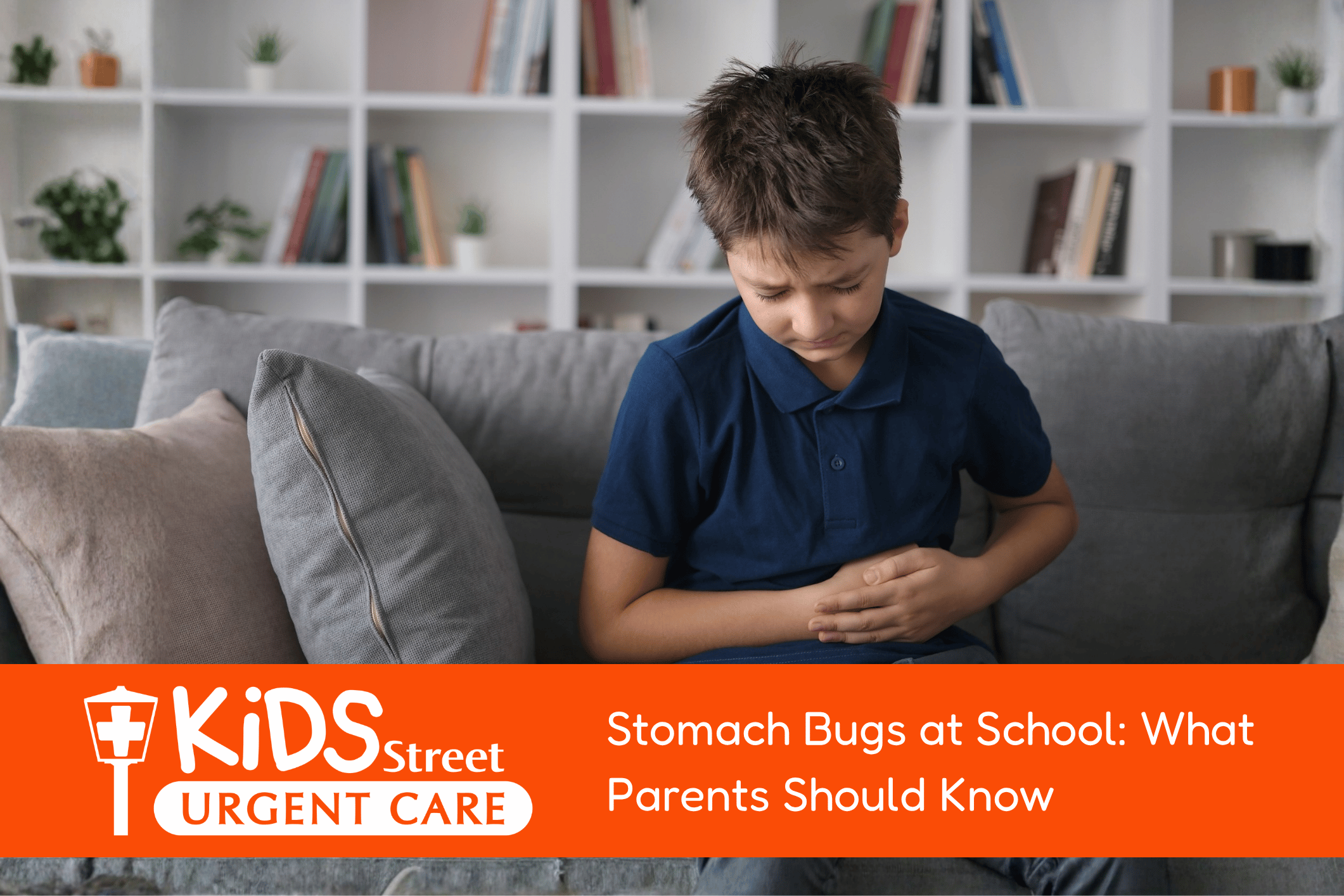
You know how it goes: you hear from your child that someone in their class threw up today and had to go home for an upset stomach. The next day, your child wakes up with a rumbling tummy, and you know a stomach bug has reared its ugly head.
Stomach bugs have a way of spreading fast once school starts, and they can throw off school schedules, work plans, and childcare in a hurry. If your family is dealing with one now, here’s what you should know.
Common Stomach Bug Symptoms
Stomach bugs in kids often show up as:
- Vomiting
- Diarrhea
- Nausea
- Stomach cramps
- Fever
- Fatigue
- Decreased appetite
Symptoms usually come on fairly quickly and can last anywhere from a day or two to about a week, depending on the illness.
Why Dehydration Is the Main Concern
When a child is vomiting or dealing with diarrhea, it can become hard for their body to keep fluids in, and that’s where dehydration becomes the main concern. Dehydration can slow down your child’s recovery and, in more serious cases, can also be dangerous.
Watch for signs like:
- A dry mouth
- Less frequent urination
- Dizziness
- No tears when crying
- Unusual sleepiness
- Trouble keeping any fluids down
Catching dehydration early makes it much easier to manage at home or with a quick visit, rather than letting it progress further.
When to Visit KidsStreet
It’s a good idea to bring your child in if you notice:
- Vomiting or diarrhea that isn’t improving
- Trouble keeping fluids down
- Signs of mild dehydration
- Fever along with stomach symptoms
- Stomach pain that concerns you
- Symptoms that are keeping your child from normal activity
- Any other concern, even without a specific symptom on this list
Our team offers dependable pediatric urgent care, and you can learn more about what we treat on our urgent care services page.
When to Go to the ER
Some symptoms call for emergency care instead of urgent care. Go to the nearest emergency room or call 9-1-1 if your child has:
- Severe dehydration
- Extreme sleepiness or confusion
- Severe abdominal pain
- Blood in vomit or stool
- Trouble breathing
- Any symptoms that feel life-threatening
Helping Your Child Recover
Rest and small, frequent sips of fluids are usually the best way to help a stomach bug run its course. An electrolyte solution can help replace what’s lost through vomiting or diarrhea.
Following your provider’s guidance on diet, hydration, and any medication can help your child feel more comfortable while they recover.
Be sure to wait until symptoms have fully improved and any school policies are met before sending your child back to class. This helps protect your child and their classmates from spreading the bug.
What to Expect at KidsStreet
When you bring your child in, our provider will review their symptoms, check for signs of dehydration, and help determine the best next steps for care, whether that means guidance for recovering at home or additional treatment.
Visit KidsStreet for Stomach Bug Concerns
Stomach bugs are no fun for anyone in the house, but you don’t have to manage them alone. Our team is here to help evaluate your child’s symptoms and let you know what to do next.
KidsStreet is open late 7 days a week.
Register online to save your spot in line! Online registration is not an appointment, but it can help reduce in-clinic wait times by adding you to the queue before you arrive.
Need more tips on navigating illness this school year? We have you covered with Back-to-School Illnesses: A Parent’s Guide.