It’s late, your child feels warm and miserable, and you’re standing at the medicine cabinet holding two bottles. Should you reach for Tylenol or Motrin? And how much should you give? If you’ve ever felt unsure in that moment, you’re not alone!
We’ll go into the differences between Tylenol and Motrin in more detail below, but here’s a quick summary:
- Tylenol is a brand name for acetaminophen
- Motrin is a brand name for ibuprofen
- Both can help reduce fever and relieve pain
- Ibuprofen also helps reduce inflammation
- The two medicines have different age restrictions and dosing schedules
Because they work differently, it helps to understand the right Tylenol and Motrin dosage for kids before giving either one.
Here’s more on this important topic.
Why Pediatric Dosing Is Based on Weight
The appropriate dose of children’s medicine generally depends on your child’s weight rather than age alone. Two children the same age can weigh very different amounts, so a dose based only on age could be too much for one child and too little for another.
Giving too much medicine can be harmful. Too much acetaminophen can damage the liver, and too much ibuprofen can upset the stomach or affect the kidneys. On the other hand, giving too little may not ease your child’s discomfort.
Concentration matters, too. Liquid medicines come in different strengths, so the same number of milliliters can contain different amounts of medicine depending on the product. Always check the concentration on the label, especially with liquid products. If you’re not sure of your child’s current weight, a provider can help.
Children’s Tylenol (Acetaminophen) Dosing
Acetaminophen is used to help reduce fever and relieve mild to moderate pain, such as a sore throat, earache, headache, or soreness after vaccines. It may be appropriate when your kiddo is uncomfortable from a fever or minor aches.
As we talked about earlier, children’s Tylenol dosage depends on your child’s weight. Acetaminophen may be given at the interval listed on the product label or as directed by a provider. It’s really important not to give more than the maximum number of doses allowed in 24 hours, since going over the daily limit can cause serious harm even when each dose seems small.
An important note: Check with a provider before giving acetaminophen to a child younger than 2. Babies and toddlers need especially careful dosing, and a provider can help confirm an appropriate amount.
Children’s Motrin (Ibuprofen) Dosing
Ibuprofen is used to help reduce fever, relieve pain, and reduce inflammation. It may help with discomfort from minor injuries, sore throats, or ear pain.
Like acetaminophen, children’s Motrin dosage is based on weight. Ibuprofen is usually given less often than acetaminophen, so follow the dosing interval on the label or your provider’s instructions, and don’t exceed the maximum number of doses in 24 hours. Infant ibuprofen drops are more concentrated than children’s liquid ibuprofen, so the two can’t be swapped milliliter for milliliter.
An important note: Ibuprofen should not be given to babies younger than 6 months unless a provider specifically directs you to. It may also not be appropriate for a child who is dehydrated, such as a child who has been vomiting or not drinking well, because ibuprofen can affect the kidneys when the body is low on fluids.
Also, little ones with certain medical conditions, such as kidney problems, stomach ulcers, or bleeding disorders, may need a different option. If you’re unsure, ask a provider!

How to Measure Children’s Liquid Medicine
Even when you know the dose, measuring liquid medicine can be tricky, especially with a fussy kid. These tips can help:
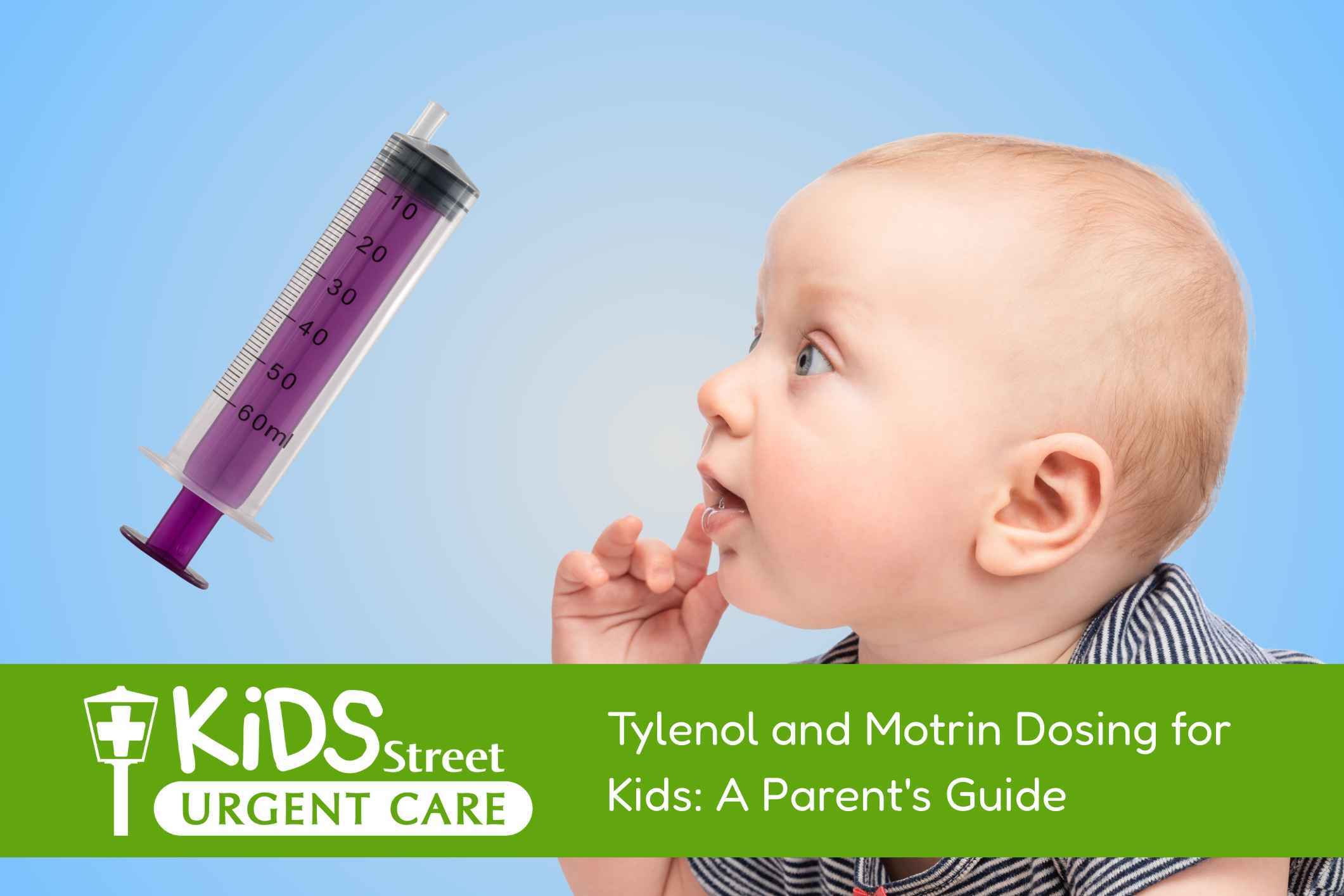
- Use the oral syringe or dosing device that comes with the medication
- Measure doses in milliliters (mL)
- Never use a kitchen spoon
- Check the product concentration before each dose
- Read the medication label carefully
- Keep track of medication times and amounts
Writing down each dose in a notebook or on your phone can be especially helpful when more than one caregiver is giving medicine.
Can You Alternate Tylenol and Motrin?
You may have heard that alternating acetaminophen and ibuprofen can help with a stubborn fever. While some families do this, alternating medicines can increase the risk of dosing errors if schedules aren’t carefully managed.
We know being a parent is super busy. It’s easy to lose track of which medicine was given and when, especially in the middle of the night. Talk with a provider before alternating medications so you can follow a plan that fits your child.
Common Dosing Mistakes Parents Should Avoid
Medication mistakes can happen to any caring parent. Some of the most common include:
- Giving the wrong amount
- Using the wrong medication concentration
- Giving doses too close together
- Exceeding the maximum daily amount
- Using more than one medicine that contains the same active ingredient
- Using household spoons for measuring
- Giving ibuprofen to babies younger than 6 months without provider direction
- Giving medication without checking age restrictions
Many cold and flu products also contain acetaminophen, so check every label before combining medicines.
If you think your child received too much medicine or the wrong medicine, call Poison Control at 1-800-222-1222, even if your child seems fine. The line is free, confidential, and open 24 hours a day.
When Should a Child With a Fever Be Seen?
Fever medicine can help manage discomfort, but it doesn’t treat the underlying cause of an illness. You should consider having your kiddo seen for:
- Fever in a baby younger than 3 months
- Fever that is persistent or worsening
- Trouble drinking fluids
- Signs of dehydration
- Unusual sleepiness
- Other concerning symptoms
Babies younger than 3 months with a temperature of 100.4°F or higher need immediate medical evaluation. For older children, you know your child best, and your concern is a good reason to have a provider take a look.
When to Seek Emergency Care
Go to the nearest emergency room or call 9-1-1 if your child has:
- Trouble breathing
- Seizures
- Difficulty waking
- Blue or gray lips or face
- Severe dehydration
- Other symptoms that feel life-threatening
If you’re ever unsure whether something is an emergency, it’s always okay to choose the emergency room.
Visit KidsStreet for Fever and Illness Concerns
When your child has a fever or illness that isn’t an emergency, an urgent care for kids can help. Through our pediatric urgent care services, a medical provider can evaluate your child’s symptoms, recommend testing when appropriate, which may help narrow down the cause, and help you understand what to do next.
We’re also happy to answer questions about medicine and dosing during your visit.
KidsStreet is open late 7 days a week! Register online to save your spot in line! Online registration is not an appointment, but it can help reduce in-clinic wait times by adding you to the queue before you arrive.