
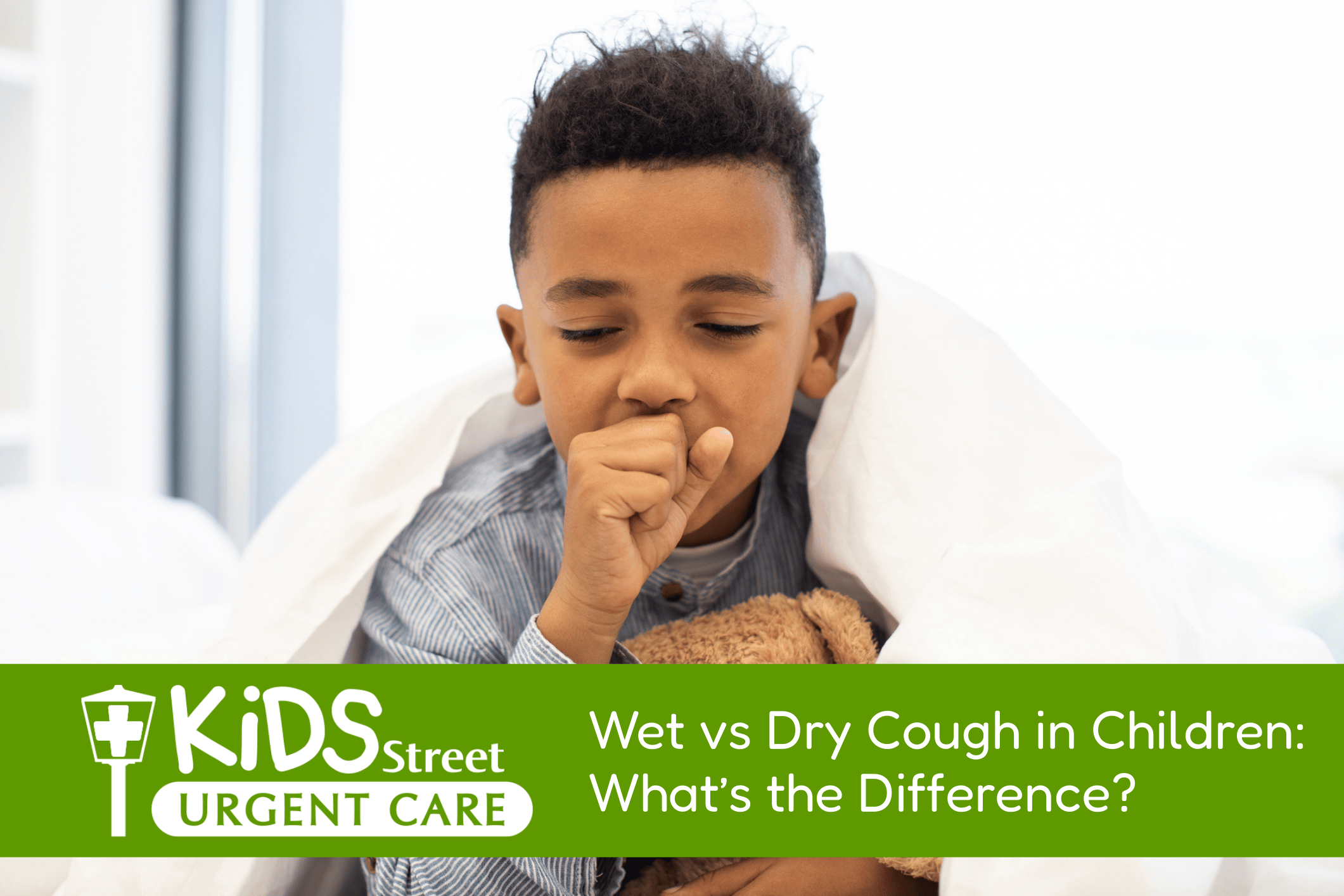
When your child starts coughing, one of the first things you will notice is how the cough sounds.
Is it a rough, scratchy cough that seems to come from the throat? Or does it make a loose, rattling sound, like a loose or rattling sound in the chest?
This distinction may seem minor, but it really matters a lot. Understanding the difference between a wet cough in kids and a dry cough in kids can help you figure out what is going on and whether your child needs to be seen by a provider.
Learn more about different cough symptoms in our guide on when to worry about a cough in babies and children.
Dry Cough vs. Wet Cough: What Each One Means
A dry cough has no mucus involved. It tends to sound harsh and scratchy, and children often describe it as a tickle in the throat they cannot shake. Dry coughs in kids are usually caused by viral upper respiratory infections, particularly in the early days before mucus production increases. Allergies, asthma, post-nasal drip, and environmental irritants like dry air or smoke can also trigger a dry cough that lingers even when your kiddo feels otherwise fine.
A wet cough, sometimes called a productive cough, sounds loose and congested. You can often hear mucus moving in the chest or throat, and younger children may gag on phlegm since they have not yet learned to clear it on their own. Wet cough in kids is very common during and after a respiratory infection, like bronchitis, as the body works to clear the airways. In most cases, they are a normal part of recovery.
That said, a wet cough that produces thick yellow or green mucus or that lingers beyond three weeks can sometimes point to a bacterial infection that may require evaluation by an urgent care provider.
How Long Should a Cough Last?
Both types of cough following a viral illness typically clear up within seven to fourteen days, though some children take up to three or four weeks to fully recover. It is also very common for a cough to start dry in the first few days of an illness, shift to a wetter sound as mucus builds up, and then gradually fade as the body heals. That pattern is completely normal and not a reason to worry on its own!
A cough that is still going strong after two weeks, though, especially one that seems to be getting worse rather than better, is worth a closer look. The same is true for a cough that consistently disrupts sleep, comes with wheezing or a tight chest, or shows up alongside other symptoms like fever or significant fatigue. These are signals that something else may be going on and that a provider should take out the trusty stethoscope and take a listen.
When to Visit Urgent Care for Your Child’s Cough
You do not need to wait days for a scheduled appointment when your child’s cough has you concerned.
KidsStreet’s urgent care services for children are here and ready to help you get answers quickly. Our providers can listen to your child’s lungs, assess the type and duration of the cough, and determine whether any treatment is needed.
Urgent care for children is a great fit when your child’s cough has you worried, but they are not in immediate distress. (Note: if you notice severe symptoms like difficulty breathing, please cal 911 or visit the nearest emergency room.)
Whether the cough turns out to be something simple or something that needs a little more attention, you’ll leave with a clear picture of what is going on and a plan to help your child feel better.
So, remember: KidsStreet is open late 7 days a week! Register online to save your spot in line and reduce in-clinic wait times.
More Resources for Parents About Cough in Kids
Cough With No Fever in Kids: What Does It Mean?
Sometimes children develop a cough even when they don’t have a fever or other obvious symptoms. Understanding the common causes of cough without fever can help parents decide when to monitor at home and when to seek care.
Barking Cough in Kids (Croup)
A barking cough can sound alarming, especially when it starts suddenly at night. This distinctive cough is often caused by croup, a common childhood illness that affects the upper airway.

Why Your Child’s Cough Gets Worse at Night
Many parents notice that their child’s cough becomes worse once bedtime arrives. Nighttime coughing is common in children and is often linked to post nasal drip, airway sensitivity, or asthma.

When a Child’s Cough Lasts More Than 2 Weeks
Most childhood coughs improve within a week or two, but sometimes symptoms linger longer than expected. A cough that lasts several weeks may have different causes that require medical evaluation.

Cough and Vomiting in Kids
Some children cough so forcefully that it triggers vomiting, which can be frightening for parents to witness. Understanding why coughing can cause vomiting can help parents know when symptoms are normal and when they may need medical attention.