

What to Expect at 3 Months
At 3 months old, your baby is becoming more alert, expressive, and interactive. This stage often feels exciting because you are starting to see more smiles, more personality, and longer stretches of awake time.
At KidsStreet Urgent Care, we love supporting moms through every stage of your baby’s early development. Here is what you can expect around the 3-month mark and how to support your growing baby.
Growth and Development at 3 Months
Around this age, many babies begin to:
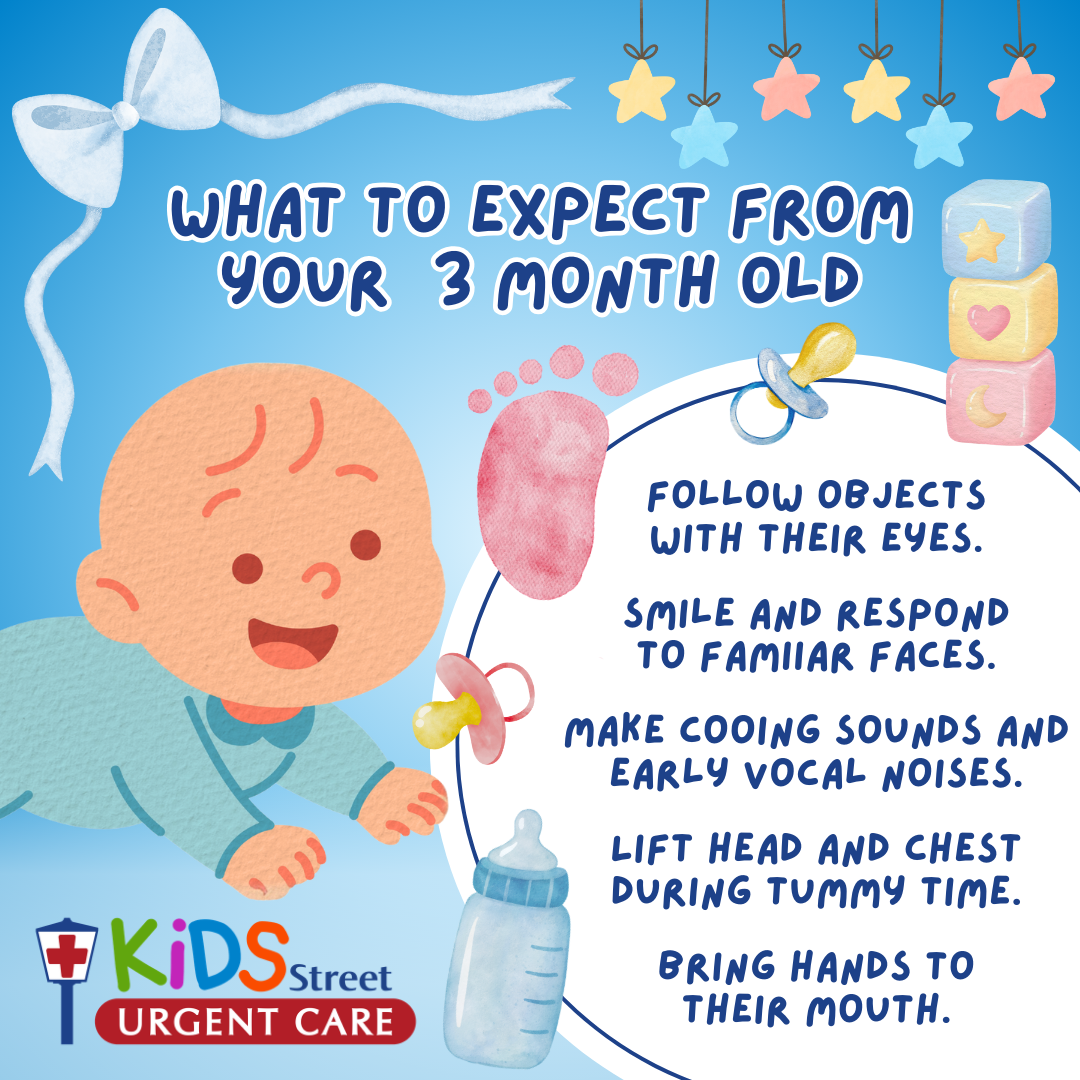
- Smile more socially and respond to familiar faces
- Follow objects with their eyes
- Lift their head and chest during tummy time
- Bring hands to their mouth
- Make cooing sounds and early vocal noises
Your baby is learning quickly through interaction. Holding, talking, reading, and singing help build strong emotional bonds and healthy brain development.
Create simple daily routines for feeding, naps, and bedtime. While your baby may not be on a strict schedule yet, consistent patterns help them feel secure.
It is still best to avoid television or digital media at this age. Face-to-face interaction is far more valuable for development.
Feeding Your 3-Month-Old
At 3 months, breast milk or iron fortified formula remains the only nutrition your baby needs.
Watch your baby’s hunger cues such as:
- Bringing hands to mouth
- Rooting or turning toward the breast or bottle
- Fussing
Also learn their fullness cues like:
- Turning away
- Relaxing their hands
- Slowing down sucking
If breastfeeding, expect about 8 to 12 feedings in 24 hours during growth spurts. Growth spurts are normal and may cause your baby to want to eat more frequently.
If formula feeding, babies typically eat about 26 to 32 ounces per day, depending on their needs.
Avoid introducing solid foods, juice, or water at this stage unless directed by your provider.
Sleep and Daily Routines
Many 3-month-olds are beginning to sleep for slightly longer stretches at night, but frequent waking is still normal.
Helpful habits include:
- Putting your baby down drowsy but awake
- Developing a calming bedtime routine
- Keeping naps consistent
- Offering tummy time during awake periods
Always place your baby on their back to sleep, in their own crib or safe sleep space, with no loose bedding or soft objects.
Teething and Oral Care
Some babies may begin showing early signs of teething. If gums seem sore, a clean, cold teething ring can help.
Even before teeth appear, you can gently wipe your baby’s gums with a soft cloth. Once the first tooth appears, use a soft toothbrush and a tiny smear of fluoride toothpaste about the size of a grain of rice.
Avoid putting your baby to bed with a bottle.
Safety at 3 Months
As your baby becomes stronger and more active, safety becomes even more important.
- Use a rear facing car seat in the back seat of every vehicle
- Never leave your baby unattended on a bed, couch, or changing table
- Keep hot drinks away while holding your baby
- Set your water heater to 120 degrees Fahrenheit or lower
- Never leave your baby alone in bathwater
- Avoid using baby walkers
Your baby may not be rolling yet, but that milestone can come quickly. Always keep one hand on them during diaper changes.
Caring for Yourself and Your Family
Parenting a young infant is rewarding and exhausting. It is normal to feel overwhelmed at times.
Make time to:
- Rest when you can
- Ask for help from family or friends
- Spend time with your partner
- Talk to a provider if you feel persistently sad, anxious, or overly tired
Taking care of yourself allows you to better care for your baby.
KidsStreet Urgent Care is Here for You
At KidsStreet Urgent Care, we provide pediatric urgent care services designed just for kids. Whether your baby has a fever, cough, feeding concerns, or you simply need reassurance, our providers are here to help.
We are open late 7 days a week so you can get care when it works for your schedule.
You can register online to save your spot in line or walk in at any time. Online registration adds you to the queue and provides an estimated arrival time. It is not an appointment, but it can help reduce your in-clinic wait time.
Find a KidsStreet location near you or learn more about our pediatric urgent care services.
See Other, Related Developmental Blogs:
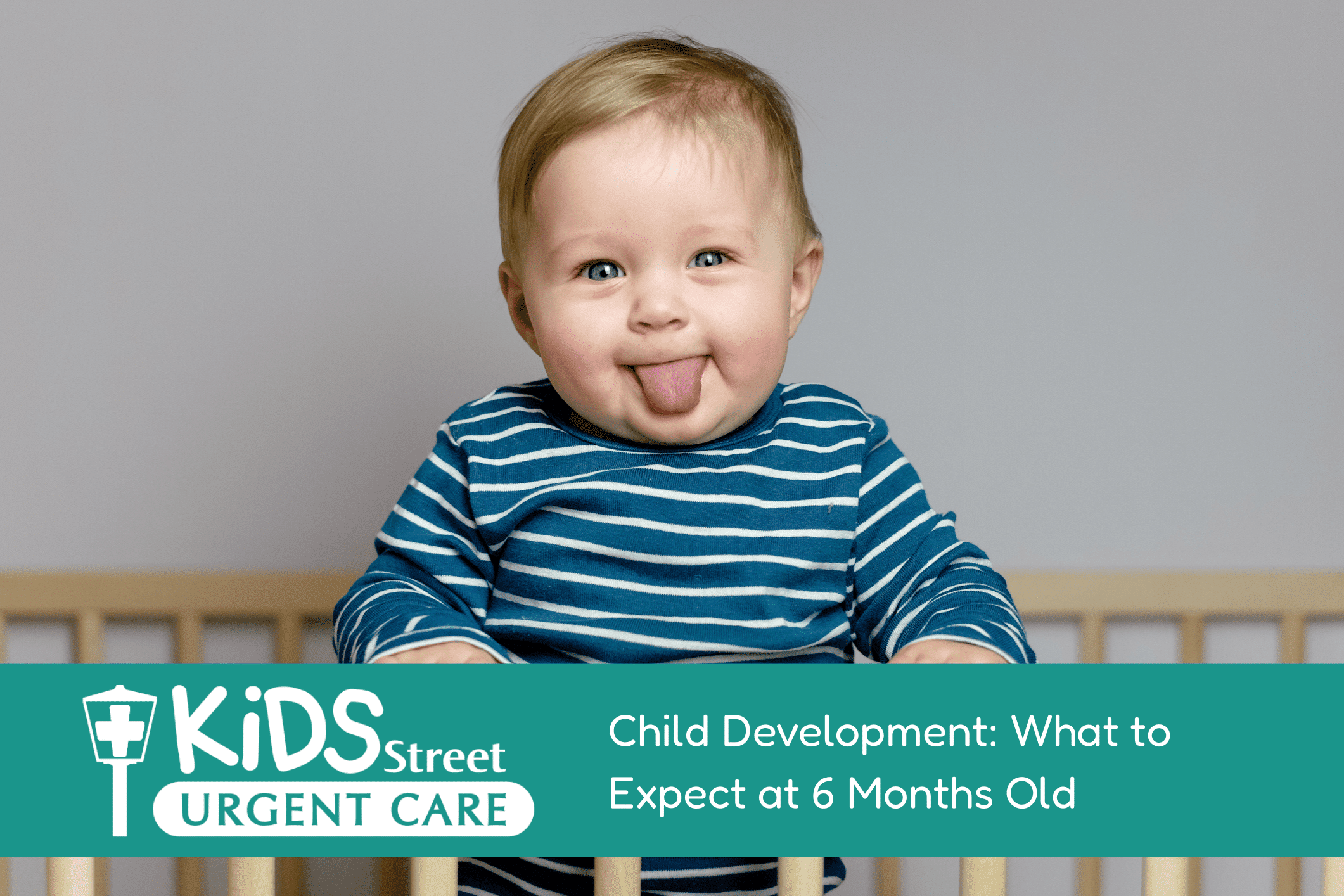
Child Development: What to Expect at 6 Months Old
Your baby is growing quickly, and hitting the 6-month milestone is a big deal. At KidsStreet Urgent Care, we’re here to support families through every stage of development. If your little one is around six months old, here’s what you can expect and how to support healthy habits at home.
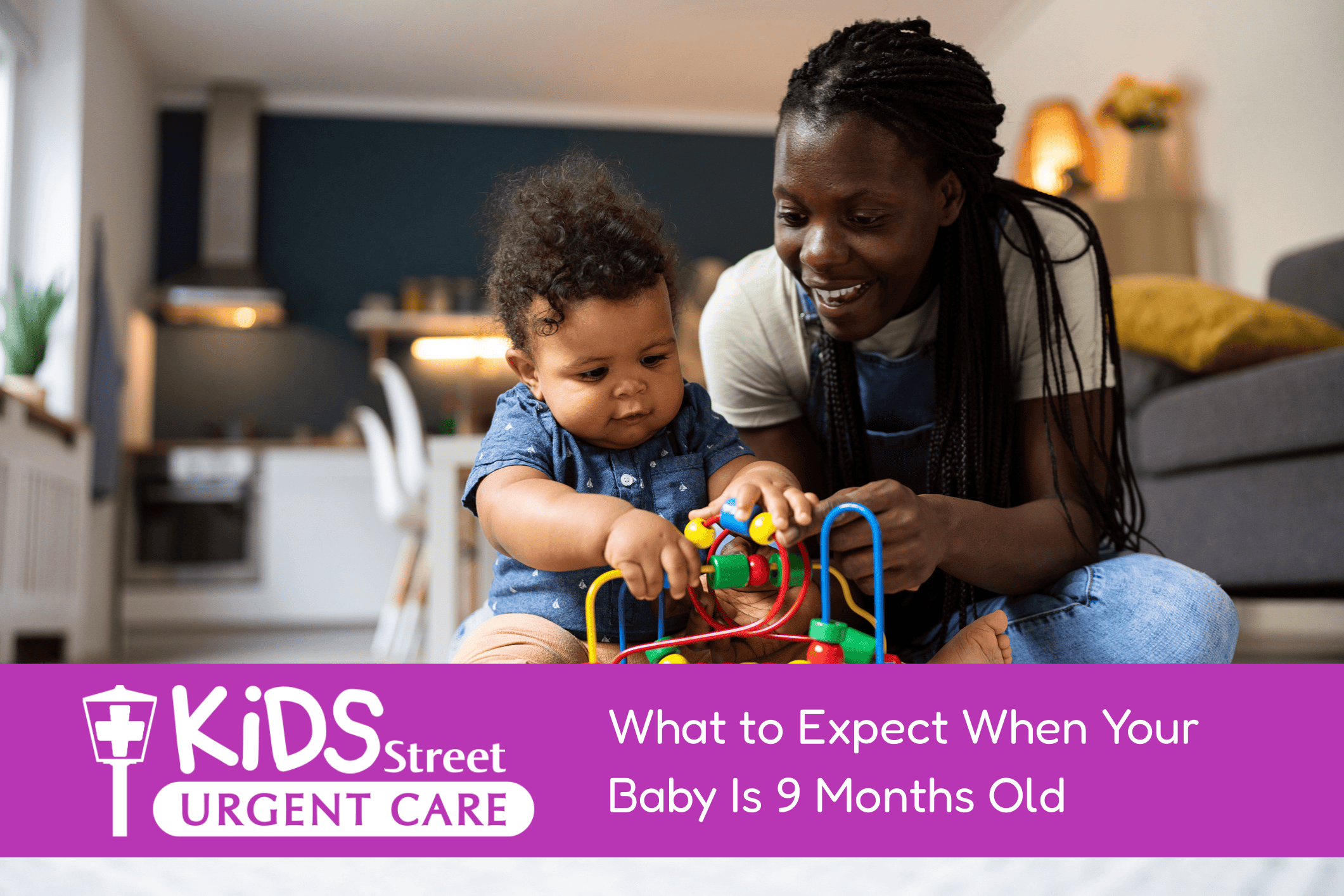
What to Expect When Your Baby Is 9 Months Old
At 9 months old, babies are more curious, mobile, and social. They are also starting to show strong preferences, personalities, and new skills. As your baby continues to grow, you may have questions about feeding, development, and safety.
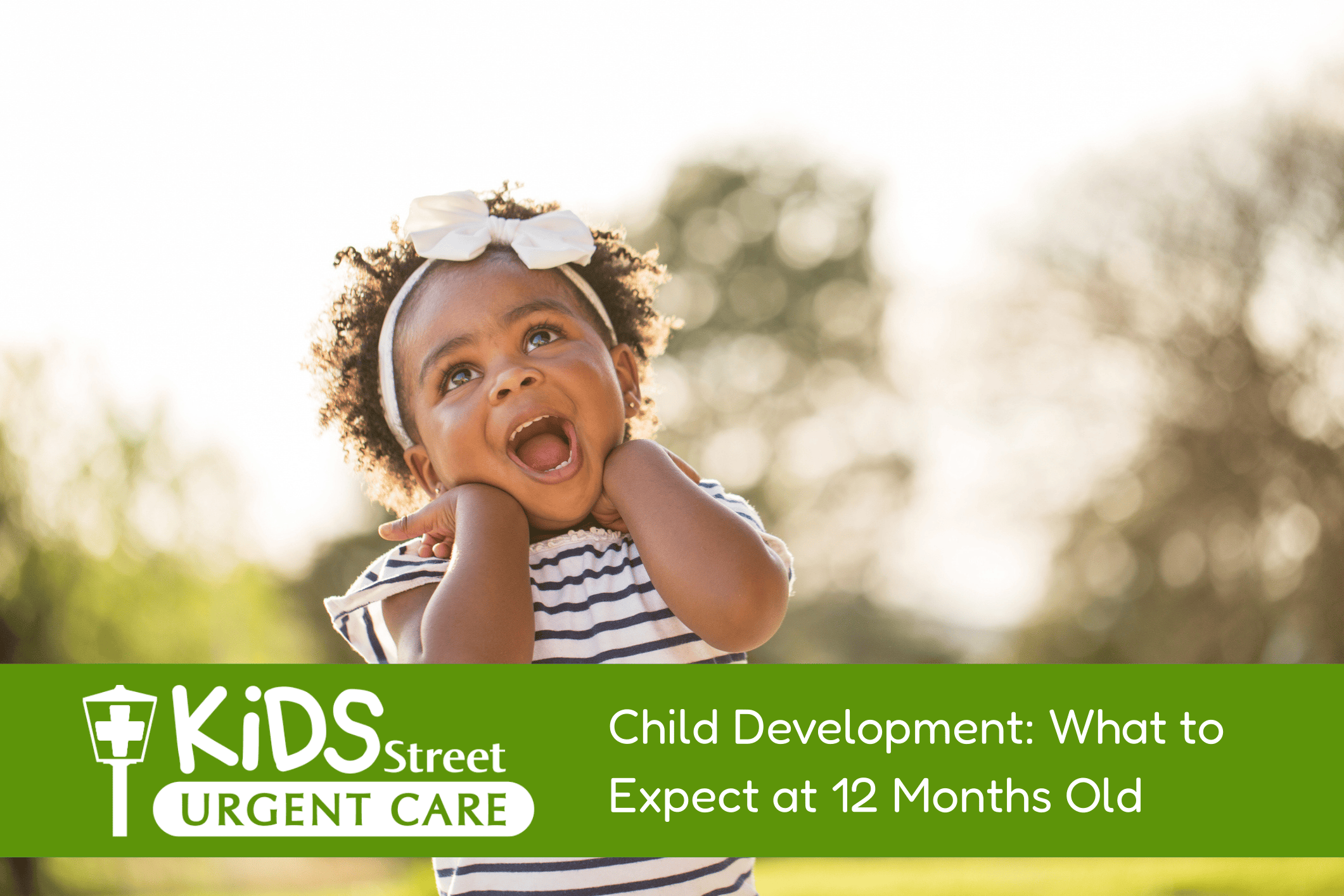
Child Development: What to Expect at 12 Months Old
Your baby is officially one year old. This milestone brings exciting changes in movement, communication, and independence. At 12 months, many children are exploring more confidently and beginning to show strong preferences and personality.