

What to Expect at 9 Months Old
At 9 months old, babies are more curious, mobile, and social. They are also starting to show strong preferences, personalities, and new skills. As your baby continues to grow, you may have questions about feeding, development, and safety. At KidsStreet Urgent Care, we are here to support your family every step of the way. We help you through every stage of your baby’s development by age.
Milestones and Social Development
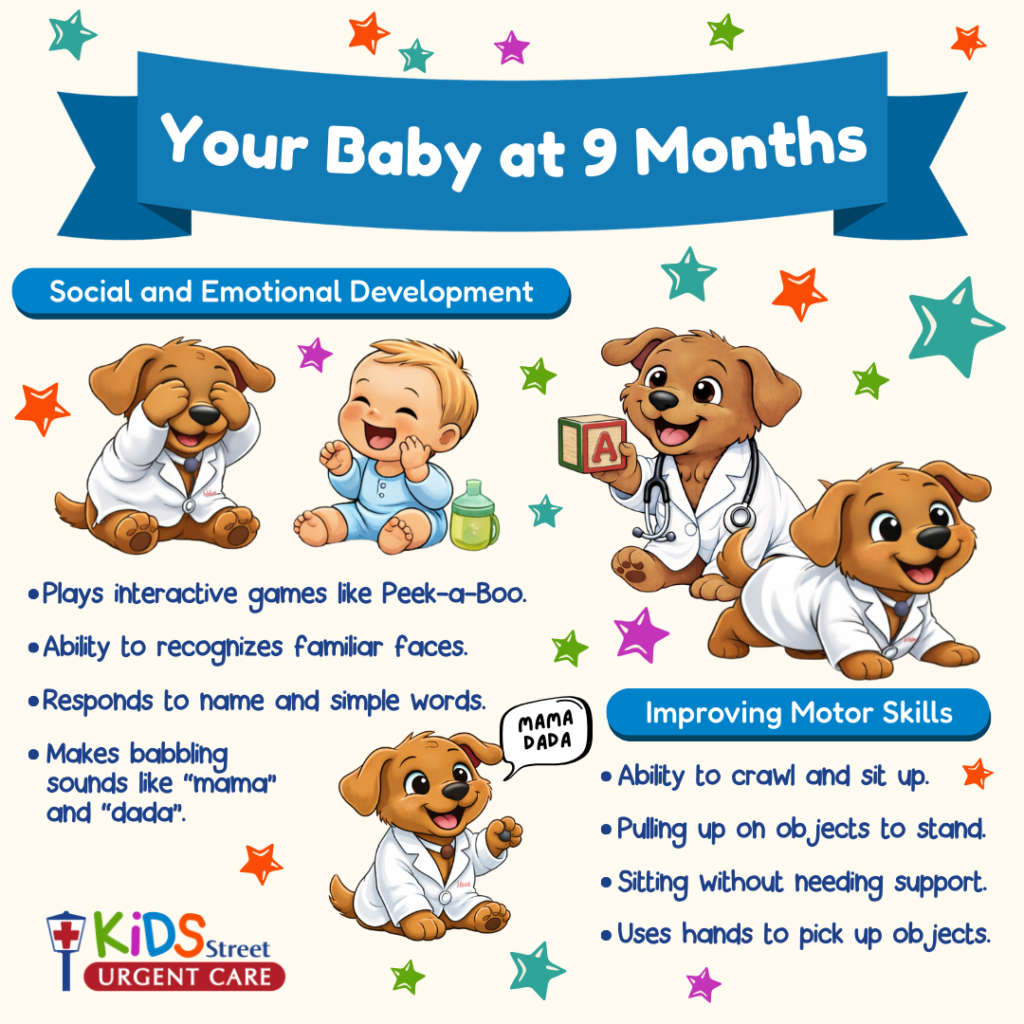
Your baby is likely eager to explore and interact with others. At this age, it is common for babies to:
-
Crawl or scoot
-
Sit without support
-
Transfer objects from hand to hand
-
Recognize familiar faces
-
Show anxiety when separated from you
You might also see your baby enjoying toys that roll, make noise, or stack. Reading, singing, and talking with your baby helps build language and emotional development. Even though they may not be using words yet, they are soaking up every sound and expression.
It is still too early for screen time. Instead, create routines that focus on bonding, learning, and play. If you haven’t already, consider creating a family media plan to guide future technology use.
Feeding Your 9-Month-Old
As your baby becomes more independent, they are learning how to self-feed and use a cup. Feeding at this age includes:
-
Three meals and two to three snacks per day
-
Breast milk or iron-fortified formula as the main drink
-
Introducing more table foods with varied textures
-
Avoiding soft drinks, flavored drinks, tea, and coffee
Let your baby decide how much to eat and when they are full. Messy eating is expected as they learn new skills. Continue to offer a variety of foods — even if your baby says “no” the first few times. Sometimes it takes multiple tries before they accept a new food.
You can continue breastfeeding as long as it works for both of you. Just hold off on introducing cow’s milk until after your baby turns one.
Discipline and Routines
Discipline at this age is more about redirection than rules. Try these tips:
-
Say what to do rather than what not to do
-
Use simple words like “Time to eat” instead of “Stop playing”
-
Offer distractions like a favorite toy when needed
-
Be consistent and calm
You are your baby’s first role model. Your actions help guide how they respond to new situations.
Safety Reminders
As your baby gets more mobile, safety at home becomes even more important. Here are a few key tips:
-
Always use a rear-facing car seat in the back seat
-
Never leave your baby alone in the car or around water
-
Use stair gates and window guards
-
Store medications and cleaning supplies out of reach
-
Keep hot foods, heavy objects, and sharp items out of reach
-
If you keep a firearm at home, make sure it is stored unloaded and locked
Always supervise your baby closely, especially when they are near stairs, water, or in the kitchen. Start building good safety habits now that will last as they grow.
Caring for Families Too
This time can be joyful and challenging. Reach out to family, friends, or a parenting group for support. Take breaks when needed and know that your well-being matters too.
If you ever feel overwhelmed or need help, talk with your provider or contact a support resource.
We’re Here for You
At KidsStreet Urgent Care, we understand how important every milestone is. Whether your baby needs care for an illness, a minor injury, or you have questions about development, our team is here to help.
We are open late 7 days a week to offer convenient, compassionate care moms can trust. You can walk in anytime or register online to save your spot in line. Registering online is not an appointment, but it does add you to the queue and reduces your in-clinic wait time.
See Other, Related Developmental Blogs:
What to Expect When Your Baby Is 3 Months Old
At 3 months old, your baby is becoming more alert, expressive, and interactive. This stage often feels exciting because you are starting to see more smiles, more personality, and longer stretches of awake time.
Child Development: What to Expect at 6 Months Old
Your baby is growing quickly, and hitting the 6-month milestone is a big deal. At KidsStreet Urgent Care, we’re here to support families through every stage of development. If your little one is around six months old, here’s what you can expect and how to support healthy habits at home.
Child Development: What to Expect at 12 Months Old
Your baby is officially one year old. This milestone brings exciting changes in movement, communication, and independence. At 12 months, many children are exploring more confidently and beginning to show strong preferences and personality.