
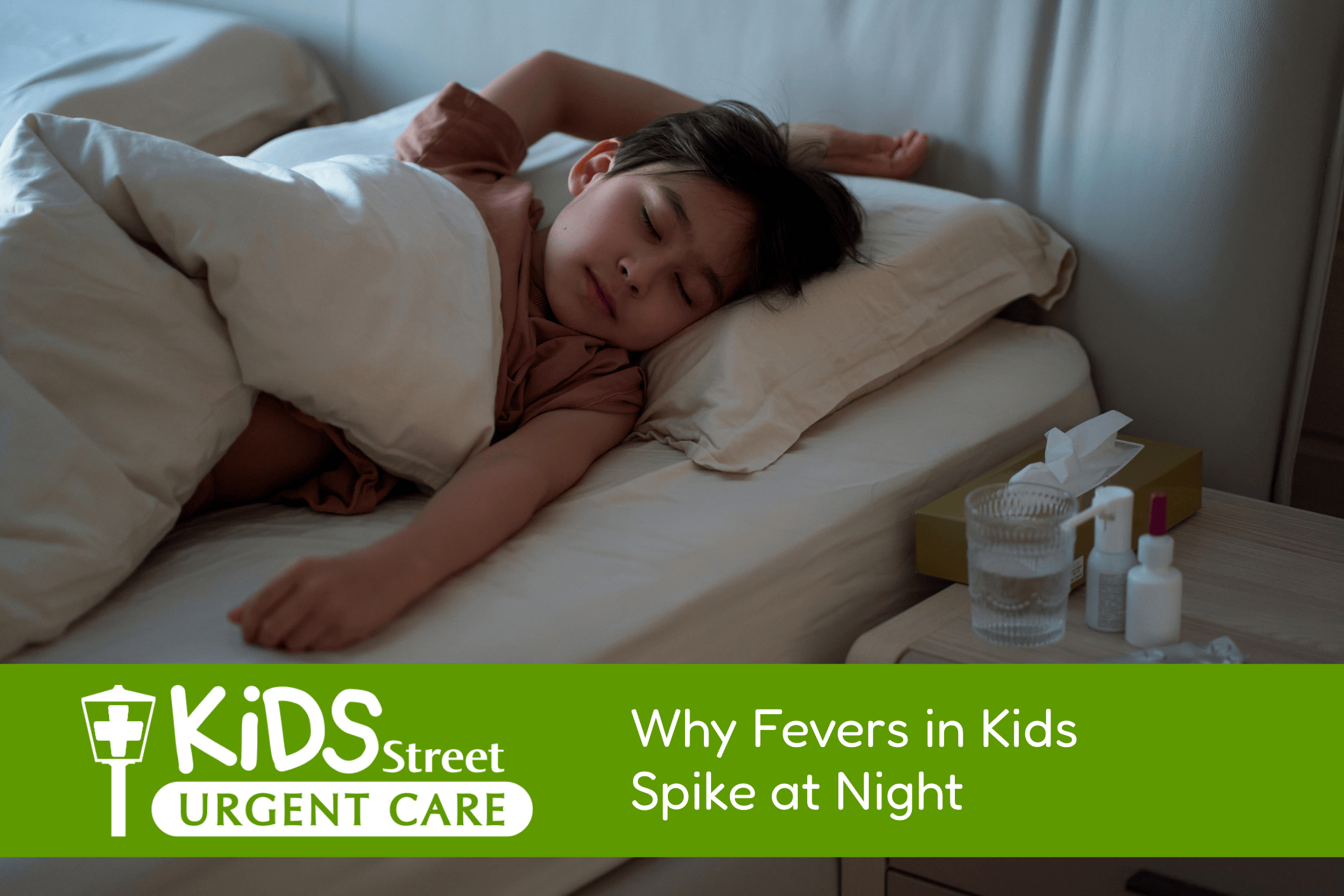
If you’ve ever wondered why a fever is worse at night in kids, you’re not alone. Fever can spike at night, and it always worries parents who already have a lot on their plate.
There’s a straightforward explanation, though. Once you understand nighttime fever in children, you’ll feel more confident about what to do when the temperature goes up after the sun goes down.
Fever and Your Child’s Built-In Body Clock
Every human body runs on what we call a circadian rhythm. It’s basically a 24-hour clock that keeps a steady and consistent schedule of when to sleep, when to produce energy (and how much), and when to raise and lower temperature.
Your child’s temperature will naturally rise and fall throughout the day, with the lows typically coming in the early morning hours, around sunrise. Temperature will reach its peak in the later afternoon and evening, from around 4pm to 10pm. This happens whether we’re sick or healthy.
But when your kiddo has an infection, their immune system naturally raises their body’s temperature to help defeat invasive bacteria and viruses. This is a fever in a nutshell.
When you add the natural effects of the fever and pair it with the circadian temperature increase at night, you wind up with a fever that is noticeably worse later than it was earlier in the day.
When to Seek Care for a Nighttime Fever in Kids
While nighttime fever spikes are common, certain symptoms require prompt medical evaluation. You should consider taking your little one to urgent care if you notice:
- A fever of 104 degrees F or higher that doesn’t come down with medication
- Difficulty breathing
- Rapid breathing
- Severe headache and/or stiffness in the neck
- Persistent rashes that don’t fade when you press on them
- Inconsolable crying
- Extreme lethargy and fatigue
- Dehydration (no wet diapers, no tears, constant dry mouth, dark yellow urine)
(Note that if your baby is three months old or younger and has a fever, seek emergency care immediately. Fever in a child that young is always a medical emergency.)
Of course, if your child is responding to medication, is responsive and can take in fluids, and doesn’t show any of the above symptoms, feel free to monitor at home.
How to Get Prompt Care at KidsStreet
Should you need some peace of mind and a provider’s attention, KidsStreet Urgent Care is open late 7 days a week for your convenience.
At our urgent care for children, walk-ins are always welcome; however, we recommend you register online to save your spot in line and reduce in-clinic wait time.
Watching your kid suffer from a fever at night can make you feel so helpless and uncertain. Many parents have experienced this moment. You’re not alone. Now you have a better understanding of your child’s illness and know that if you need help, we’re right around the corner.
Other Fever in Kids Blogs
Fever In Kids With No Other Symptoms
At 3 months old, your baby is becoming more alert, expressive, and interactive. This stage often feels exciting because you are starting to see more smiles, more personality, and longer stretches of awake time.
How Long Should a Fever in Children Last?
Watching the thermometer for days can make any parent anxious. Learn what is considered a normal fever duration, when three days is still typical, and when a longer fever may need medical evaluation.
Fever After Vaccines in Children: What’s Normal?
It can be unsettling when your child develops a fever after shots. This post explains why post vaccine fever happens, how long it typically lasts, and when it may be time to check in with a provider.
Alternating Acetaminophen and Ibuprofen for Fever
If your child’s fever will not budge, you may wonder whether alternating medications is safe. This guide covers when fever medicine is appropriate, safe dosing principles, and when medication alone is not enough.