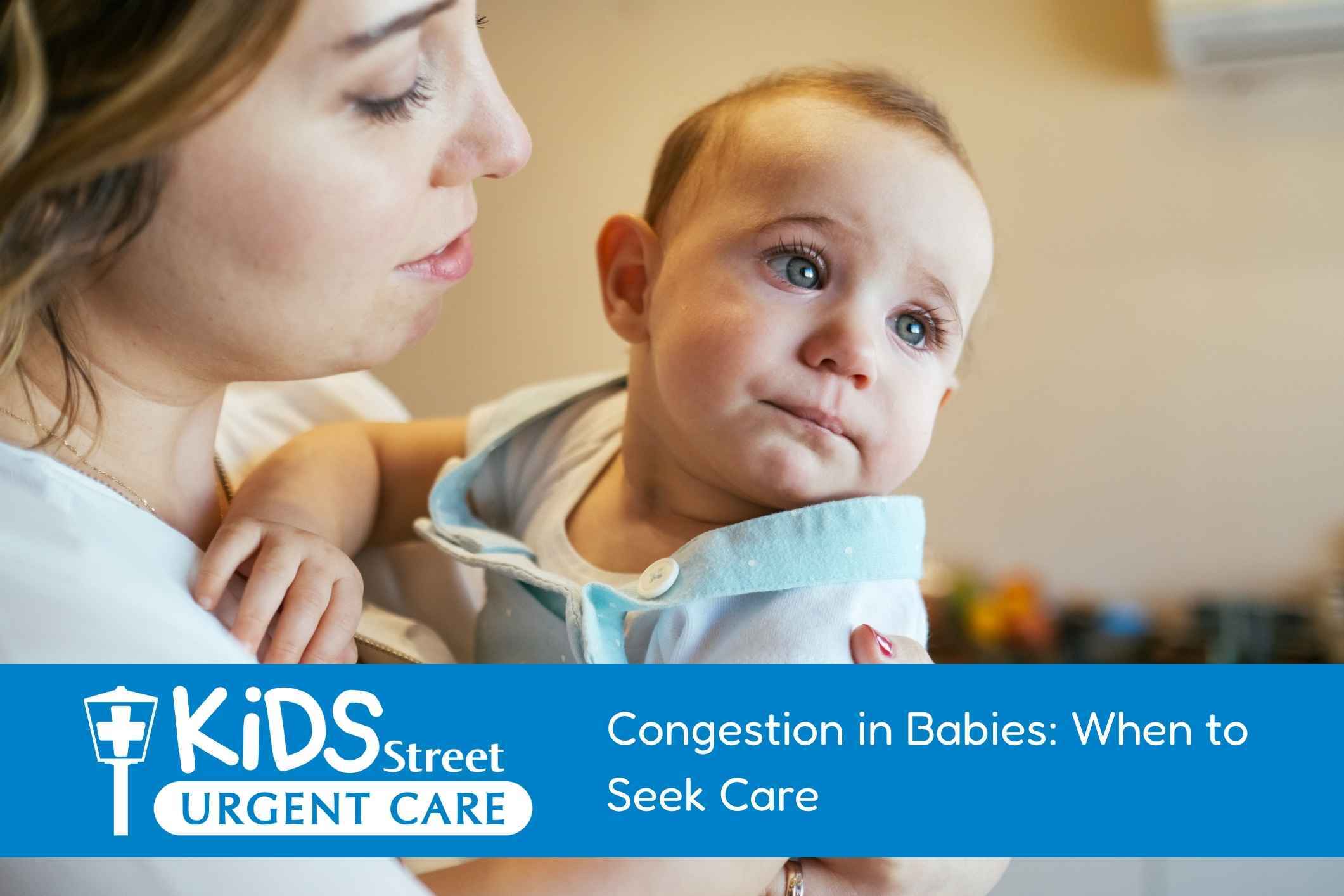
You might be dealing with a congested baby.
Be at ease: congestion is very common in babies and usually isn’t serious. They’re prone to congestion because their nasal passages are a lot smaller than ours, so even a little bit of mucus can go a long way.
Of course, you should still pay attention to breathing, feeding patterns, hydration, and how they’re acting overall. Here’s more on congestion and what you can do about it.
Common Causes of Congestion in Babies
Baby nasal congestion can be caused by a few different things. These include:
- Common colds
- RSV and other respiratory viruses
- Nasal irritation
- Dry air
- Mucus buildup
- Other respiratory illnesses
With so many possible causes, congestion alone can’t tell you what’s going on. Other symptoms can provide clues.
When Baby Congestion May Need a Closer Look
Baby congestion isn’t usually serious, but there are certain concerns you should be aware of, such as:
- Congestion that is worsening
- Difficulty feeding because of a stuffy nose
- Fewer wet diapers than usual
- Fever
- Persistent cough
- Unusual fussiness or sleepiness
- Symptoms that are not improving
One important note: If you have a baby younger than 3 months, a temperature of 100.4°F or higher needs immediate medical evaluation.
Feeding and Hydration Concerns
Beyond a baby’s stuffy nose, congestion can also make breastfeeding or bottle feeding more difficult, and that can affect feeding and hydration. Watch for:
- Taking significantly less milk than usual
- Difficulty staying latched or feeding comfortably
- Fewer wet diapers
- Unusual tiredness
- Signs of dehydration
Paying attention to these symptoms can help you stay aware of what’s going on and how your little one is coping.
Ways to Help Manage Mild Congestion at Home
What can you do to help things from the comfort of your own home? You can consider:
- Saline drops
- Gentle nasal suction when needed
- Using a clean cool mist humidifier
- Offering regular feeds
- Keeping the baby’s sleep environment safe
There are things you should avoid doing, too, like:
- Elevating the baby’s mattress
- Using pillows to help them sleep
- Placing babies in unsafe sleep positions
Also avoid using over-the-counter cough and cold medicines for infants without guidance from your medical provider.
When to Visit KidsStreet
A lot of parents ask, “When should I worry about baby congestion?”
Pediatric urgent care may be the right call if you’ve been monitoring things at home and have noticed:
- Congestion that is not improving
- Congestion with cough or other illness symptoms
- Feeding concerns without signs of severe distress
- Symptoms following exposure to RSV or other respiratory illnesses
If you’re wondering whether testing or an evaluation may be needed, that’s a good reason to have a provider take a look.
When to Seek Emergency Care
Sometimes congestion comes with more serious symptoms. Go to the nearest emergency room or call 9-1-1 if your baby has:
- Trouble breathing
- Breathing pauses
- Blue or gray lips or face
- Skin pulling in around the ribs while breathing
- Severe dehydration
- Extreme sleepiness or difficulty waking
- Symptoms that feel life-threatening
You know your child best. If you’re ever unsure whether something is an emergency, it’s always okay to choose the emergency room.
What to Expect at KidsStreet
At KidsStreet, your medical provider will review your baby’s symptoms, take vitals, examine your baby, and recommend testing when appropriate. Testing may help narrow down what is causing your baby’s symptoms and help guide next steps.
You’ll leave with a recommendation for what you can do next to help your baby.
Visit KidsStreet for Baby Congestion Concerns
A congested baby isn’t fun for anyone. If your little one’s stuffy nose has you wondering what to do next, our team is here to help.
KidsStreet is open late 7 days a week!
Register online to save your spot in line! Online registration is not an appointment, but it can help reduce in-clinic wait times by adding you to the queue before you arrive.