

Fun in the sun is great, but all that activity means kids are losing more fluids throughout the day. Dehydration can be very serious, and it can be difficult to keep kids hydrated. The tricky part? Kids often don’t realize they’re thirsty until they’re already behind the curve. So what do you do?
Here’s what every parent needs to know about hydration for kids and how to keep dehydration away so they can stay safe in the summer sun.
The Risk of Dehydration in Children
Heat pulls moisture out of our bodies because sweating is how our bodies cool down. The more we sweat, the more fluids we lose, and the more we have to work to replace them.
Kids have a harder time staying hydrated because their bodies heat up faster, they sweat more, and they’re usually caught up in having too much fun to think about stopping for a drink.
This is especially true when it’s humid outside; high humidity increases the rate at which our bodies overheat, and can make it harder to recognize when we are becoming dehydrated..
Signs of dehydration to watch out for include:
- Dry mouth
- Cracked lips
- Less urination than usual
- Dark yellow urine
- Unusual fatigue or irritability
- Dizziness or lightheadedness
- Sunken eyes
- No tears while crying
- A sunken soft spot at the top of their head in infants
You can also perform a simple pinch test. Gently pinch the skin on the back of your child’s hand and hold for a few seconds, then release. If the skin returns to normal quickly, they are likely well hydrated. If it stays raised or returns slowly, dehydration may be present.
Dehydration at first isn’t dangerous, provided it is addressed and treated. But if we let it progress, it can have very serious consequences including leading to medical emergencies like heat stroke.
How Much Water Do Kids Need?
There’s no one-size-fits-all answer. Per the Academy of Nutrition and Dietetics, children from 4 to 8 years of age need approximately 7 cups of water each day. Children from 9 to 13 need 9-10 cups, and children 14 to 18 need 10-14 cups.
This is a baseline, though, and temperature and humidity can drive this number way up. Of course, children get fluids not just from drinking water but also from eating food, but to be safe, you can’t rely on just a child’s diet to keep them hydrated.
Summer Hydration Tips to Keep Children Healthy
Getting kids to drink consistently can feel like a battle, but a few simple tactics can go a long way.
To help:
- Make water available and easy accessible
- Make drinking water fun: let your children pick out their own water bottle, add fruit slices for flavor, etc.
- Build good routines by encouraging water at every meal
- Hold water breaks every 15-20 minutes of activity outside (set a timer if necessary)
- Keep fruit handy, like watermelon, strawberries, etc.
Making fluids available and consistently encouraging your children to take them is how to prevent dehydration in kids.
When Dehydration Needs Medical Care
Mild dehydration usually resolves with rest and fluids at home. But some situations call for a provider to step in.
Seek urgent care for children if your child hasn’t urinated in 8 or more hours, is vomiting and can’t keep fluids down, or has a very dry mouth with no tears. Seek emergency care by calling 911 or visiting the ER if your child is unusually lethargic, confused, not urinating, has a fever of 102 degrees F or higher, or has become unresponsive.
KidsStreet is open late 7 days a week! We know dehydration doesn’t always show up at a convenient time, and our providers are ready to help whenever your child needs it.
Register online to save your spot in line so you spend less time waiting and more time getting your kiddo back to feeling their best.
Summer should be fun, not stressful. With these tips, you’ll keep your kiddos safe and happy all sunny day long.
Summer Safety for Kids Blogs

Water Safety for Kids: Pools, Lakes, and Beaches
Spending time in the water is one of the best parts of summer, from pool days to beach trips. Knowing how to keep your child safe around water can help you enjoy every splash with more peace of mind.

Signs of Heat Exhaustion and Heat Stroke in Kids
Hot summer days can take a toll on kids faster than you might expect. Knowing the early signs of heat exhaustion and heat stroke can help you act quickly and keep your child safe.
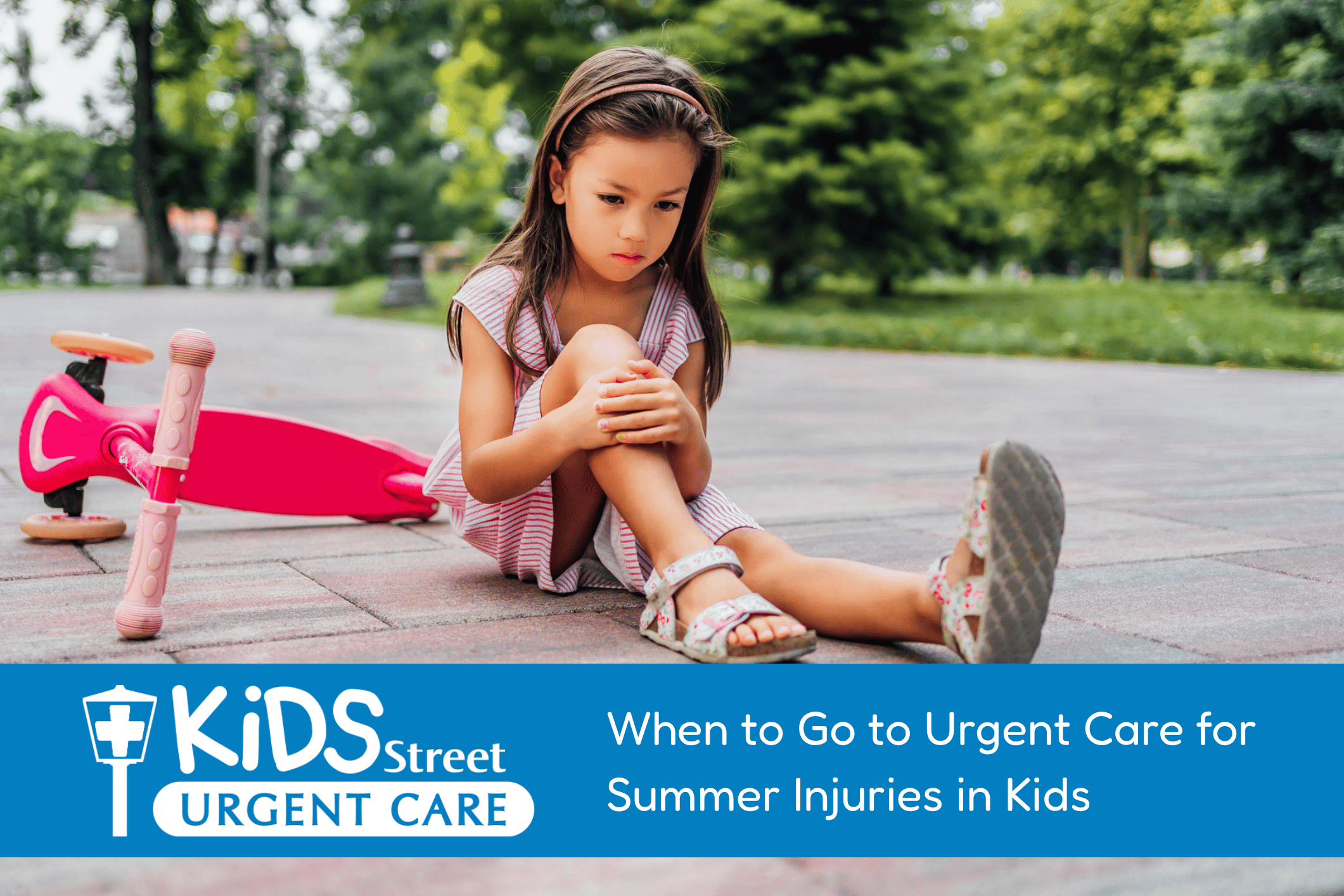
When to Go to Urgent Care for Summer Injuries in Kids
From scrapes and sprains to sunburns and stings, summer can come with its share of bumps and bruises. Knowing when to treat at home and when to seek care can make all the difference.

Car Seat Safety and Summer Travel Tips for Kids
Summer means more time on the road for family trips and everyday outings. Making sure your child is safe in the car and protected from heat can make every drive a little less stressful.

Sun Safety for Kids: Preventing Sunburn and Skin Damage
Long days in the sun are part of what makes summer so fun. Protecting your child’s skin now can help prevent sunburn and support healthy skin long-term.

Bug Bites, Stings, and Summer Rashes in Kids
Bug bites and summer rashes are almost unavoidable during outdoor play. Knowing what’s normal and what needs attention can help you handle these common issues with confidence.