

When you think of summer, what comes to mind? For many families, there’s one word that stands out: water.
Whether you’re building sandcastles at the beach or spending the day around a busy pool, making memories in the water is one of the best parts of the year.
It also calls for a bigger focus on safety, because when you’re near the water, a lot can go wrong. Here’s how to enjoy the wet stuff while being prepared for the worst, with these summer safety tips for kids.
Why Water Safety for Kids Is Crucial
Did you know that drowning is one of the leading causes of accidental injury in children? It’s true, and it can happen quickly, too, in just a matter of seconds.
Young children are especially vulnerable, and drowning can happen quickly and quietly.
You don’t have to be a nervous or paranoid parent to take this seriously. A few simple habits can make a huge difference.
For example, the number one habit is to always keep an eye on your kids when they’re in or near the water. Each group should have at least one designated adult whose sole job is to watch the children (no scrolling on the phone or chatting with friends). Rotate this adult throughout the day to keep everyone fresh and attentive.
Another habit is to create barriers to water at home for smaller children. For a pool at home, install a fence with a self-latching gate. Also consider a motion-operated camera that alerts you via an app on your phone whenever someone enters the field of view. You can turn this on when you’re not around so that the moment a child gets too close to water, you’ll be notified.
Pools, Lakes, and Beaches: Not All Water is the Same
Knowing your environment can go a long way toward making water safer, too.
Each type of water you’ll be around this summer comes with its own set of things to keep in mind.
Pools are generally more controlled and may even have a lifeguard on duty. But visibility can still be tricky, especially if the pool is crowded. Plus, the smoother surface around a pool makes it more likely that kids will run on it, which increases the chances of an accident. Pool safety for kids extends outside of the pool itself to everything around it.
Lakes and rivers add another layer of unpredictability, since the bottom is uneven and visibility is typically low. Unseen currents can also pose a danger. Moving water is tricky to stand in and can obscure obstacles. Knowing what you can’t see is a big part of lake safety for children.
Finally, beaches come with the same problems plus something scary: rip tides. These underwater forces pose a challenge even for confident swimmers, so observe any posted warnings and try to stick close to the shore. Beach safety for kids is all about keeping them close and being conservative about danger.
For any open water:
- Check conditions before getting in
- Respect all warning signs
- Make sure your children have the skills necessary to be in that particular type and depth of water
- Equip children and non-swimmers with life jackets and other United States Coast Guard-approved flotation devices. (Floaties and other toys are fun accessories, not safety devices).
When to Seek Urgent Care for Kids
Even when you take every precaution, accidents happen.
If your kiddo swallows water and seems to be coughing persistently, breathing differently, or feeling unwell after a swim, it’s worth getting them checked out. The same goes for cuts from rocks or pool edges, ear pain (or swimmer’s ear) after swimming, and anything else that seems off.
At KidsStreet Urgent Care, our providers are here exactly for those moments. KidsStreet is open late 7 days a week! We’re the convenient urgent care choice for busy families, with no appointment necessary. Register online to save your spot in line.
Water is a big reason for the season. Stay safe and enjoy every splash!
Summer Safety for Kids Blogs
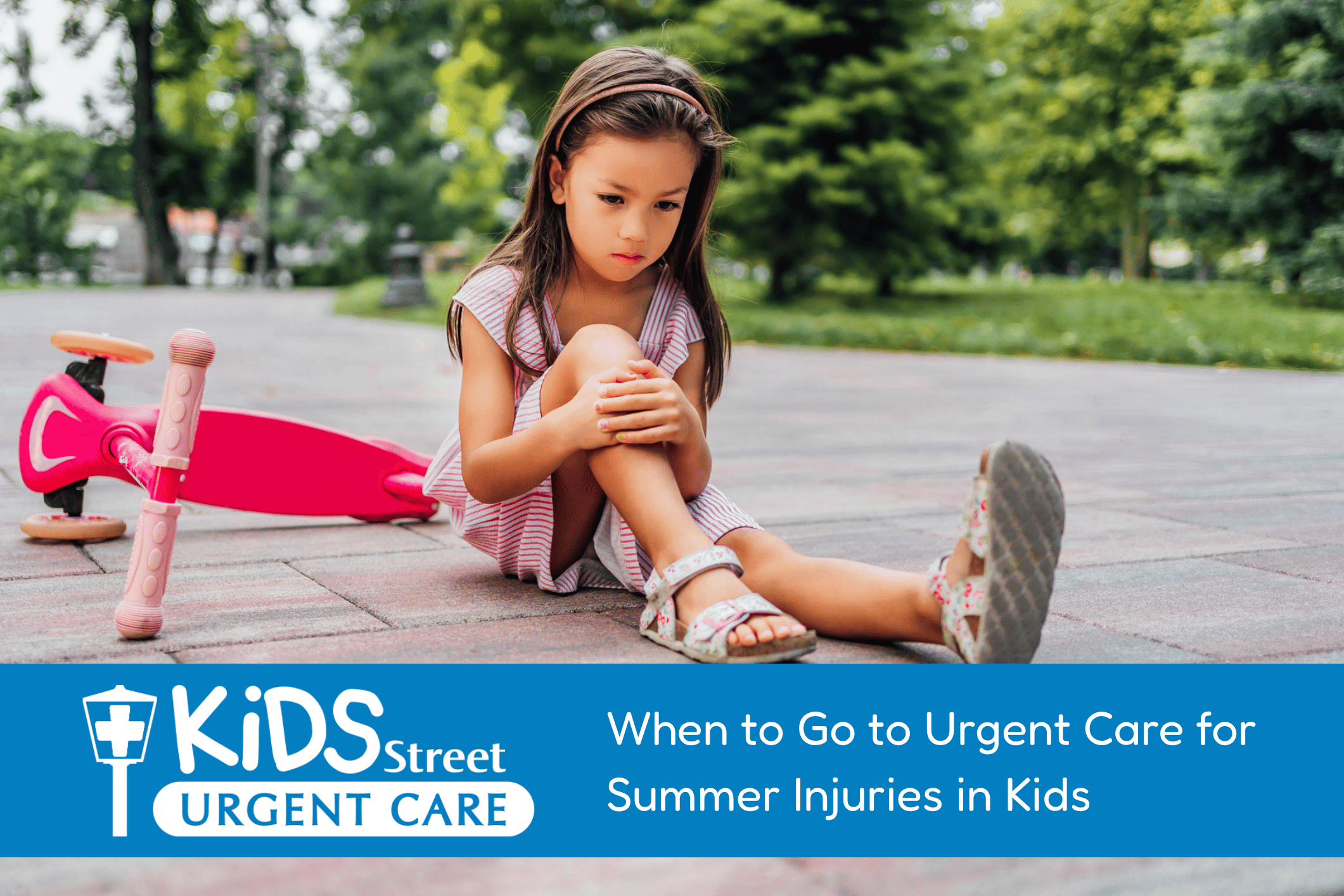
When to Go to Urgent Care for Summer Injuries in Kids
From scrapes and sprains to sunburns and stings, summer can come with its share of bumps and bruises. Knowing when to treat at home and when to seek care can make all the difference.

Signs of Heat Exhaustion and Heat Stroke in Kids
Hot summer days can take a toll on kids faster than you might expect. Knowing the early signs of heat exhaustion and heat stroke can help you act quickly and keep your child safe.

How to Keep Kids Hydrated in the Summer Heat
Between playing outside, swimming, and running around, kids can get dehydrated quickly in the summer heat. Staying ahead of hydration helps keep their energy up and their bodies feeling their best.

Car Seat Safety and Summer Travel Tips for Kids
Summer means more time on the road for family trips and everyday outings. Making sure your child is safe in the car and protected from heat can make every drive a little less stressful.

Sun Safety for Kids: Preventing Sunburn and Skin Damage
Long days in the sun are part of what makes summer so fun. Protecting your child’s skin now can help prevent sunburn and support healthy skin long-term.

Bug Bites, Stings, and Summer Rashes in Kids
Bug bites and summer rashes are almost unavoidable during outdoor play. Knowing what’s normal and what needs attention can help you handle these common issues with confidence.